Landmark: Musee de Prehistoire des Gorges du Verdon
City: Marseille
Country: France
Continent: Europe
Musee de Prehistoire des Gorges du Verdon, Marseille, France, Europe
The Musée de Préhistoire des Gorges du Verdon is one of the largest prehistory museums in Europe. While often associated with major regional hubs like Marseille, it is actually located in the village of Quinson, within the Alpes-de-Haute-Provence department, approximately 100 kilometers northeast of Marseille.
Visual Characteristics
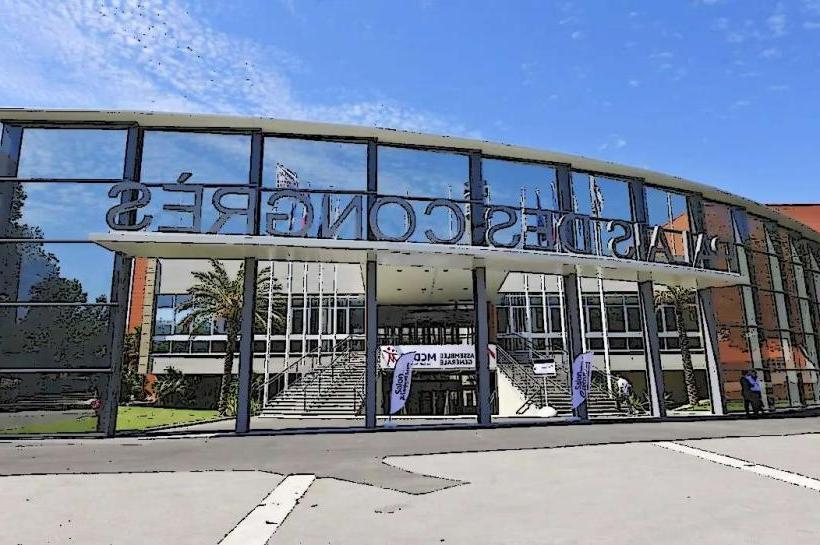
The museum building is a landmark of contemporary architecture, designed by Norman Foster. It features a curved, minimalist facade made of concrete and glass that integrates into the limestone landscape of the Verdon. The interior is organized around a large, spiraling ramp that guides visitors through chronological galleries. A standout visual feature is the life-sized "Prehistoric Herd" at the entrance, featuring a mammoth, woolly rhinoceros, and saber-toothed cat.
Location & Access Logistics
The museum is located at Route de Montmeyan, 04500 Quinson.
From Marseille: The drive takes approximately 1 hour and 30 minutes (100km) via the A51 motorway (exit toward Vinon-sur-Verdon/Cadarache).
Transit: Public transport is limited. There are regional buses from Aix-en-Provence or Marseille, but a car is the most efficient method for reaching this remote part of the Verdon Regional Natural Park.
Parking: A large, free public parking lot is situated directly adjacent to the museum.
Historical & Ecological Origin
Opened in 2001, the museum was built to house and showcase over 50 years of archaeological discoveries in the Verdon Valley. The region’s limestone caves, such as the Baume Bonne, provided a continuous record of human habitation spanning nearly one million years. The site is ecologically significant as it sits at the entrance to the lower Verdon Gorges, a protected area characterized by Mediterranean scrubland (garrigue) and dramatic river canyons.
Key Highlights & Activities
The Permanent Circuit: Covers 1 million years of history in Provence through 20 thematic spaces.
The Prehistosite (Prehistoric Village): Located a 15-minute walk from the museum on the banks of the river, it features full-scale reconstructions of prehistoric dwellings (huts, tipis, and stone shelters).
Grotte de la Baume Bonne: Guided hikes to this major archaeological site are available by reservation (includes a 3.5-hour round trip with 2.5 hours of walking).
Workshops: Seasonal activities include flint knapping, fire-making demonstrations, and prehistoric archery (spear-throwing).
Infrastructure & Amenities
The museum features a documentation center for researchers, a specialized boutique, and a picnic area. 5G/4G cellular coverage is generally available but can be spotty within the deeper concrete sections of the museum. The main museum building is fully wheelchair accessible; however, the Prehistosite and cave tours involve natural, uneven terrain.
Best Time to Visit
The museum is open from February 1 to December 15 (closed on Tuesdays, except during school holidays). The best time to visit is during the European Archeology Days (June) or the Fête de la Préhistoire (July), when additional live demonstrations occur. Spring and early autumn offer the most comfortable weather for the outdoor village and cave hikes.
Facts & Legends
A verified historical fact is that the museum's layout is specifically designed to mirror the "stratigraphy" of an archaeological dig, where you physically descend into the "layers" of time. Local legend-or rather, a common misconception-is that prehistoric humans lived deep inside the Gorges; in reality, most lived in shelters at the entrance of the canyons where sunlight and water access were optimal.
Nearby Landmarks
Lower Gorges of the Verdon: 0.2km (Access for hiking/kayaking)
Lac d'Esparron: 10km West
Moustiers-Sainte-Marie: 30km Northeast
Valensole Plateau (Lavender fields): 25km North