Landmark: Notre Dame de la Garde
City: Marseille
Country: France
Continent: Europe
Notre Dame de la Garde, Marseille, France, Europe
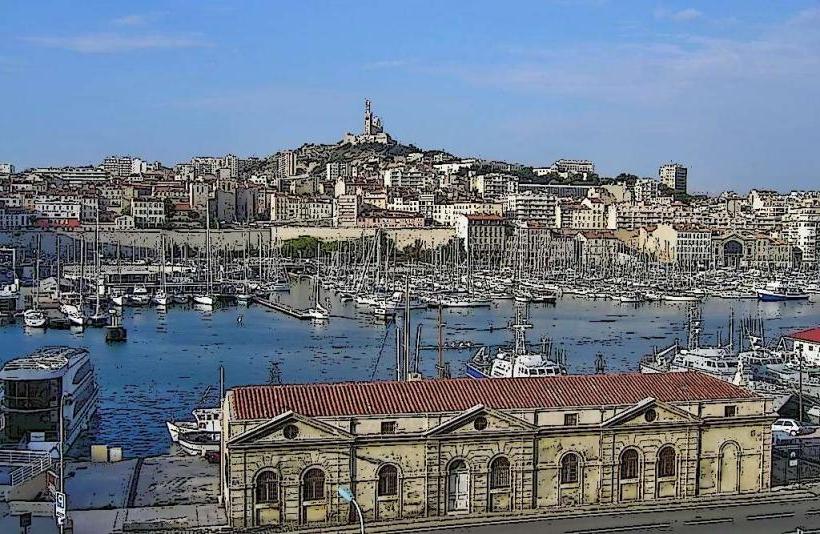
Notre-Dame de la Garde (colloquially known as La Bonne Mère, or "The Good Mother") is a Catholic basilica and the most prominent landmark of Marseille. It is situated at the highest natural point in the city, a 149-meter limestone peak in the 6th arrondissement.
Visual Characteristics
The basilica is a masterpiece of Romano-Byzantine architecture. Its exterior features alternating layers of white stone and green limestone from Florence. It is topped by a 41-meter square bell tower supporting a 9.7-meter gilded bronze statue of the Virgin and Child, which is covered in gold leaf and serves as a navigational beacon for sailors. The interior is lavishly decorated with gold-leaf mosaics, multi-colored marble, and hundreds of "ex-voto" offerings (miniature boats and plaques) donated by the faithful.
Location & Access Logistics
The site is located at the summit of the Colline de la Garde. Access is available via Bus 60 from the Vieux-Port, which delivers visitors directly to the base of the stairs. Alternatively, a "Petit Train" tourist shuttle operates from the port. While walking up is possible via the scenic pedestrian paths from the Jardin de la Colonne, it involves a steep climb. Access to the terrace and basilica is free.
Historical Origin
The site originally held a 15th-century chapel and was later fortified by King Francis I in 1524 (the foundations of the fort are still visible beneath the basilica). The current structure was designed by architect Henri-Jacques Espérandieu and consecrated in 1864. During the 1944 liberation of Marseille, the basilica was the site of heavy fighting; bullet and shrapnel scars are still visible on the northern exterior walls.
Key Highlights & Activities
The Panoramas: The outdoor terraces offer a 360-degree view of Marseille, the Vieux-Port, the Frioul Islands, and the surrounding mountains.
The Crypt: A stark contrast to the upper church, the crypt is carved directly into the rock and serves as a place of quiet reflection.
Mosaics: The upper church contains thousands of square meters of intricate mosaic work depicting religious narratives.
Ex-voto Collection: The hanging model ships and paintings represent centuries of maritime tradition and gratitude for surviving shipwrecks or disease.
Infrastructure & Amenities
The site includes a restaurant and cafe, L'Eau Vive, staffed by missionary sisters. There is a large gift shop and a small museum detailing the building's history. 5G/4G signals are excellent. The site is equipped with an elevator and ramps, making the main areas accessible to mobility-impaired visitors, though some external viewing platforms require stairs.
Best Time to Visit
Sunset is the most popular time for the views, but morning light is better for photographing the gilded statue. The site can be extremely windy; check weather reports for "Mistral" winds before visiting. The basilica is an active place of worship; visitors must maintain silence and dress respectfully.
Facts & Legends
The gold leaf on the statue is periodically restored; it requires approximately 500 grams of gold every 30 years to maintain its luster. Legend and local culture hold that La Bonne Mère protects all citizens of Marseille, regardless of their faith; it is traditional for players of the local football club, Olympique de Marseille, to visit the basilica after winning major trophies.
Nearby Landmarks
Abbaye Saint-Victor: 1.0km Northwest
Vieux-Port: 1.2km North (downhill)
Vallon des Auffes: 1.5km West
Jardin de la Colonne: 0.2km South