Landmark: Fort Saint Nicolas
City: Marseille
Country: France
Continent: Europe
Fort Saint Nicolas, Marseille, France, Europe
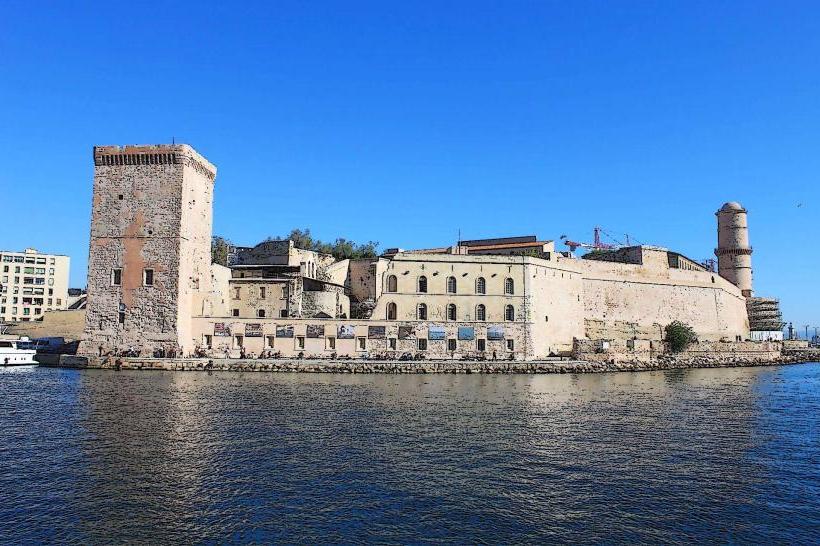
Fort Saint-Nicolas (also known as the Citadelle de Marseille) is a 17th-century star-shaped bastion situated on the southern bank of the Vieux-Port (Old Port) in Marseille. It stands as a symbol of royal authority over the famously rebellious Mediterranean city.
Visual Characteristics
Constructed from pink-toned limestone from the nearby Cap Couronne, the fort is a classic example of bastioned military architecture. It is massive and tiered, following the natural relief of the rocky spur. In 1860, the fortress was bisected by Boulevard Charles Livon to link the port to the Pharo district, effectively splitting it into two parts:
Fort Ganteaume: The lower, seaward section (occupied by the military).
Fort d’Entrecasteaux: The upper, landward section (the primary area for public visits).
Location & Access Logistics
The fort is located at 2 Boulevard Charles Livon in the 7th arrondissement. It is a 15-minute walk from the Vieux-Port Métro station (Line 1) or accessible via buses 82, 82S, or 83. After being closed to the public for over 350 years, the upper section is currently undergoing a massive restoration project and is gradually opening to visitors through the "Citadelle de Marseille" association. Entry to the ramparts often requires a fee (approx. €12), and advanced booking for guided tours is highly recommended.
Historical Origin
Commissioned by King Louis XIV and built between 1660 and 1664 by the engineer Clerville, the fort was designed to secure the port against invasion but primarily to subdue the local population. Famously, its cannons were pointed inward toward the city rather than out to sea. During the French Revolution, the citizens of Marseille began to dismantle the fort as a symbol of tyranny, but the National Assembly halted the destruction to maintain the city's coastal defense. It later served as a military prison until the end of World War II.
Key Highlights & Activities
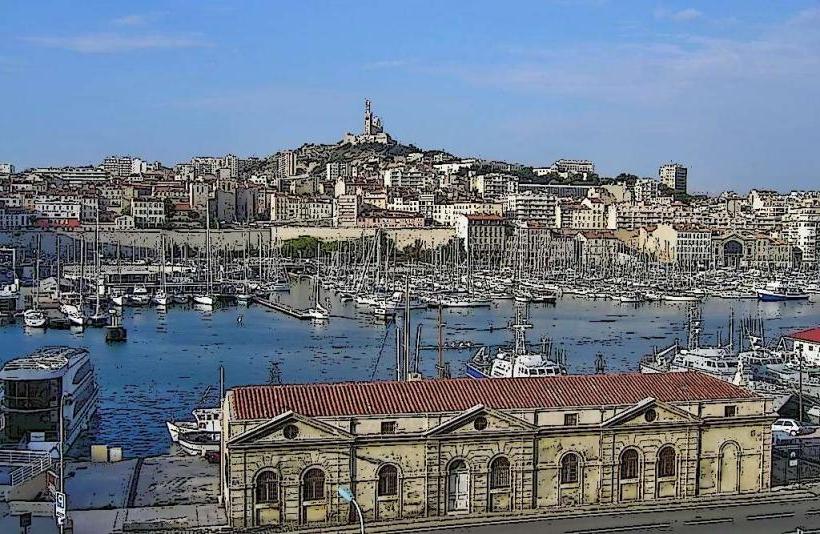
Panoramic Views: The ramparts offer a 360-degree view of the Vieux-Port, the Mucem, and Fort Saint-Jean directly across the water.
The Gardens: The fort's terraces have been converted into public gardens that host seasonal "Guinguettes" (outdoor bars/cafes).
Guided Tours: Specialized historical tours delve into the 17th-century masonry and the life of prisoners.
Cultural Hub: The site increasingly hosts concerts, open-air cinema, and contemporary art exhibitions as part of its transition into a cultural center.
Infrastructure & Amenities
The site is a "work in progress" restoration project. Facilities are concentrated in the renovated sections of Fort d’Entrecasteaux and include a seasonal bar (La Guinguette du Fort) and a reception desk. 5G/4G signals are excellent. Note: Due to the historic military design, the site features steep slopes, uneven cobblestones, and numerous stairs, making it difficult for mobility-impaired visitors and strollers.
Best Time to Visit
Sunset is the peak time to visit the ramparts for views over the Mediterranean. The gardens and Guinguette are typically open during the summer season (May to September), while historical guided tours are held year-round, primarily on weekends.
Facts & Legends
The fort once held several famous prisoners, including the writer Jean Giono. A local legend involves its construction speed: Louis XIV was so determined to exert control that the massive complex was completed in a record-breaking four years. In 2024, the site gained significant visibility as a major venue during the Olympic sailing events in Marseille.
Nearby Landmarks
Abbaye Saint-Victor: 0.2km South
Palais du Pharo: 0.4km West
Vieux-Port (Old Port): 0.1km North
Plage des Catalans: 0.7km West
Fort Saint-Jean: 0.3km North (accessible via ferry or walking around the port)