Landmark: Le Panier District
City: Marseille
Country: France
Continent: Europe
Le Panier District, Marseille, France, Europe
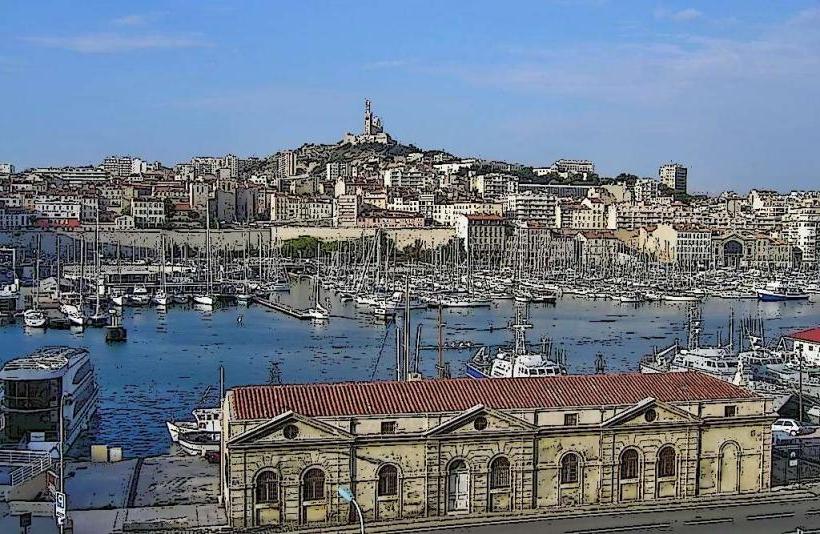
Le Panier is the oldest district in Marseille, located in the 2nd arrondissement on a hill overlooking the Vieux-Port. It occupies the site of the original Greek colony, Massalia, founded in 600 BCE.
Visual Characteristics
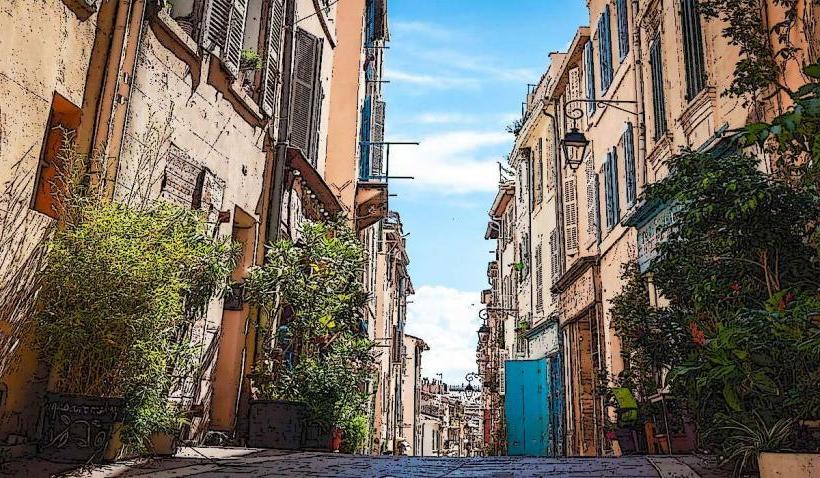
The district is a labyrinth of narrow, winding alleys, steep staircases, and small sun-drenched squares. It is characterized by multi-story houses with weathered pastel facades-ochre, terracotta, and yellow-often adorned with laundry hanging from windows and vibrant street art. The architecture is a mix of medieval foundations and 17th-to-18th-century reconstruction.
Location & Access Logistics
The neighborhood is situated north of the Old Port and east of the Mucem. It is accessible via the Métro at Vieux-Port (Line 1) or Joliette (Line 2), and by Tramway lines T2 and T3 (Sadi Carnot stop). Due to its steep topography and narrow streets, the district is primarily a pedestrian zone; vehicle access is restricted and parking is nearly impossible inside the district.
Historical Origin
As the city's founding site, Le Panier has transitioned from a Greek acropolis to a working-class immigrant enclave (notably for Italians, Corsicans, and North Africans). During World War II, the German occupying forces considered the district a haven for the Resistance and dynamic "undesirables"; in January 1943, they dynamited the lower sections of the neighborhood, displacing 30,000 residents. The upper part of Le Panier survived and has since been revitalized into an artistic hub.
Key Highlights & Activities
Vieille Charité: A former 17th-century almshouse with a stunning Baroque chapel and courtyard, now housing the Museum of Mediterranean Archaeology and the Museum of African, Oceanian, and Amerindian Arts.
Place des Pistoles: A central square lined with cafes and terraces, ideal for observing the local atmosphere.
Artisan Shops: The district is dense with local craft workshops, galleries, and "savonneries" selling traditional Marseille soap.
Street Art: Large-scale murals and stencil art are integrated into the historic architecture throughout the neighborhood.
Infrastructure & Amenities
The area is filled with small bistros, bakeries, and concept stores. Public restrooms are available within the Vieille Charité complex. 5G/4G signals are generally strong, though the dense stone walls and narrow alleys can cause occasional drops. The district is not easily accessible for mobility-impaired visitors due to the high frequency of stairs and steep inclines.
Best Time to Visit
Late morning or early afternoon is optimal to catch the sunlight in the narrow streets. The district is most vibrant during the "Golden Hour" before sunset. It is a popular residential area; quiet behavior is expected in the residential alleys.
Facts & Legends
The name "Le Panier" (The Basket) likely comes from a 17th-century inn called Le Logis du Panier that featured a basket on its sign. A local legend identifies the district as the setting for various scenes in the film The French Connection, reflecting its former reputation as a gritty underworld hub before its gentrification.
Nearby Landmarks
Mucem: 0.3km West
Cathédrale de la Major: 0.2km Northwest
Vieux-Port: 0.1km South
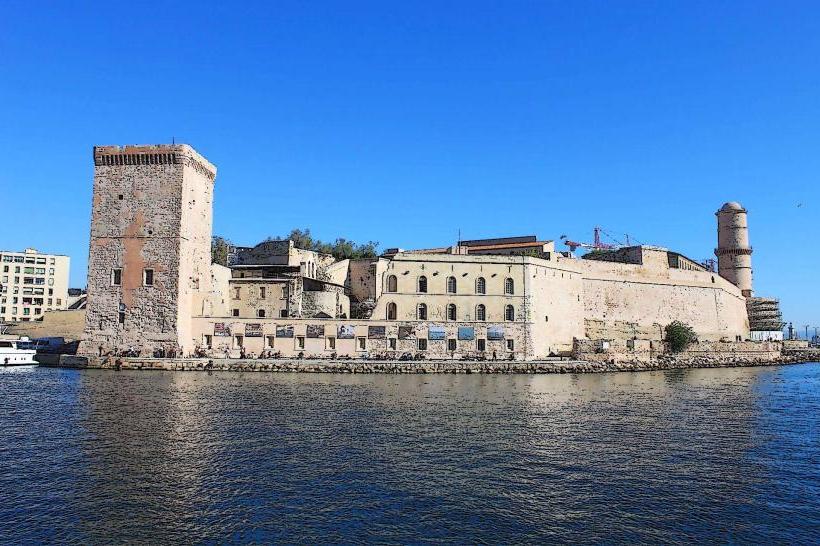
Fort Saint-Jean: 0.3km Southwest
Hôtel de Ville (City Hall): 0.1km South