Landmark: Old Port of Marseille
City: Marseille
Country: France
Continent: Europe
Old Port of Marseille, Marseille, France, Europe
The Vieux-Port (Old Port) is the historic and cultural heart of Marseille, located at the western end of the Canebière in the 1st, 2nd, and 7th arrondissements. It has served as the city's primary maritime gateway for over 2,600 years.
Visual Characteristics
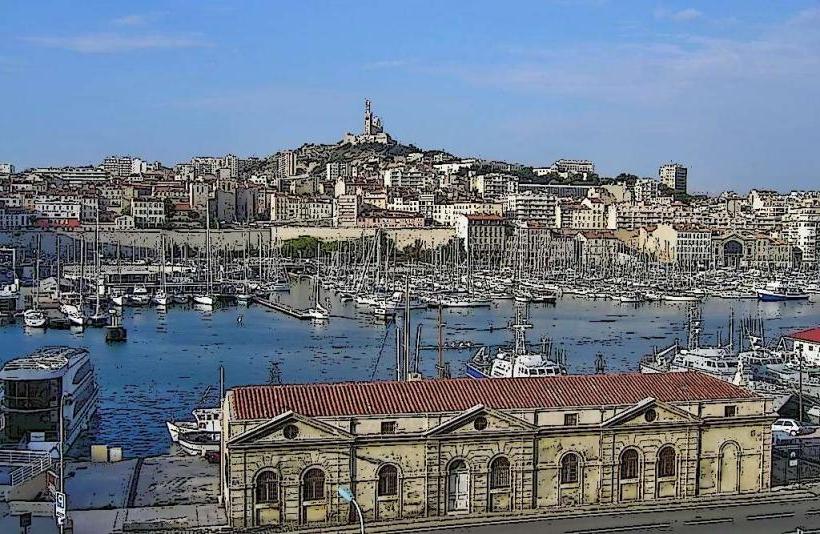
The port is a natural U-shaped harbor surrounded by three limestone quays. It is characterized by thousands of docked pleasure boats and fishing vessels. The perimeter is lined with 18th-century buildings, cafes, and seafood restaurants. A defining modern feature is the L'Ombrière, a massive, 46-meter-long polished stainless steel mirror canopy designed by Norman Foster, located on the Quai des Belges.
Location & Access Logistics
The port is the central hub for Marseille’s transit system. It is served by the Métro station Vieux-Port (Line 1). Multiple bus lines and the "Ferry Boat" (a small solar-powered shuttle) cross the harbor between the Town Hall and the Place aux Huiles. It serves as the departure point for ferries to the Frioul Islands, Château d'If, and coastal tours of the Calanques. The area is largely pedestrianized.
Historical Origin
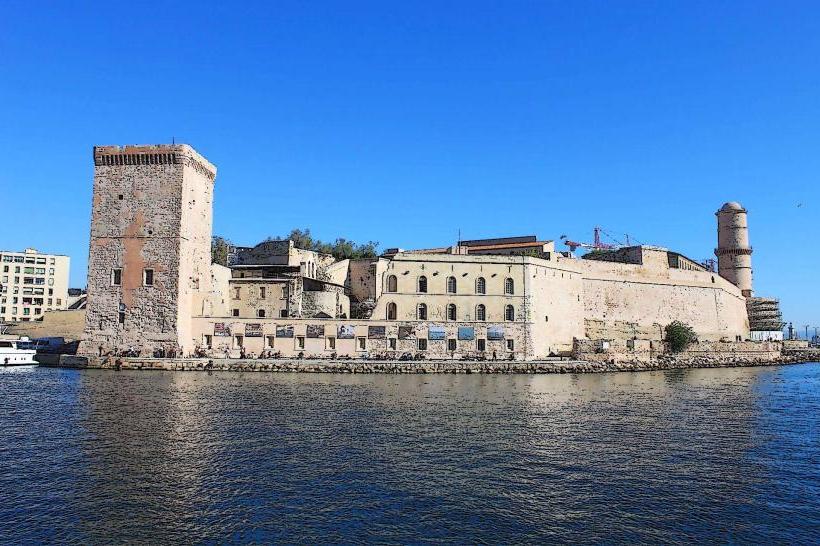
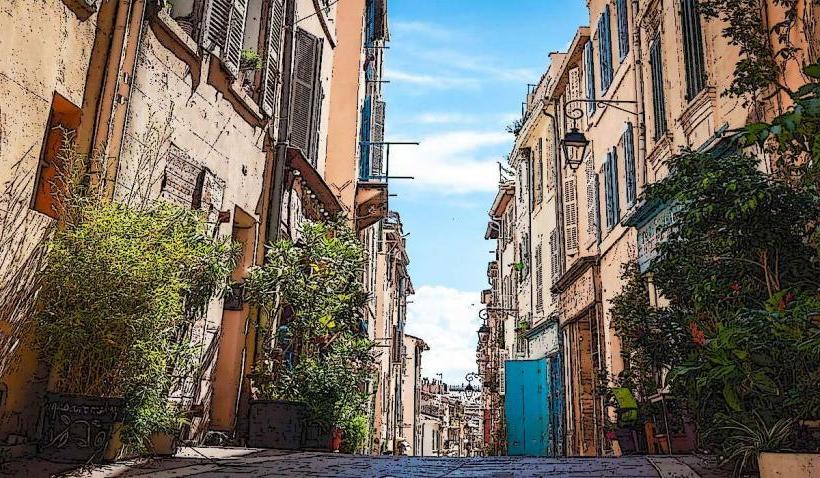
Founded in 600 BCE by Phocaean Greeks as the colony of Massalia, the port was the site of the city's first settlement. For centuries, it was a major Mediterranean commercial hub. In the 17th century, Louis XIV reinforced the entrance with Fort Saint-Jean and Fort Saint-Nicolas. During World War II, the German military destroyed much of the historic Old Town (Le Panier) bordering the port, which was subsequently rebuilt in a more open, modern style.
Key Highlights & Activities
Fish Market: A traditional morning market (Marché aux Poissons) held daily on the Quai des Belges where local fishermen sell the catch directly from their boats.
L'Ombrière: A popular gathering spot providing shade and distorted reflections for photography.
Le Panier: The oldest district of the city, located on the northern slope overlooking the harbor.
Abbey of Saint-Victor: A 5th-century monastery and crypt overlooking the southern quay.
Nightlife: The southern quay (Cours Estienne d'Orve) is the center for dining and bars.
Infrastructure & Amenities
The port features broad granite-paved pedestrian areas. Numerous public benches and waste bins are integrated into the design. 5G and 4G signals are excellent. The terrain is flat and highly accessible for mobility-impaired visitors, although the surrounding hills leading to Le Panier or Saint-Victor are steep. Public restrooms are located near the Town Hall and the Métro entrance.
Best Time to Visit
Between 08:00 and 11:00 for the fish market and a traditional harbor atmosphere. Sunset is the optimal time for the "Golden Hour" view of the surrounding forts and the Notre-Dame de la Garde basilica overlooking the port.
Facts & Legends
The "Ferry Boat" crossing the Vieux-Port is claimed to be the shortest maritime crossing in the world (283 meters). A significant local legend involves the founding of the city: the marriage of the Greek sailor Protis to Gyptis, the daughter of the local Celtic-Ligurian chief, which allegedly took place on these shores.
Nearby Landmarks
Fort Saint-Jean: 0.2km Northwest
Mucem: 0.3km Northwest
Canebière (Main Street): 0.1km East
Pharo Palace: 0.8km West
Notre-Dame de la Garde: 1.2km South (steep uphill)