Landmark: Flame Monument Monumentalism
City: Kyustendil
Country: Bulgaria
Continent: Europe
Flame Monument Monumentalism, Kyustendil, Bulgaria, Europe
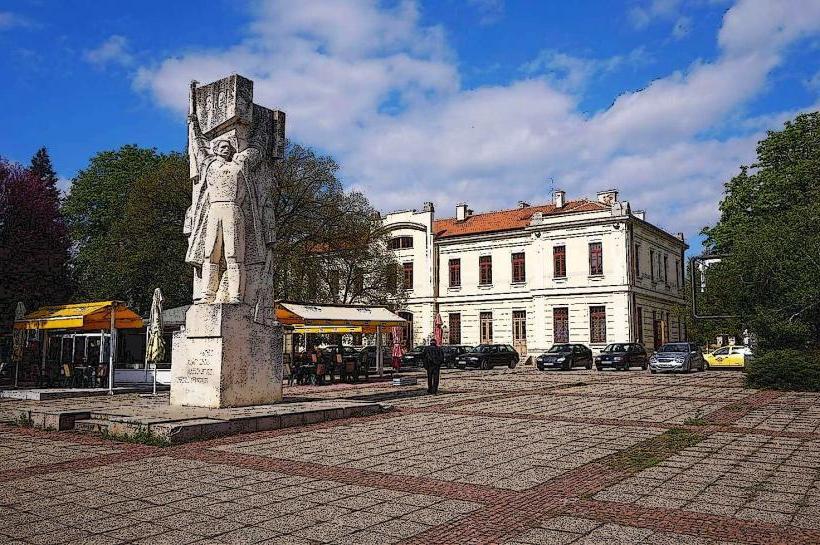
The Flame Monument, officially part of the Velbazhd Memorial Complex, is situated on the Hissarlaka Hill overlooking Kyustendil, Bulgaria. It is a prominent example of socialist monumentalism, designed to commemorate the revolutionary struggles and the anti-fascist movement in the region.
Visual Characteristics
The monument is constructed from reinforced concrete and consists of three stylized, vertical pillars reaching approximately 15 meters in height, resembling flickering flames. The surface is textured with rough-cast grey concrete and features integrated bronze relief figures depicting partisan fighters and historical scenes. The base is a wide, multi-tiered stone pedestal surrounded by a ceremonial paved plaza.
Location & Access Logistics
The site is located within the Hissarlaka Park, approximately 2.5km southwest of the Kyustendil city center. Access is via a winding asphalt road (Hissarlaka Street) or a steep pedestrian forest trail that begins near the Zoo. Dedicated parking is available near the entrance to the fortress area, about 200 meters from the monument. There is no direct public transport to the summit, so taxis or private vehicles are the primary logistical options.
Historical & Ecological Origin
Inaugurated in the 1970s, the monument was designed during the peak of Bulgarian monumentalism to celebrate the local resistance history of the Velbazhd (medieval Kyustendil) region. It sits on the northern slopes of the Osogovo Mountains, characterized by dense pine forests and karst limestone formations. The site coincides with the archaeological layers of the Late Antique and Medieval Hissarlaka Fortress.
Key Highlights & Activities
Visitors can walk the ceremonial paths around the sculpture and view the detailed bronze reliefs. The elevated plaza serves as a primary observation deck, offering 360-degree views of the Kyustendil Valley and the Struma River. The surrounding park paths are frequently used for hiking and mountain biking.
Infrastructure & Amenities
The area features stone benches, waste bins, and directional signage. Shade is provided by the surrounding forest canopy rather than the monument itself. There are no restrooms or food vendors directly at the monument, but several restaurants and a hotel are located within a 400-meter walk near the fortress ruins. 4G and 5G cellular signals remain strong due to the elevation.
Best Time to Visit
The monument is an open-air site accessible 24 hours a day. The optimal time for photography is during the late afternoon when the sun illuminates the western face of the "flames" and the valley below. Spring and autumn offer the best visibility and comfortable hiking temperatures, while winters can bring significant snow to the plateau.
Facts & Legends
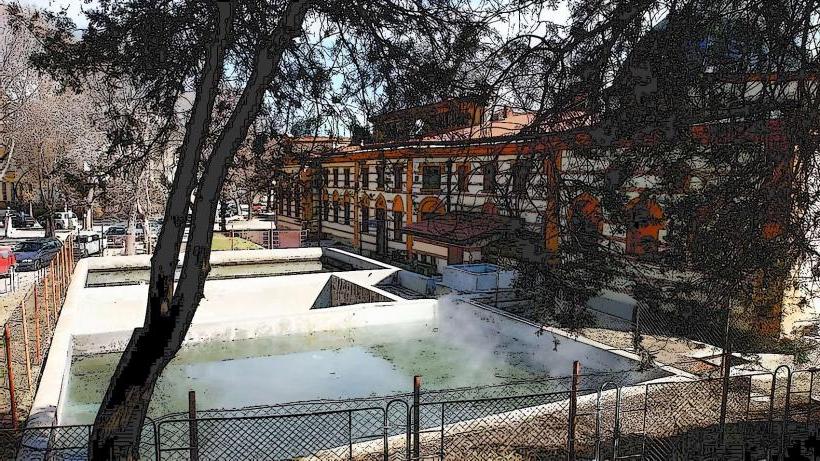
Local residents often refer to the monument simply as "The Three Flames" due to its distinct silhouette. A historical oddity of the site is its proximity to the Roman-era thermal springs infrastructure, suggesting the hill has been a focal point of human activity for over 2,000 years. A specific tip for visitors is to visit during the "Kyustendil Spring" festival in March, when ceremonial processions often conclude at this site.
Nearby Landmarks
Hissarlaka Fortress: 0.3km West
Kyustendil Zoo: 0.6km Northeast (downhill)
Vladimir Dimitrov - The Master Art Gallery: 2.2km Northeast
Roman Thermae: 2.4km Northeast
St. George Church (Kolosh): 2.1km East