Landmark: Kyustendil Mineral Springs
City: Kyustendil
Country: Bulgaria
Continent: Europe
Kyustendil Mineral Springs, Kyustendil, Bulgaria, Europe
Kyustendil has been a major balneological center for over 2,000 years, utilizing hyper-thermal mineral waters that originate from the deep crystalline basement of the Kyustendil valley. The city’s identity is fundamentally defined by these springs, which led to the founding of the Roman city Pautalia.
Visual Characteristics
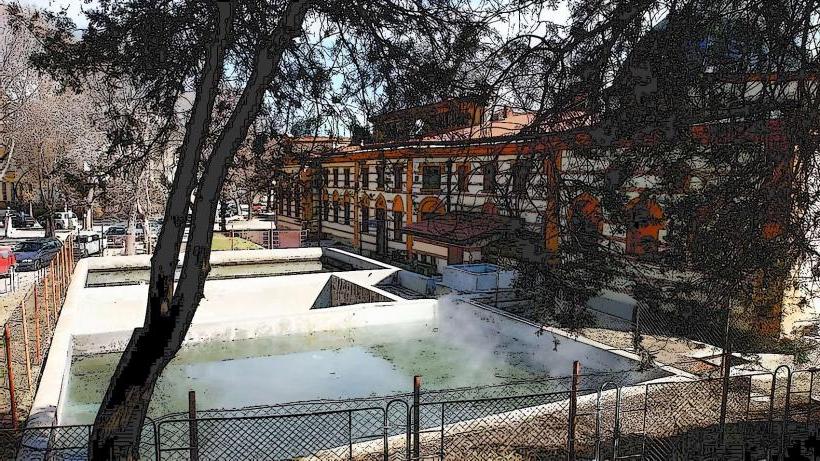
The springs are concentrated in the central urban area, manifested through public drinking fountains with steaming water, outdoor thermal pools, and the massive stone ruins of Roman baths. The water is clear, characterized by a distinct sulfurous odor. The historical "Chifte Banya" and "Alay Banya" buildings feature Ottoman-style domes and intricate stonework, while modern spa facilities utilize glass and sleek tile infrastructure.
Location & Access Logistics
The primary spring zone is located in the central park area, between Tsar Osvoboditel Boulevard and Asklepiy Street.
Public Fountains: Located on the corner of General Zaimov and Asklepiy streets; free and accessible 24/7.
Baths: The central "Chifte Banya" is located at the city center.
Transit: 15-minute walk from the railway/bus station.
Parking: Managed through the city’s "Blue Zone" system on adjacent streets.
Chemical & Ecological Origin
The mineral water is categorized as hyper-thermal, emerging at temperatures between 71°C and 74°C.
Composition: The water is hydrocarbonate-sulfate-sodium, with a high content of sulfide compounds (9.4 mg/l), fluorine (over 9 mg/l), and silicon.
Origin: The springs are formed at a depth of approximately 2,000 meters along the Kyustendil fault zone.
Ecological Impact: The thermal discharge maintains a unique microclimate in the central park, allowing for the growth of specific plant species that otherwise struggle in the Bulgarian winter.
Key Highlights & Activities
Healing Properties: The water is specifically indicated for the treatment of musculoskeletal disorders, peripheral nervous system issues, and gynecological conditions.
The Roman Thermae: Visitors can tour the second-largest Roman thermal complex in Bulgaria, which utilized a sophisticated hypocaust (underfloor heating) system.
Public Bathing: "Chifte Banya" and "Alay Banya" remain functional, offering traditional thermal baths and massage services.
Drinking: The water is used for internal treatment of gastrointestinal and metabolic diseases (consultation with a physician is recommended due to high fluorine content).
Infrastructure & Amenities
The zone includes modern spa hotels, specialized rehabilitation hospitals, and the public Municipal Sanatorium. Public parks surrounding the springs feature benches, drinking fountains, and 5G cellular coverage. Most bath facilities are wheelchair accessible on the ground level.
Best Time to Visit
The springs are accessible year-round. Winter visits are particularly impactful, as the contrast between the freezing air and the 70°C steaming water is most visible. Spring is optimal for combining spa treatments with the local "Kyustendil Spring" festival in March.
Facts & Legends
In antiquity, the springs were dedicated to Asklepius (the god of medicine) and his daughters Hygieia and Panacea. A verified historical fact is that the Roman Emperor Marcus Aurelius frequented the Pautalia baths for their curative properties. Legend says the water's heat comes from the breath of a dragon trapped deep beneath the Hisarlaka hill.
Nearby Landmarks
Roman Thermae (Ruins) – 0.1km East
Chifte Banya – 0.05km North
Vladimir Dimitrov "The Master" Art Gallery – 0.3km North
Pirkova Tower – 0.1km East
Hisarlaka Park – 0.8km South