Landmark: Saint George's Church
City: Kyustendil
Country: Bulgaria
Continent: Europe
Saint George's Church, Kyustendil, Bulgaria, Europe
The Medieval Church of Saint George is the oldest preserved religious building in Kyustendil and a monument of national importance. It is located in the Kolusha quarter, formerly a separate village that served as the spiritual center of the medieval city of Velbazhd.
Visual Characteristics
The church is a classic Byzantine cross-in-square (metropolitan type) structure, measuring 10 by 8.70 meters. Its facade features distinctive "cellular" masonry-alternating rows of red brick and white mortar. The central octagonal dome is supported by six interior pillars. Inside, the walls are covered in layers of medieval and Bulgarian National Revival frescoes, characterized by a dark, austere palette and high-fidelity Byzantine iconography.
Location & Access Logistics
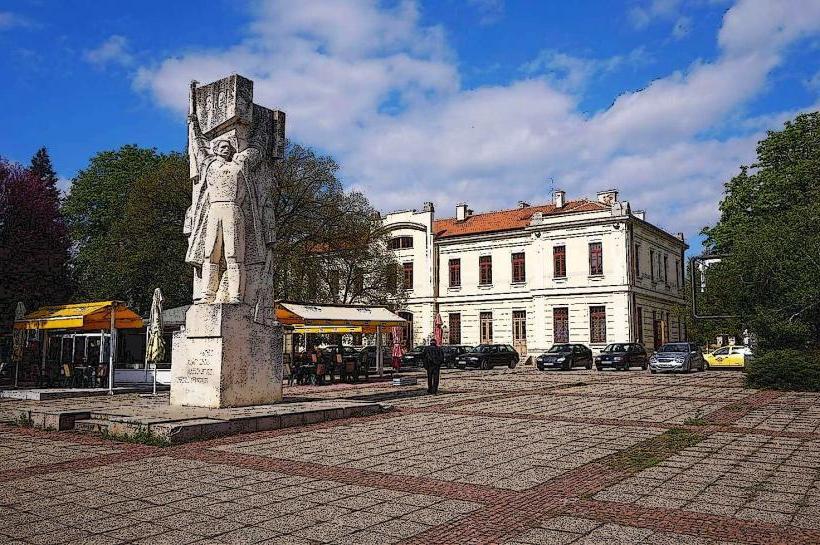
The church is situated at the southwestern edge of Kyustendil in the Kolusha district. It is approximately a 20-minute walk (1.5 km) from the central Macedonia Square. Visitors can access it via Sveti Georgi Street. A small parking area is available at the entrance of the museum complex. Public transport stops nearby at the "Kolusha" bus station.
Historical & Ecological Origin
Constructed in the late 10th or early 11th century, the church was built upon earlier foundations using Roman stones and bricks from ancient Pautalia. It served as the cathedral of the Kyustendil bishopric until the early 19th century. In the mid-19th century, Ottoman authorities razed the building to the arches, but it was reconstructed between 1878 and 1880 following the Liberation of Bulgaria.
Key Highlights & Activities
11th–12th Century Frescoes: These represent the rarest and most valuable layer of murals, featuring images of St. Elijah, St. Pantaleon, and various bishops.
Medieval Graffiti: Over 200 ancient drawings and inscriptions, scratched into the pillars by medieval visitors, are visible in the nave.
Tsar’s Tomb Legend: Local tradition asserts that the Bulgarian Tsar Michael III Shishman was buried here after his death at the Battle of Velbazhd in 1330.
Revival School: The museum complex includes a restored 19th-century cell school and an exposition of church plate and rare books.
Infrastructure & Amenities
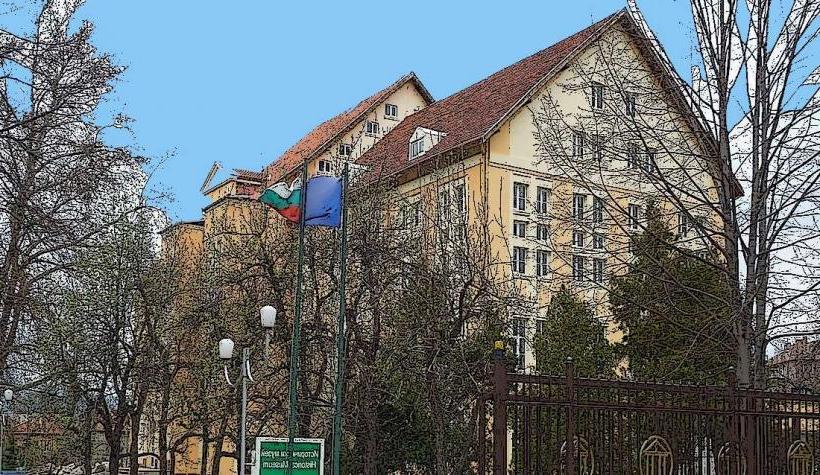
The site is managed by the Regional History Museum and features a landscaped garden, a ticket office, and a souvenir shop. The grounds are wheelchair accessible, though the interior of the medieval church has high thresholds. Public restrooms are located within the complex. 5G/4G cellular signals are consistently strong.
Best Time to Visit
The museum is open Wednesday through Sunday (typically 09:30–18:00 in summer). The best time for photography is late morning when the sun highlights the brickwork of the southern facade. Note that the interior is kept cool and dimly lit to preserve the ancient frescoes; flash photography is strictly prohibited.
Nearby Landmarks
Vladimir Dimitrov "The Master" Art Gallery – 1.3 km Northeast
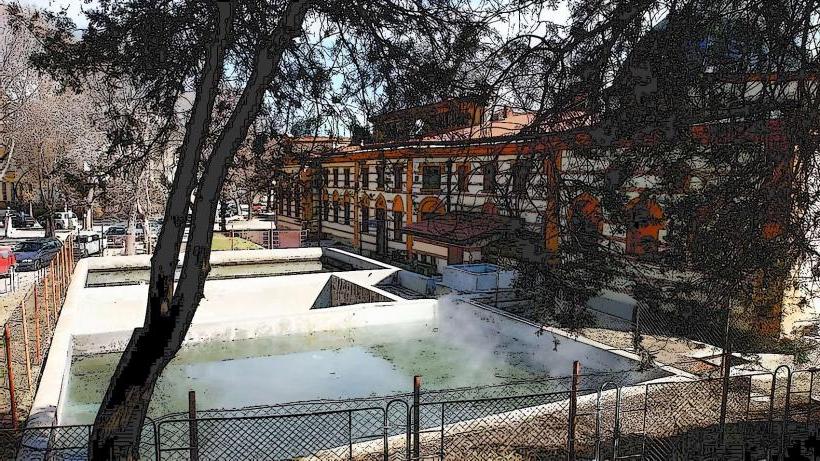
Roman Thermae (Baths) – 1.4 km Northeast
Hisarlaka Fortress – 1.8 km Southeast (uphill)
House Museum "Ilyo Voivoda" – 1.2 km North