Landmark: Gaddafi National Mosque
City: Kigali
Country: Rwanda
Continent: Africa
Gaddafi National Mosque, Kigali, Rwanda, Africa
The Uganda National Mosque, commonly known as the Gaddafi National Mosque, is a skyscraper-style place of worship situated on Kampala Hill. It serves as the headquarters of the Uganda Muslim Supreme Council and is located 2km from the Kampala city center in the Old Kampala district.
Visual Characteristics
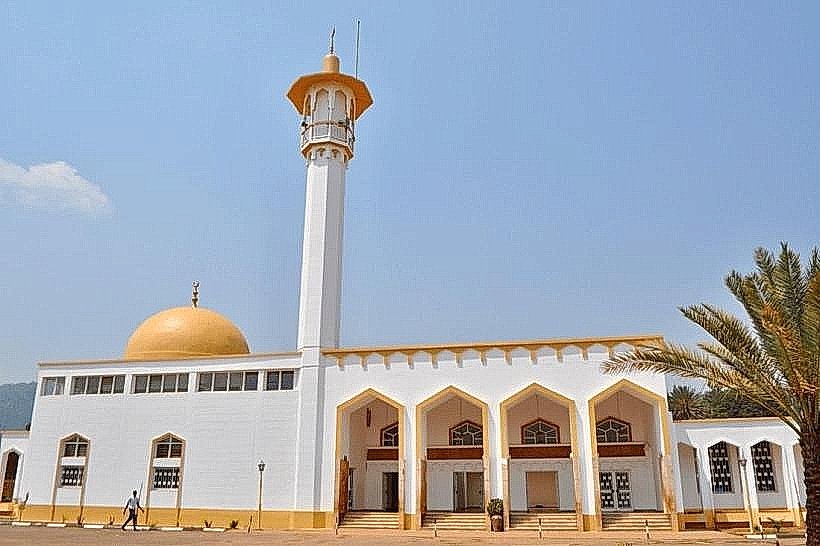
The mosque is constructed primarily from reinforced concrete and steel, finished with a cream-colored exterior facade. It features a large central copper dome and several smaller surrounding domes, all topped with crescent moons. The interior is characterized by expansive patterned carpets, ornate wood carvings, and stained-glass windows imported from Italy. The minaret is a standalone tower rising 50 meters, featuring a circular observation deck at the top accessible via a narrow internal staircase.
Location & Access Logistics
The mosque is positioned at the intersection of Old Kampala Road and Albert Cook Road. Access from the city center is via bodaboda (motorcycle taxi) or private vehicle, approximately a 10-minute drive depending on traffic. Public transport via "matatus" (minibuses) to the Old Kampala taxi park is the most common transit method, followed by a 400-meter walk uphill. On-site secure parking is available within the gated compound for a nominal fee.
Historical & Ecological Origin
Construction began in 1972 under Idi Amin but stalled for decades due to political instability and lack of funding. Work resumed in 2006 following a significant donation from Colonel Muammar Gaddafi of Libya, with the architectural design handled by international engineering firms. The mosque was officially commissioned in June 2007 and renamed the Uganda National Mosque in 2013 following the collapse of the Gaddafi regime.
Key Highlights & Activities
Climbing the 304 steps of the minaret provides a 360-degree view of the seven hills of Kampala. Guided tours are mandatory for non-Muslim visitors and depart from the main entrance throughout the day. Photography is permitted in the main prayer hall outside of designated prayer times. Visitors must adhere to a strict dress code; headscarves and long robes (gomesi/kanzu) are provided at the entrance for those not appropriately dressed.
Infrastructure & Amenities
Restrooms and ablution areas (Wudu) are located on the ground level. The compound has full 4G and 5G cellular coverage from major local providers. Shaded areas are available under the peripheral archways. Small kiosks selling water and religious literature are located near the main gate, though there are no major food vendors inside the gates.
Best Time to Visit
The best time for photography is early morning (08:30 to 10:00) for soft lighting on the facade or late afternoon for the city view from the minaret. The months of June to August and December to February offer the driest weather for outdoor exploration. Avoid visiting during the five daily prayer times and midday on Fridays (Jumu'ah) when the mosque is closed to tourists for congregational worship.
Facts & Legends
The mosque is built on the site of the original Fort Lugard, the first administrative outpost of the British East Africa Company in Uganda. A local historical oddity is that the mosque can accommodate over 15,000 worshippers inside, with the terrace holding an additional 3,500, making it one of the largest religious structures in sub-Saharan Africa.
Nearby Landmarks
Fort Lugard Museum – 0.1km North
Namirembe Cathedral – 1.2km West
Rubaga Cathedral – 2.5km Southwest
Kabaka's Palace (Mengo) – 1.8km South
Owino Market – 1.5km East