Landmark: Gobustan Rock Art Museum
City: Baku
Country: Azerbaijan
Continent: Asia
Gobustan Rock Art Museum, Baku, Azerbaijan, Asia
The Gobustan Rock Art Museum is an archaeological site located in the Gobustan National Park, approximately 64 kilometers southwest of Baku, Azerbaijan.
Visual Characteristics
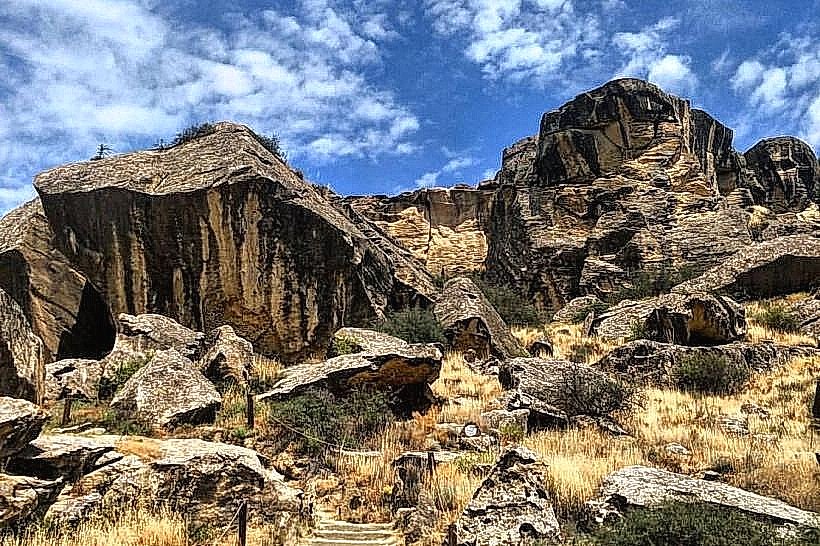
The site features a series of rock shelters and caves containing petroglyphs. The rock formations are primarily composed of sandstone and limestone, exhibiting erosion patterns. The petroglyphs themselves are carved into the rock surface, varying in color from light brown to dark grey depending on the rock's oxidation. The landscape is semi-arid, characterized by sparse vegetation and rocky terrain.
Location & Access Logistics
Access is via the M3 highway from Baku. The turn-off for Gobustan is clearly marked. The site is approximately a 1-hour drive from Baku city center. Parking is available at the visitor center. Public transport options are limited; a combination of bus to Alat and then a taxi is a possible route, but direct bus services are not common. Private car or organized tour is the most efficient method.
Historical & Ecological Origin
The petroglyphs date from the Upper Paleolithic period to the Middle Ages, with the earliest carvings estimated to be around 40,000 years old. The site's geological formation is part of the Absheron Peninsula's sedimentary rock layers, shaped by millennia of wind and water erosion. The primary purpose of the carvings is believed to be ritualistic, communicative, and historical documentation by ancient human populations.
Key Highlights & Activities
Exploration of the designated rock art sites (numbered I, II, III, IV, V, VI). Observation of petroglyphs depicting fauna (goats, bulls, deer), human figures, boats, and hunting scenes. Visiting the modern museum building which provides context and displays artifacts. Hiking on marked trails between the rock art locations.
Infrastructure & Amenities
The Gobustan National Park features a modern visitor center with restrooms and a small cafe. Shaded areas are available at the visitor center and along some of the main pathways. Cell phone signal (4G/5G) is generally available in the vicinity of the visitor center but can be intermittent at more remote rock art sites.
Best Time to Visit
The best time of day for viewing the petroglyphs is late morning or late afternoon when the sun's angle creates shadows that highlight the carvings. The most favorable months for visiting are April to June and September to October, avoiding the extreme heat of summer and the potential for cold winds in winter. No tide considerations are applicable.
Facts & Legends
One of the most frequently depicted animals is the wild goat (Bezoar ibex), which was a significant food source and symbol for the ancient inhabitants. A specific "secret" tip is to look for the small, circular depressions carved into some rocks; these are believed to have been used for collecting rainwater or as primitive musical instruments.
Nearby Landmarks
- Gobustan Mud Volcanoes (2.5km West)
- Bibi-Heybat Mosque (35km Northeast)
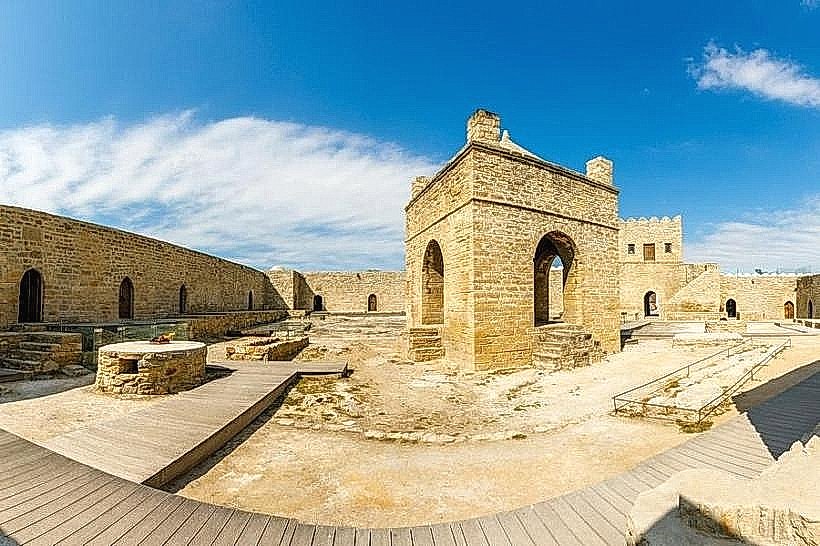
- Atashgah of Baku (Fire Temple) (50km Northeast)
- Yanar Dag (Burning Mountain) (52km Northeast)
- Baku Boulevard (55km Northeast)