Landmark: Great Mosque of Touba
City: Touba
Country: Senegal
Continent: Africa
Great Mosque of Touba, Touba, Senegal, Africa
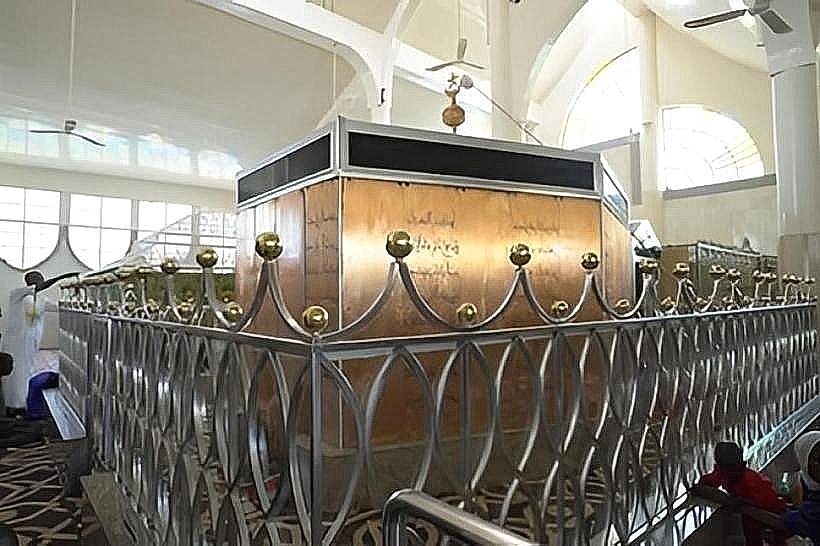
The Great Mosque of Touba is the central architectural and spiritual landmark of the city of Touba, Senegal. It serves as the primary place of worship for the Mouride Brotherhood and contains the mausoleum of its founder, Sheikh Amadou Bamba.
Visual Characteristics
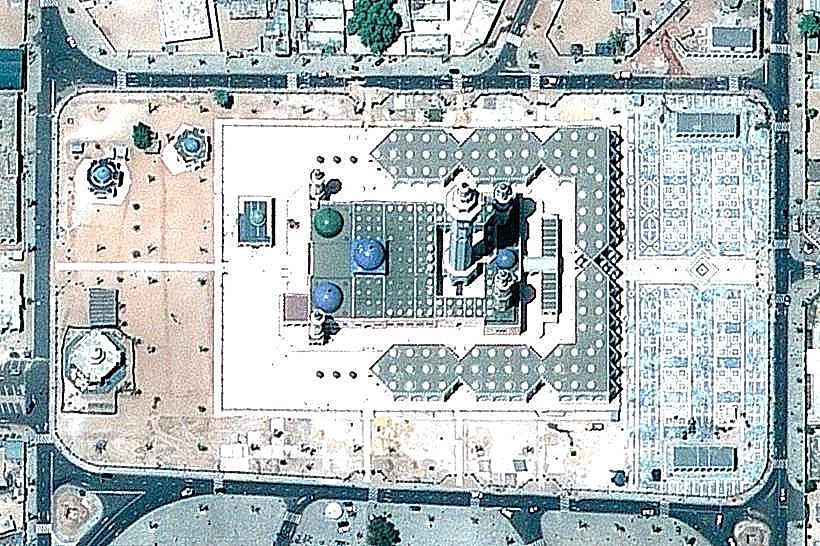
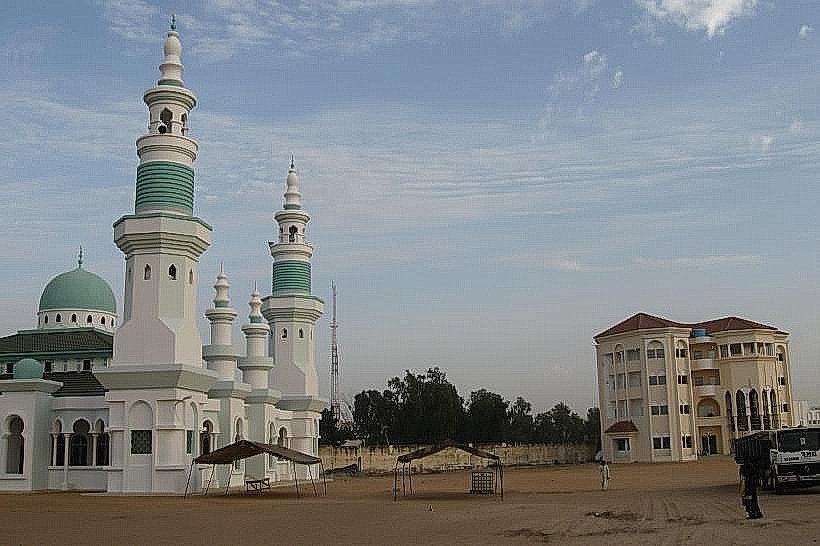
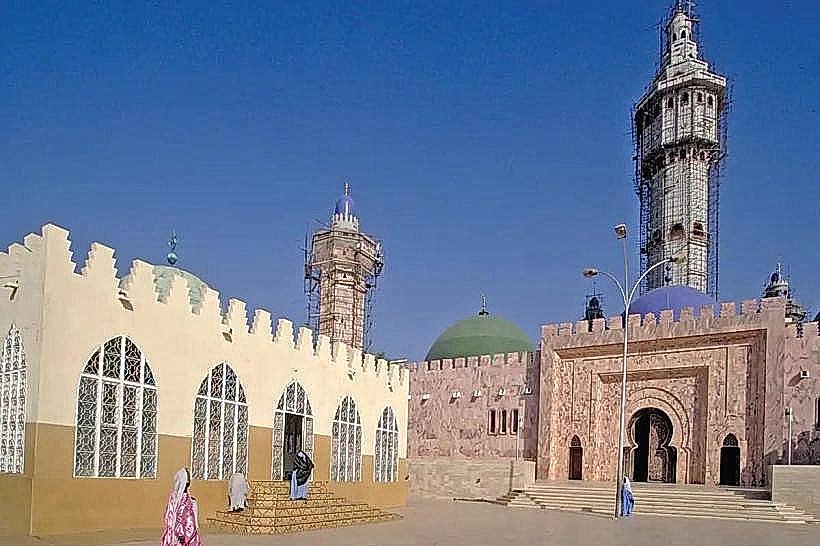
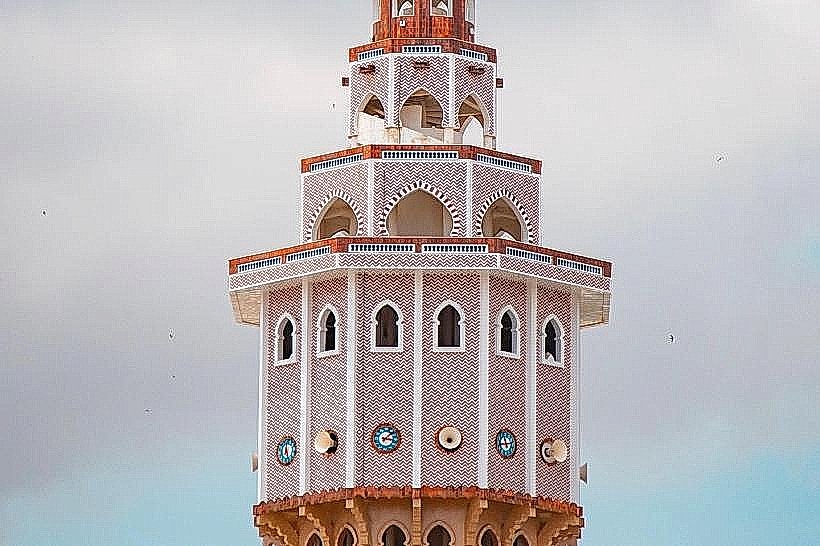
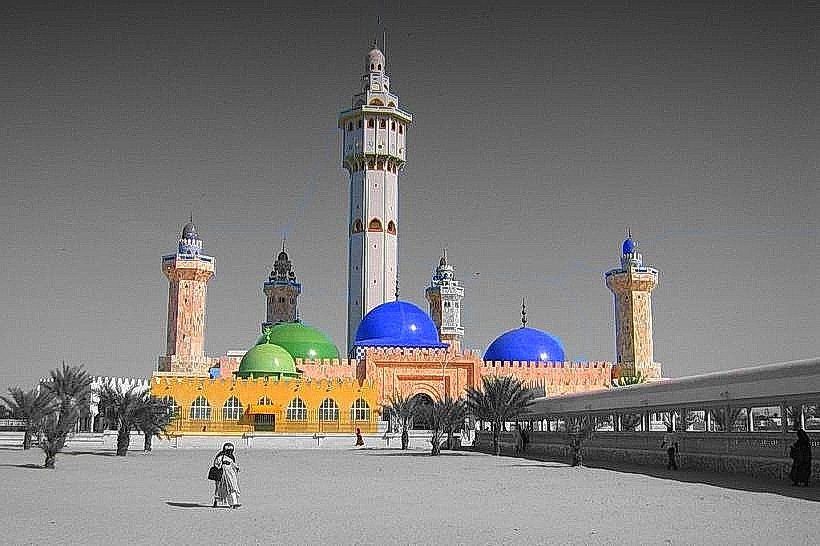
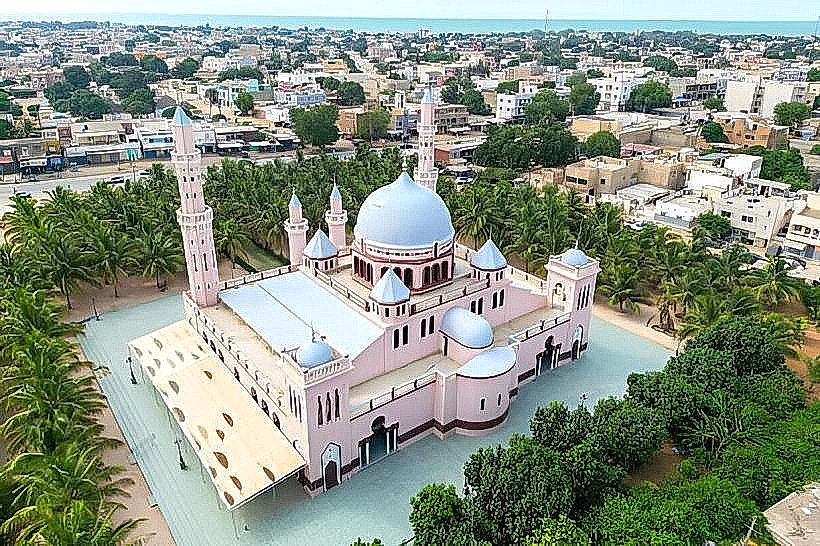
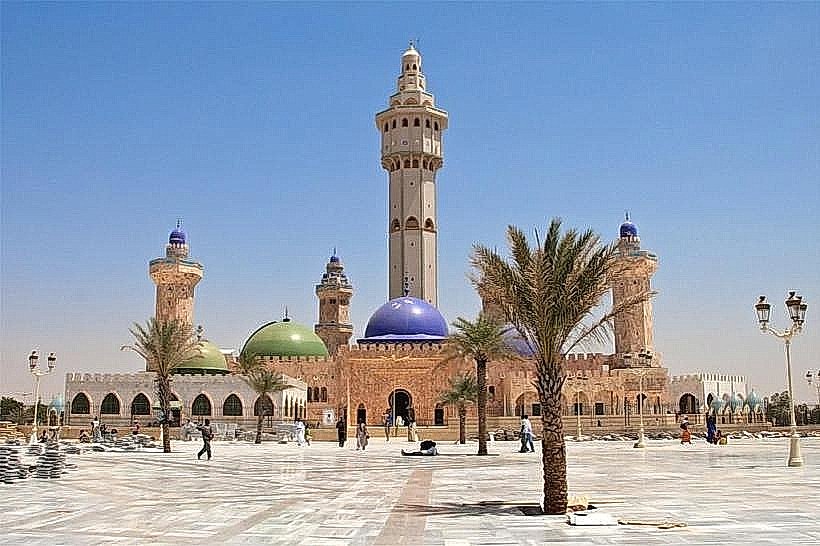
The mosque is a massive structure featuring five minarets, the tallest of which-known as Lamp Fall-reaches a height of 87 meters. The exterior is clad in white marble and pink granite, with the central dome and smaller secondary domes finished in a bright green. The architecture is a blend of traditional Islamic design and modern Sahelian influences, characterized by intricate arabesque carvings, expansive marble courtyards, and massive brass doors. The interior prayer halls are supported by hundreds of columns and decorated with elaborate mosaics and chandeliers.
Location & Access Logistics
The mosque is located in the center of the city of Touba, approximately 190km east of Dakar. It is accessed via the A1 toll road (Autoroute de l'Avenir) or the N3 highway. Visitors usually arrive via "sept-places" (inter-city taxis) or private coaches from Dakar or Thiès. The area surrounding the mosque is a pedestrian-only zone during major religious events, with designated parking areas situated on the city's periphery. No airport serves the city directly; travelers use the Diass International Airport followed by a three-hour drive.
Historical & Ecological Origin
Construction began in 1927, shortly after the death of Sheikh Amadou Bamba, and was completed in 1963. The project was funded entirely by the voluntary contributions of the Mouride disciples. The mosque is built on the semi-arid Ferlo plateau, a region characterized by sandy ferruginous soils and a deep water table. The site was chosen by Bamba himself, who claimed it was a spot of divine revelation amidst the Baobab-studded savanna.
Key Highlights & Activities
Specific activities include visiting the Mausoleum of Sheikh Amadou Bamba and those of his sons (the Caliphs). Devotees engage in "Dhikr" (chanting) and the reading of Bamba’s poems (Khassaids) within the courtyards. Non-Muslim visitors are generally permitted to view the exterior and courtyards but must strictly adhere to dress codes (modest clothing, headscarves for women) and remove shoes before entering the marble precincts.
Infrastructure & Amenities
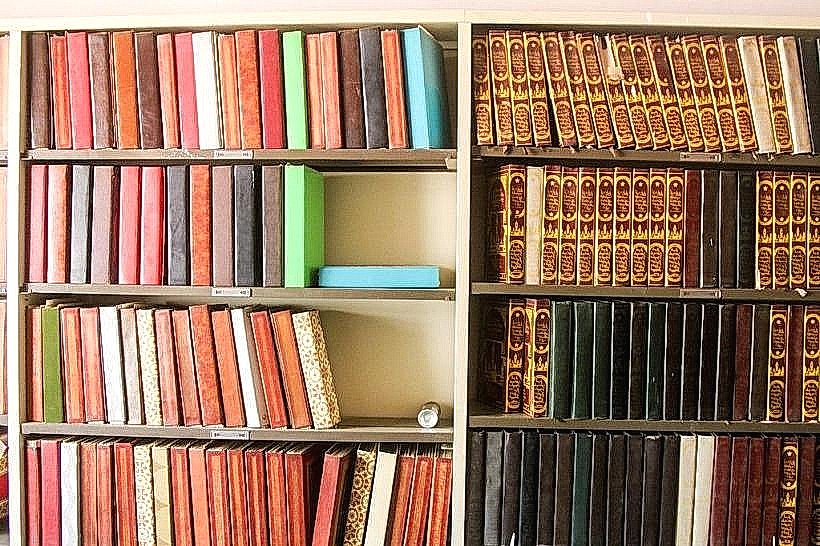
The mosque complex includes a vast library (the Khadimou Rassoul Library), several madrasas, and administrative offices. The surrounding city operates under a unique autonomous status where alcohol and tobacco are strictly prohibited. Public restrooms and ablution fountains are located at the perimeter of the courtyard. 4G and 5G cellular signals are robust, and the area is served by a dedicated municipal water and power grid independent of the national system during peak times.
Best Time to Visit
The mosque is most significant during the Grand Magal of Touba, an annual pilgrimage attracting millions of people, though this period involves extreme congestion. For logistical ease, visit during the dry season (November to May) on a weekday morning. The best lighting for photography of the minarets and marble occurs at dawn or during the late afternoon "golden hour" to minimize the glare from the white stone.
Facts & Legends
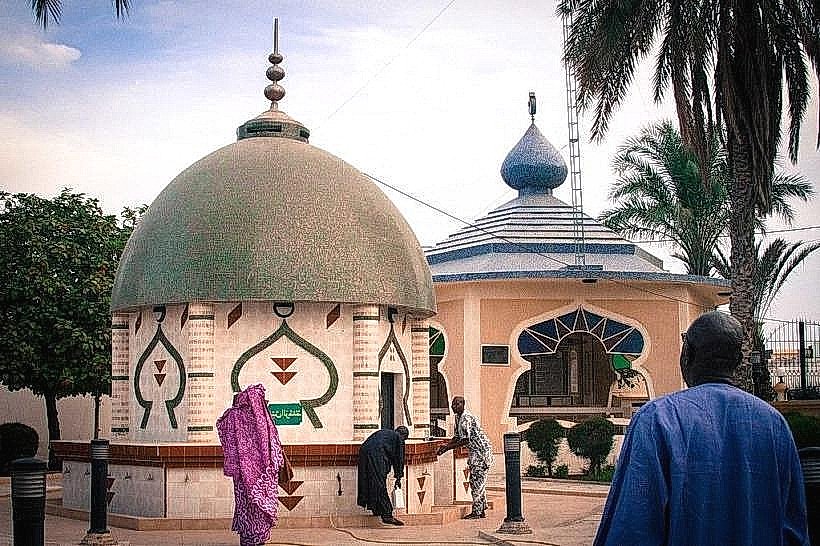
A central belief is that the location of the mosque was revealed to Amadou Bamba by an angel, marking it as a "Gate of Heaven." A verified historical oddity is that despite its size, the mosque was built without any state funding or foreign loans. A specific tip for visitors is to look for the "Well of Mercy" (Aïnou Rahmati), a spring discovered by Bamba that is believed by followers to have healing properties.
Nearby Landmarks
Khadimou Rassoul Library – 0.2km North
Mausoleum of Sheikh Ibrahima Fall – 1.5km East
Touba University (Complex) – 2.0km West
Residence of the General Caliph – 0.4km South
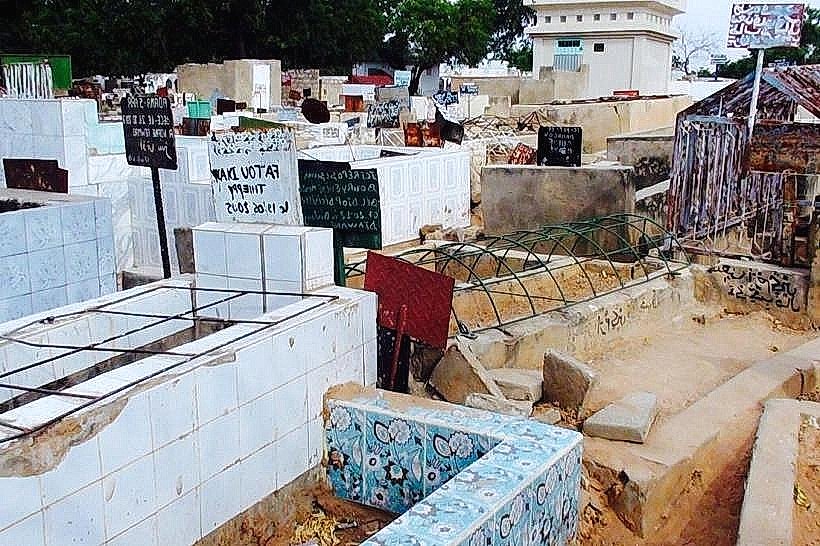
The Holy Cemetery of Touba – 1.0km East