Landmark: Touba Minarets
City: Touba
Country: Senegal
Continent: Africa
Touba Minarets, Touba, Senegal, Africa
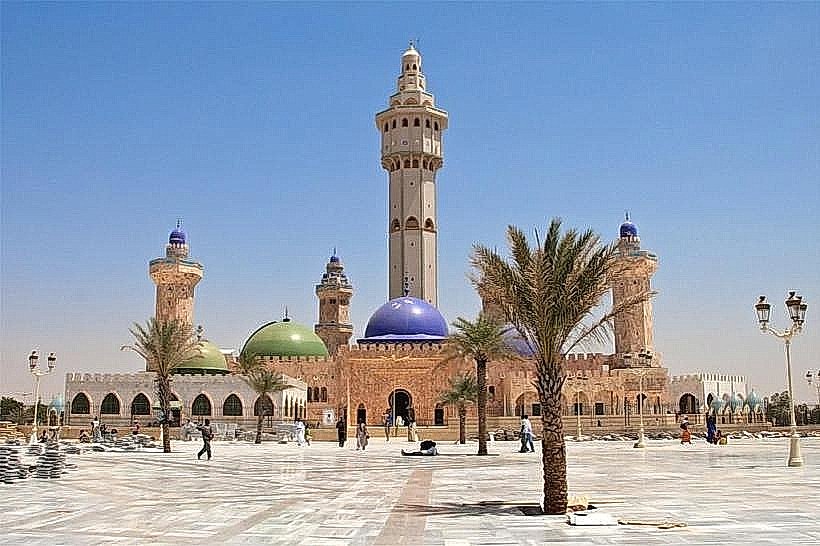
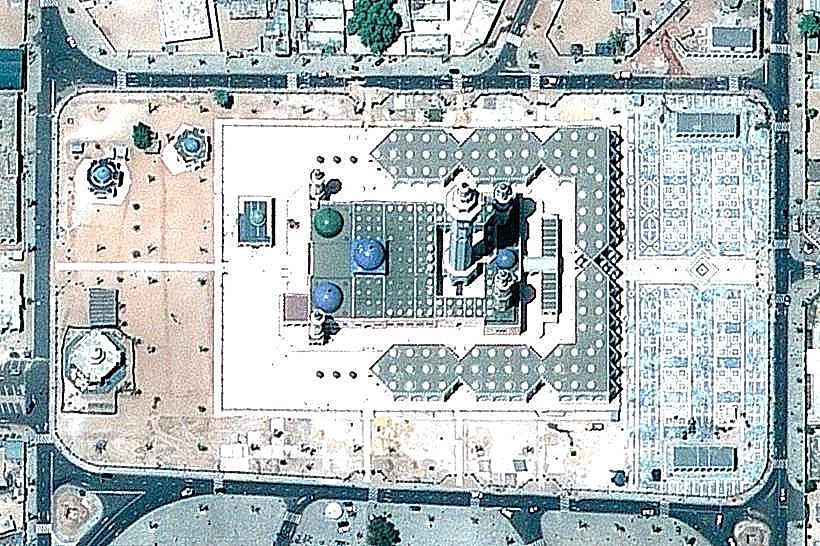
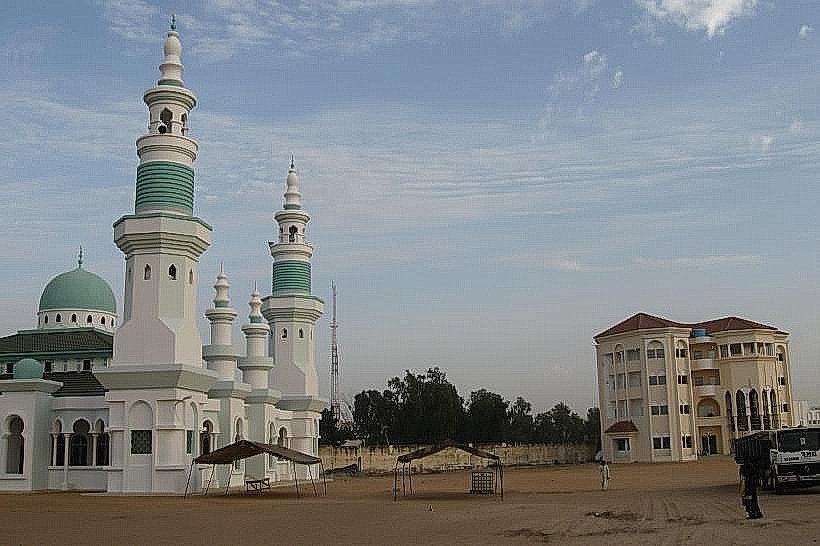
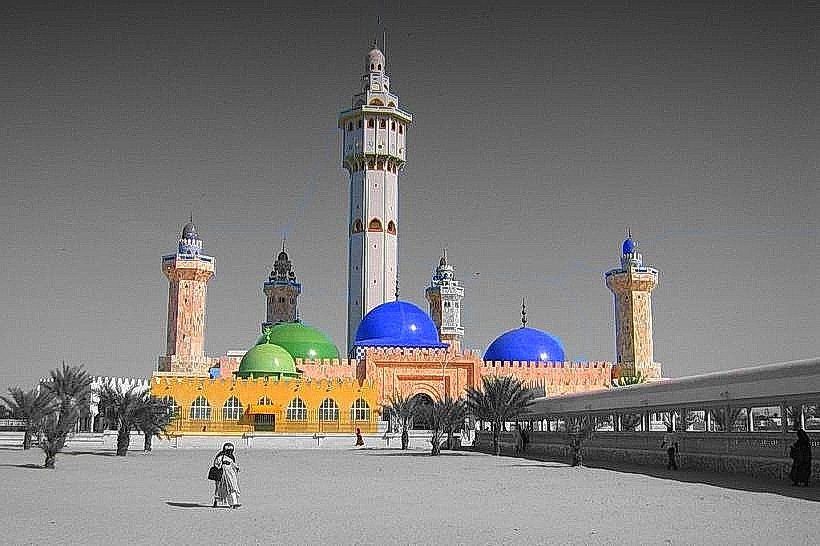
The minarets of the Great Mosque of Touba are the most recognizable features of the city’s skyline, serving as both architectural landmarks and symbolic pillars of the Mouride faith. The mosque currently features seven minarets, each with specific historical and spiritual significance.
The Central Minaret: Lamp Fall
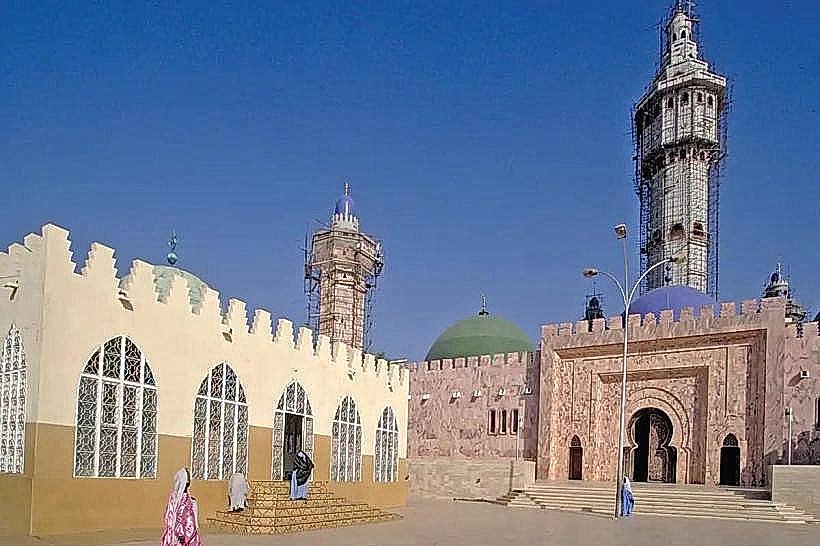
The most prominent is the central minaret, known as Lamp Fall, named after Cheikh Ibrahima Fall, the most devoted disciple of Sheikh Amadou Bamba.
Height: It stands at 87 meters, making it one of the tallest structures in Senegal.
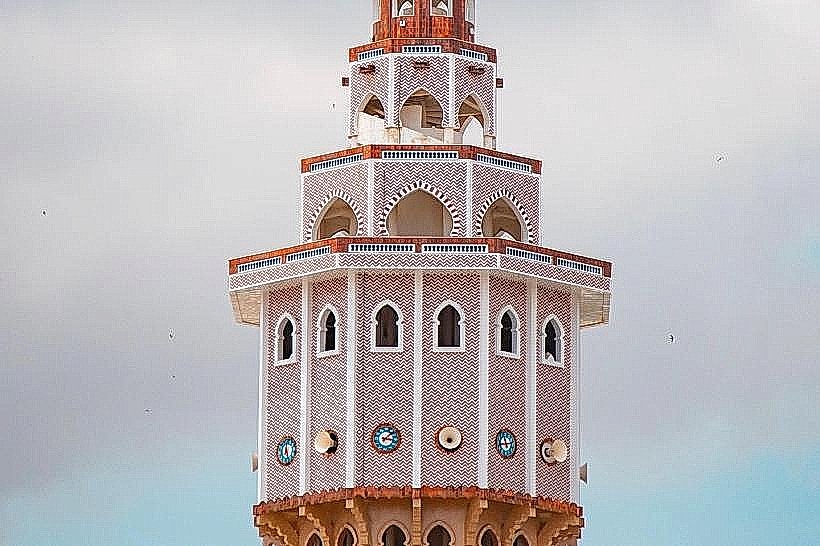
Visuals: It is a massive, square-based tower that transitions into an octagonal upper section, topped with a green dome and a golden crescent.
Function: It serves as a visual "lighthouse" (Lamp) for pilgrims approaching the city from the surrounding savanna. It is illuminated at night, visible from tens of kilometers away.
The Secondary Minarets
Surrounding the central structure are six additional minarets that define the mosque's perimeter:
The Four Corner Minarets: These original towers stand at approximately 66 meters each. They are finished in white marble and pink granite, matching the main facade of the mosque.
The Two New Minarets: Added during more recent expansions, these stand at 75 meters. They were constructed to maintain the symmetrical balance of the complex as the prayer halls were enlarged to accommodate millions of worshippers.
Location & Access Logistics
The minarets are located at the heart of the Great Mosque of Touba, at the center of the city’s radial grid.
Access: Visitors can view the minarets from the massive marble courtyards. Access to the interior stairs of the minarets is generally restricted to the Muezzins (those who call to prayer) and authorized maintenance staff.
Photography: The best vantage point for capturing all seven minarets is from the Rocade (ring road) or the wide avenues leading to the mosque, such as the Avenue Cheikh Ahmadou Bamba.
Historical & Structural Origin
The first four minarets were completed in 1963 along with the main mosque. Lamp Fall has undergone several renovations to reinforce its structure against the Sahelian winds and to update its decorative marble cladding. The towers are built on deep concrete foundations designed to stabilize the massive weight against the sandy, ferruginous soils of the Diourbel plateau.
Infrastructure & Features
Materials: Clad in high-quality Carrara marble and local granite to resist the intense UV radiation and heat.
Audio: Each minaret is equipped with high-powered speaker arrays to broadcast the Adhan (call to prayer) and the recitation of Khassaids across the city's 30km radius.
Lighting: Modern LED floodlighting systems were installed to highlight the green domes and architectural relief during religious festivals like the Grand Magal.
Best Time to View
The minarets are best viewed at dawn (Fajr) or sunset (Maghrib). During these times, the white marble reflects the changing colors of the sky, and the green domes are at their most vibrant. Mid-morning (09:00) provides the clearest light for architectural photography before the afternoon dust haze sets in.
Facts & Legends
Local tradition holds that the height of Lamp Fall is a physical representation of the "elevation of the soul" achieved through work and devotion. A specific tip for visitors: look for the distinct architectural transition between the older 1960s masonry on the lower levels and the more intricate modern marble work on the upper sections, which illustrates the continued evolution of the mosque over the decades.
Nearby Landmarks
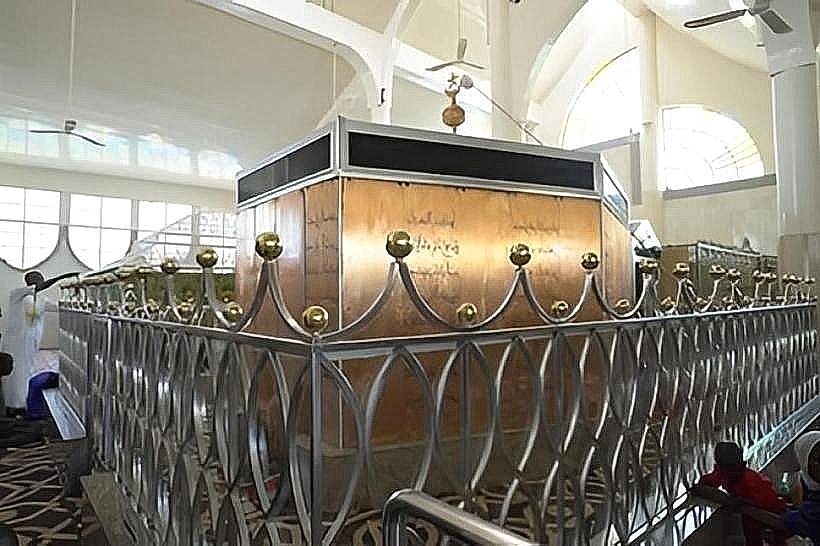
Mausoleum of Sheikh Amadou Bamba – 0.1km (Inside the complex)
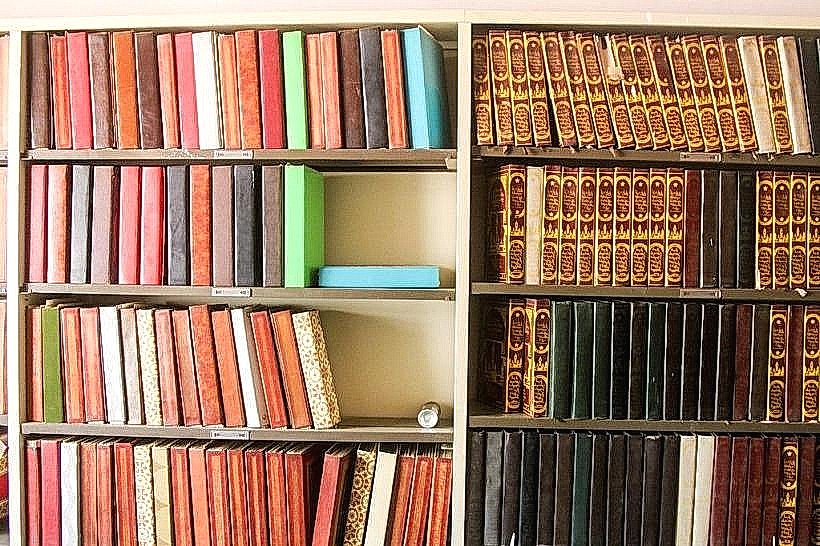
Khadimou Rassoul Library – 0.3km North
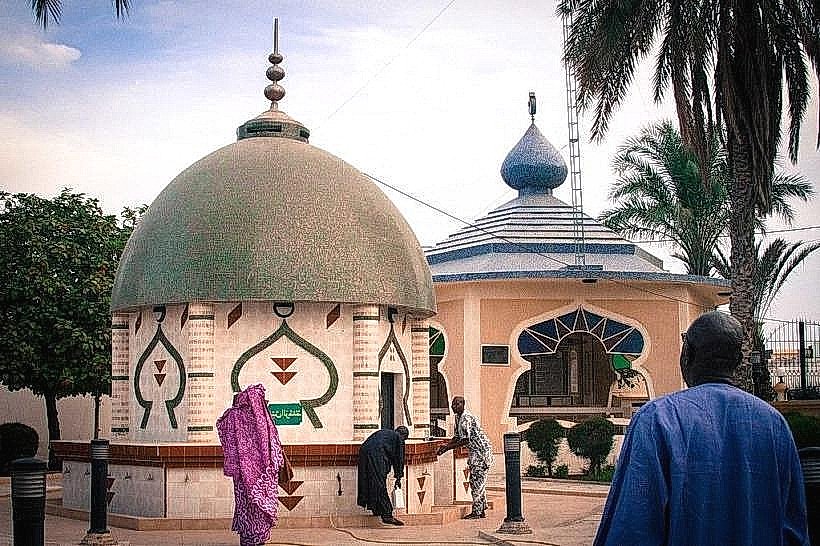
Well of Mercy (Aïnou Rahmati) – 0.4km West
Place Baya (Touba) – 0.2km East
Residence of the General Caliph – 0.5km South