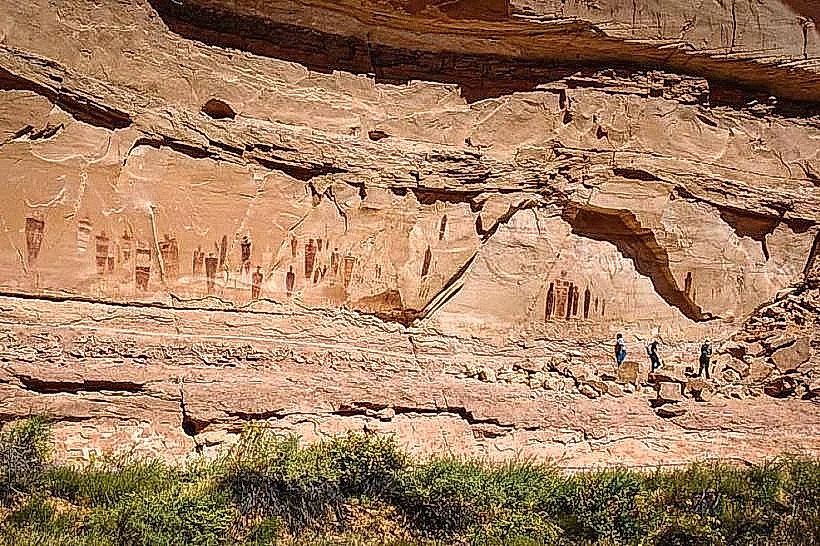
Landmark: Horseshoe Canyon (Canyonlands Unit)
City: Green River
Country: USA Utah
Continent: North America
Horseshoe Canyon (Canyonlands Unit), Green River, USA Utah, North America
Horseshoe Canyon is a geological formation located within the Canyonlands National Park, near Green River, Utah.
This canyon is characterized by its sheer sandstone walls and a significant concentration of ancient rock art.
Visual Characteristics
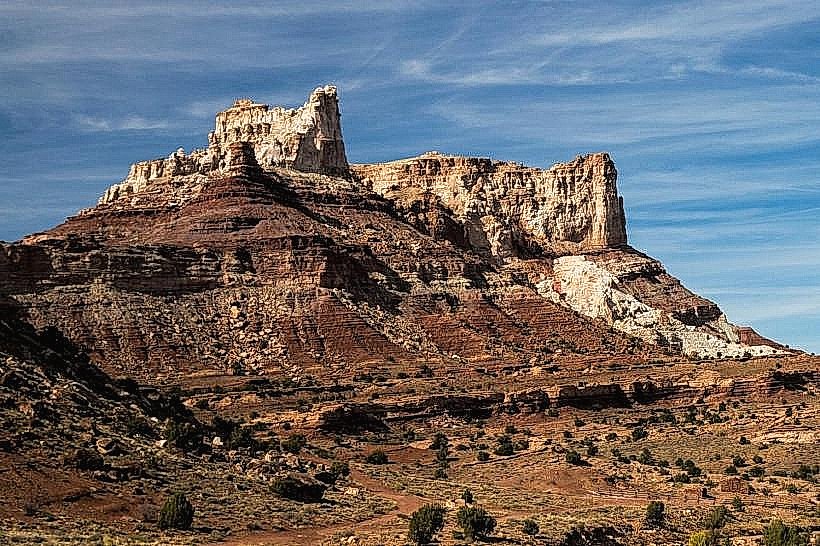
The canyon walls are composed of Entrada Sandstone, exhibiting a light tan to reddish-brown coloration. The canyon floor is primarily composed of sand and gravel. Vegetation is sparse, consisting mainly of desert shrubs and grasses. The canyon's shape is a U-shaped meander, approximately 100-200 meters wide at its base.
Location & Access Logistics
Horseshoe Canyon is accessed via a 31-mile (50 km) unpaved road originating from the Green River-Hanksville Highway (UT-24). The road is designated as a primitive road and requires a high-clearance vehicle, preferably 4WD, especially after precipitation. The trailhead is located at the end of this road. There is a designated parking area at the trailhead. No public transport services this location.
Historical & Ecological Origin
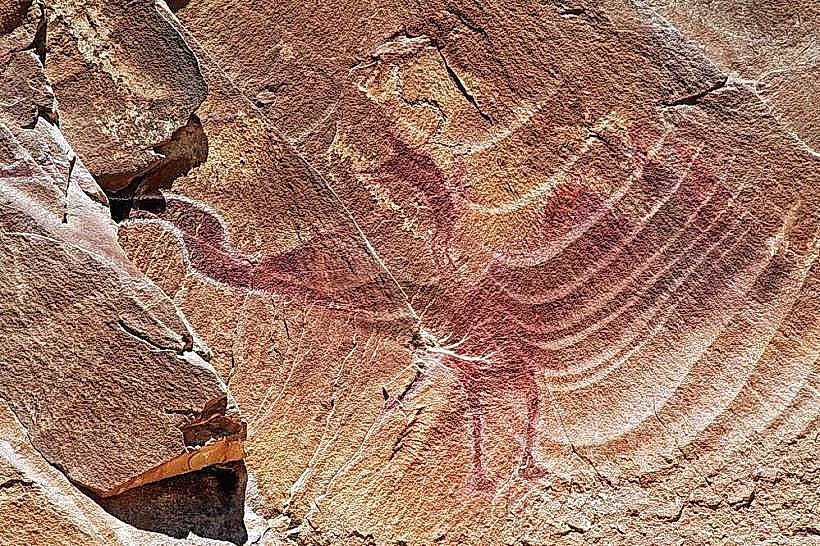
Horseshoe Canyon is a result of differential erosion, where softer rock layers were carved away by water and wind over millions of years, leaving behind the harder sandstone formations. The canyon contains significant pictographs and petroglyphs created by the Barrier Canyon culture, dating back approximately 2,000 to 4,000 years.
Key Highlights & Activities
The primary activity is viewing the Barrier Canyon style rock art panels, including the "Great Gallery." Hiking is permitted within the canyon. Visitors should be prepared for self-sufficiency as there are no services within the canyon.
Infrastructure & Amenities
There are no facilities within Horseshoe Canyon itself. A primitive vault toilet is located at the trailhead parking area. Cell phone signal is generally absent. No food vendors are present.
Best Time to Visit
The best time for visiting is during the spring (April-May) and fall (September-October) to avoid extreme summer temperatures. Mid-morning or late afternoon provides optimal lighting for viewing the rock art. Hiking during midday in summer is not recommended due to heat.
Facts & Legends
The Barrier Canyon style of rock art is unique for its anthropomorphic figures, often depicted with large heads and elongated bodies, lacking discernible facial features. One panel, the "Great Gallery," features over 100 figures, some over 2 meters tall.
Nearby Landmarks
- Green River State Park (15km Northeast)
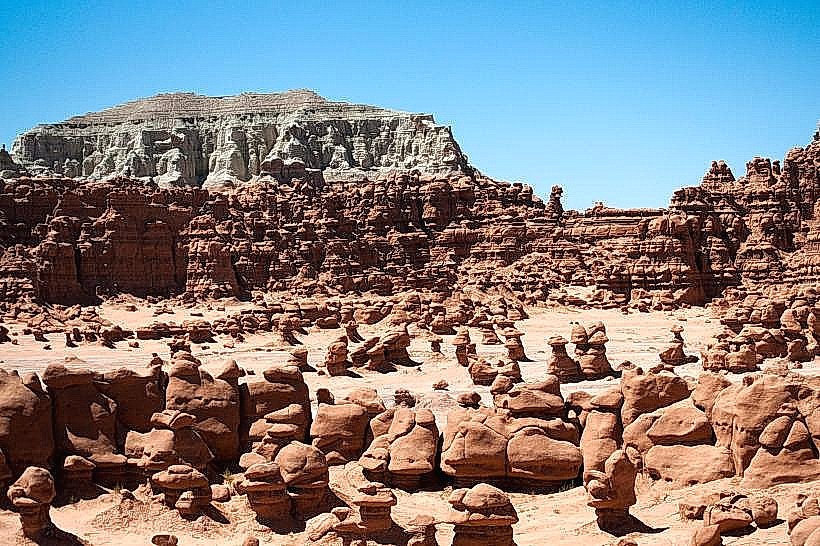
- Goblin Valley State Park (40km Southwest)
- San Rafael Swell (50km West)
- Arches National Park (60km East)