Landmark: Kfarhim Grotto
City: Beiteddine
Country: Lebanon
Continent: Asia
Kfarhim Grotto, Beiteddine, Lebanon, Asia
The Kfarhim Grotto is a natural subterranean cave system located beneath the village of Kfarhim in the Chouf District of Mount Lebanon Governorate, Lebanon. It is a prominent geological landmark in the region, featuring intricate speleothems developed over thousands of years, and functions as a managed eco-tourism site.
Visual Characteristics
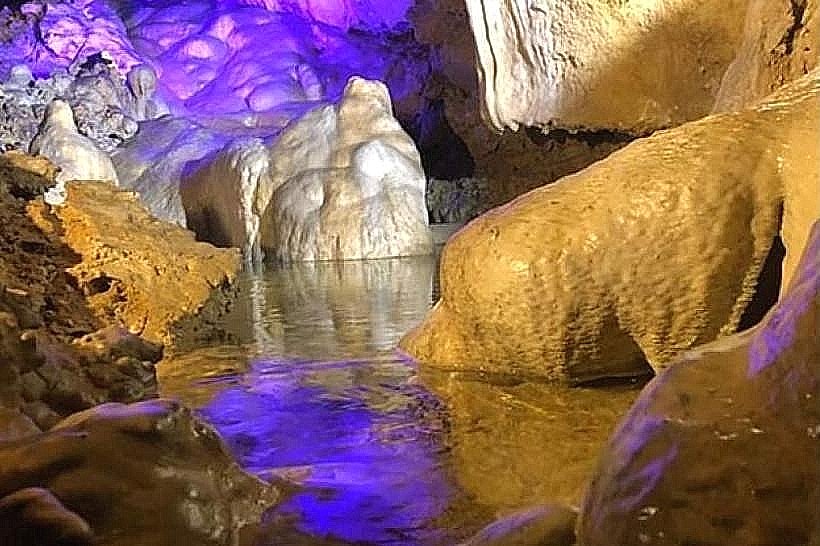
The grotto is composed of multiple layers of limestone chambers characterized by dense concentrations of stalactites, stalagmites, and flowstone formations. The interior displays varied mineral colorations, ranging from translucent white and cream to deep ochre due to iron oxide deposits in the groundwater. The cavern features steep vertical drops, narrow limestone corridors, and a subterranean water stream. Ambient humidity inside the cave remains consistently close to 100 percent, with a stable year-round interior temperature of approximately 14 to 16 degrees Celsius.
Location & Access Logistics
The cave system is located directly beneath the main arterial road of Kfarhim village, situated roughly 30 kilometers southeast of Beirut and 8 kilometers west of Deir el Qamar. Access from Beirut is via the southern coastal highway to Damour, exiting toward the Chouf mountain road via Kfar Matta. A dedicated asphalt parking lot is located directly at the grotto’s entrance pavilion. Public transit options are restricted to regional shared minivans operating along the Damour-Chouf route, requiring a drop-off at the Kfarhim main intersection.
Historical & Ecological Origin
The grotto is a solutional cave formed through karstification, where slightly acidic groundwater gradually dissolved the thick layers of Cretaceous-era limestone over millions of years. It was accidentally discovered in 1974 during residential excavation works for the construction of a building foundation. Following its discovery, the cave was systematically surveyed, fitted with pedestrian pathways, and opened to the public as a natural monument.
Key Highlights & Activities
Visitors can walk along a 200-meter paved and illuminated pathway that snakes through the main upper and lower chambers of the cave system. Guided tours are provided by the site operators, explaining the ongoing growth of the stalactites and the path of the underwater river. The entrance complex features an exhibition of small, locally carved stalagmite sculptures and regional mineral specimens available for observation.
Infrastructure & Amenities
The visitor pavilion at the cave mouth contains public restroom facilities and a small ticketing office. The interior pathways are fully illuminated with artificial electric lighting and fitted with metal handrails, though the wet surfaces require slip-resistant footwear. Cellular signal (4G) is available at the surface pavilion but drops completely upon entering the lower limestone chambers. Shaded seating areas are provided under the entrance canopy, and several small snack kiosks operate on-site.
Best Time to Visit
Because the cave environment is completely insulated from solar light, the time of day does not impact interior visibility or photography, though morning visits encounter fewer tour groups. The optimal months for visiting are from May to October when mountain roads are completely clear of winter fog. During the peak snowmelt period in early spring, the subterranean water levels rise, increasing the flow of the internal streams.
Facts & Legends
A verified geological feature of the Kfarhim Grotto is its overlapping multi-level structure, which allows visitors to stand in a lower chamber and look directly upward through natural limestone apertures to see the underside of the upper cave floor. Local guides frequently point out a massive, continuous stalagnate (a column formed when a stalactite and stalagmite meet) that took an estimated tens of thousands of years to fuse into a single structural pillar.
Nearby Landmarks
Baakline Waterfalls: 4.2km Southeast
Deir el Qamar Synagogue: 4.5km East
Fakhreddine Mosque: 4.6km East
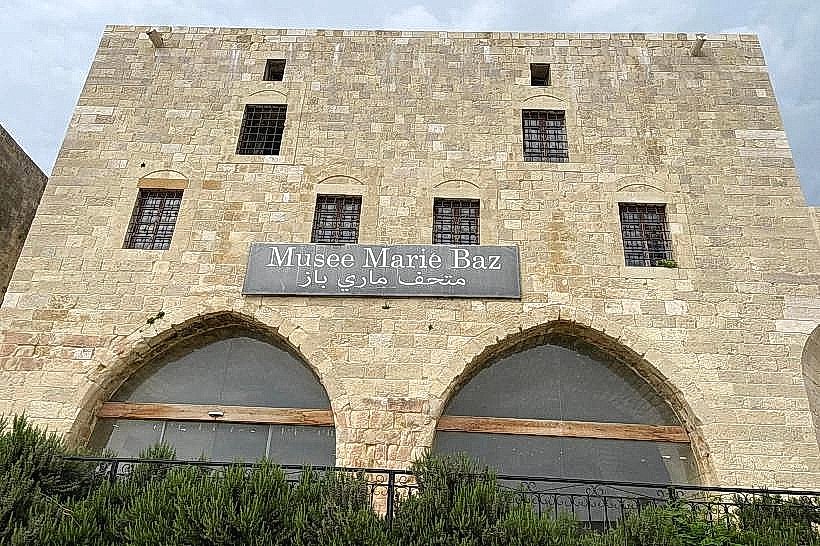
Marie Baz Wax Museum: 4.6km East