Landmark: Mir Amin Palace
City: Beiteddine
Country: Lebanon
Continent: Asia
Mir Amin Palace, Beiteddine, Lebanon, Asia
The Mir Amin Palace is a nineteenth-century aristocratic residence situated on a prominent mountain peak in the village of Beiteddine within the Chouf District of Mount Lebanon. It stands as a significant monument of late Emirate architecture, originally built as a private residence for the ruling elite and currently operating as a historical boutique hotel.
Visual Characteristics
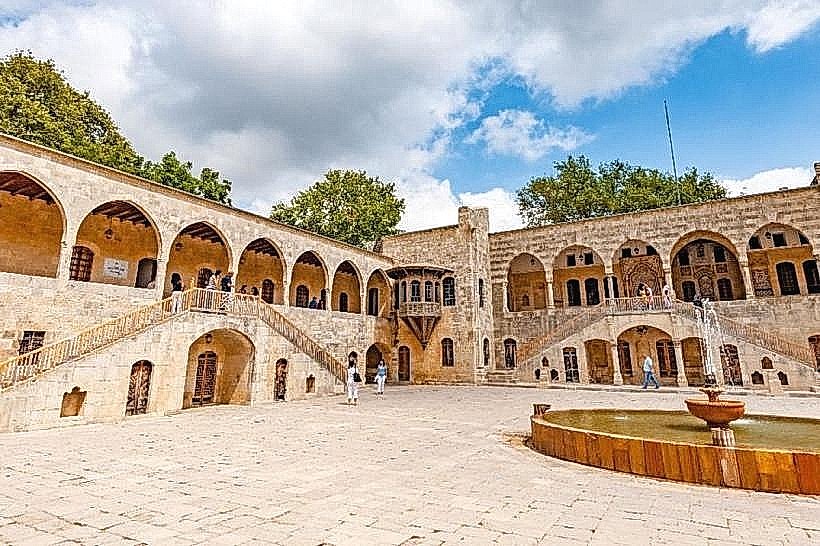
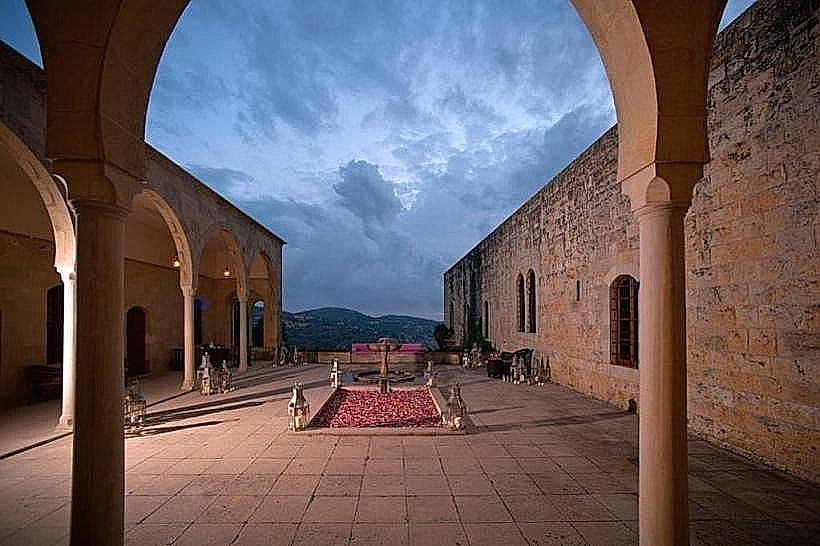
The palace features a classic Levantine-Ottoman layout centered around a large open-air courtyard paved with intricate geometric stone tiling. The architecture uses local cream and ochre limestone blocks, distinguished by elegant double-arched windows, pointed arcades, and stone-carved balconies. The interior combines traditional elements, such as high ceilings, decorative wooden beams, and marble water basins, with modern luxury hotel fittings. The structure is built into the high topography of the ridge, offering layered terraces and outdoor swimming pools that provide unobstructed views across the steep mountain valleys and toward the neighboring Beiteddine Palace.
Location & Access Logistics
The property is positioned at the highest point of Beiteddine, at an elevation of approximately 950 meters above sea level, 46 kilometers southeast of Beirut and 1.2 kilometers southeast of the main Beiteddine Palace. Access from Beirut follows the South Coastal Highway southbound to the Damour junction, turning east onto the winding, two-lane asphalt mountain highway that ascends through Deir el-Qamar and Beiteddine. A private, secure parking lot is available on-site for guests and visitors. Public transportation minivans from Beirut's Cola intersection drop passengers near the lower Beiteddine crossroads, requiring a short taxi ride or a steep uphill walk to reach the palace gates.
Historical & Ecological Origin
The palace was constructed in the early 19th century by Emir Bashir Shihab II for his youngest son, Prince Amin (Mir Amin), who served as a high-ranking administrator in the Mount Lebanon Emirate. The palace was engineered as part of a broader consolidation of Shihab family power on the Beiteddine mountain ridge, utilizing local limestone quarried directly from the Chouf mountains. Following the exile of the Shihab dynasty in 1840, the structure underwent various cycles of abandonment and municipal use before being meticulously restored and converted into a luxury heritage hotel in the late 20th century.
Key Highlights & Activities
Exploring the main inner courtyard to view the historical stone fountains and symmetrical Ottoman arcades.
Dining on the outdoor panoramic terraces that overlook the village of Beiteddine and the deep mountain gorges of the Chouf.
Examining the structural masonry and classical wood carvings preserved within the historic suites and reception rooms.
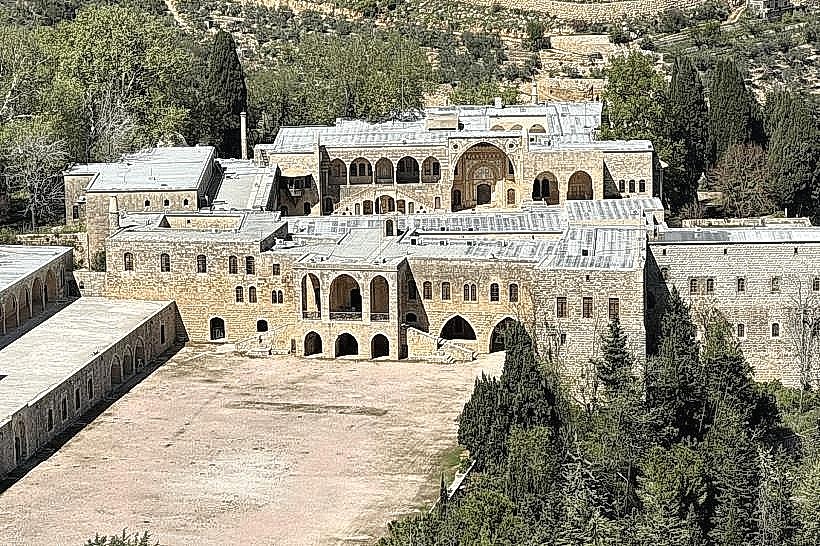
Photographing the longitudinal views of the Beiteddine Palace complex situated across the valley basin.
Infrastructure & Amenities
As an operational luxury boutique hotel, the palace features high-tier infrastructure. Amenities include a 24-hour reception desk, fine-dining restaurants, outdoor swimming pools, event spaces, and public restrooms. The thick historic masonry provides natural thermal insulation, while modern climate control systems manage mountain weather variances. Cellular network coverage is fully functional, with stable 4G and 5G signals maintained across the ridge by carriers Alfa and Touch. High-speed Wi-Fi is available throughout the property.
Best Time to Visit
The optimal months to visit are from April through June and September through November to experience temperate mountain climates and clear visibility. The hotel and its restaurants operate year-round, though winter months can bring heavy fog and occasional snow blockages. The best time of day for photography is late afternoon during the golden hour, when the setting sun hits the western limestone facade and illuminates the lower valleys in high-contrast orange and gold tones.
Facts & Legends
A verified historical detail is that the palace was strategically constructed at a higher altitude than the main Beiteddine Palace to give Prince Amin a defensive tactical advantage and a direct visual lookout over his father's administrative headquarters, allowing for rapid optical signaling between the two fortresses. Local mountain folklore long claimed that a secret underground passage was carved through the solid bedrock connecting the basement of Mir Amin Palace directly to the private quarters of the main palace, allowing the prince to visit his father undetected during times of political instability.
Nearby Landmarks
Beiteddine Palace: 1.2km Northwest
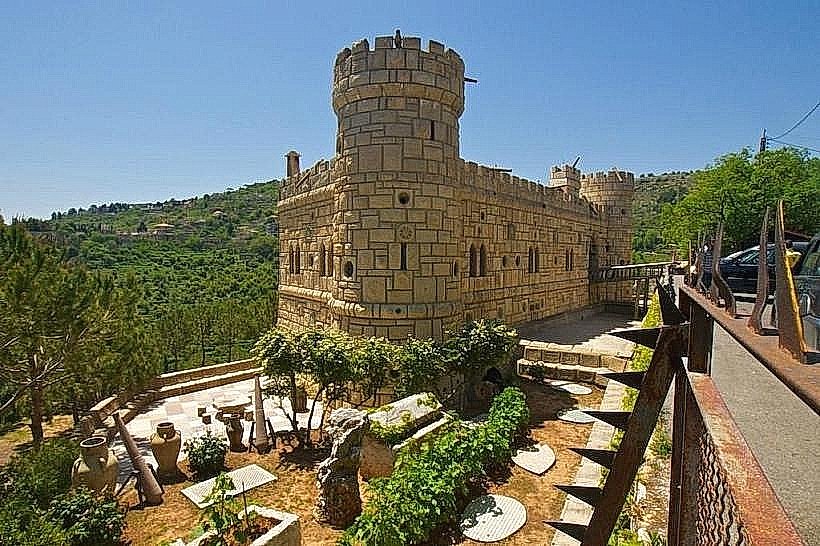
Moussa Castle: 2.7km Northwest
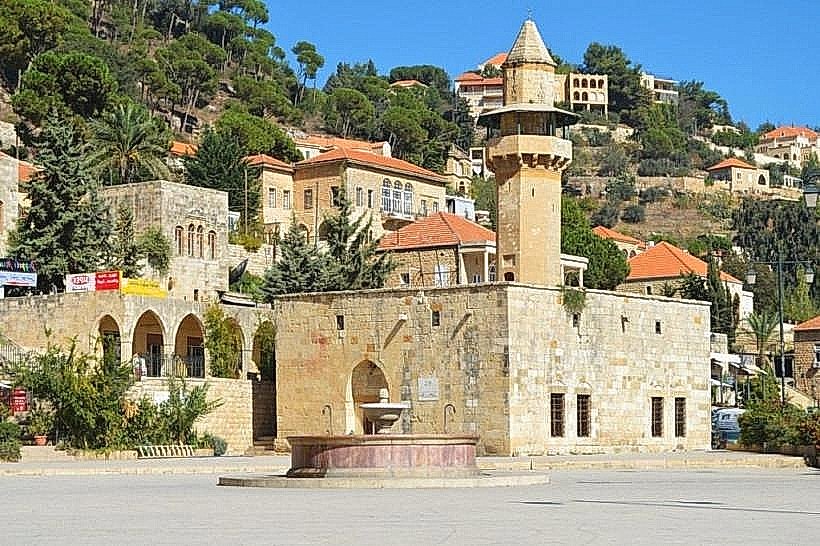
Deir el-Qamar Historic Town: 6.0km Northwest
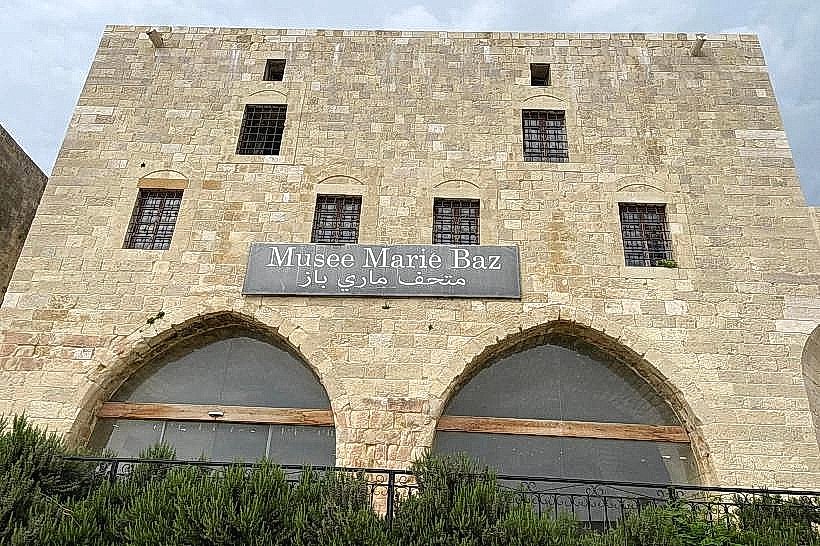
Marie Baz Wax Museum: 6.1km Northwest
Barouk Cedars Reserve: 14.0km Northeast