Landmark: Kwa Magogo Number 43
City: Manzini
Country: Eswatini
Continent: Africa
Kwa Magogo Number 43, Manzini, Eswatini, Africa
Kwa Magogo Number 43 is a prominent historical safe house and liberation heritage site located in the Trelawney Park suburb of Manzini, Eswatini. The property functioned as a crucial covert logistical base, safe haven, and operational intelligence repository for the African National Congress (ANC) and Umkhonto we Sizwe (MK) cadres infiltrating South Africa during the anti-apartheid struggle.
Visual Characteristics
The landmark comprises a modest, unaltered mid-20th-century residential bungalow built with standard masonry bricks and finished with cream-colored plastered exterior walls. The roof is constructed from corrugated iron sheets, and the structural trim features light green window frames, doorframes, and fascia boards. The interior layout retains its original four-bedroom configuration, including a central kitchen that historically served as the primary gathering space for political strategy and shelter. A large, protected indigenous mango tree stands prominently at the southeast corner of the residential plot.
Location & Access Logistics
The site is located at House Number 43 in the Trelawney Park residential neighborhood, approximately 1.5 kilometers south of the central business district of Manzini. Navigating to the property involves traveling south from the city center via the MR3 highway, turning left onto the local distributor road designated as G929, and proceeding east for approximately 500 meters. Public transport users can board a local residential shuttle or kombi from the central Manzini Bus Rank heading toward Trelawney Park and disembark near the intersection of the G929 corridor. Parking is limited to the residential driveway and adjacent street shoulders.
Historical & Ecological Origin
The property was established in 1965 when South African exile Solomon Buthongo Masilela arrived in the region and cleared the bushland, initially constructing a temporary corrugated iron shelter. The permanent brick bungalow was constructed through family labor and completed in 1972. The house was designated as "Kwa Magogo" (meaning "Place of the Grandmother") in honor of the family matriarch, Rebecca Makgomo Masilela, who managed the property. From the early 1970s until the end of apartheid, the home operated as an underground transit station for high-profile freedom fighters fleeing South Africa after the 1976 Soweto uprising.
Key Highlights & Activities
Educational tours of the intact residential quarters provide insight into the living conditions, concealment methods, and survival strategies of political exiles. Visitors can examine the historically preserved kitchen, which served as an open-air courtroom, sanctuary, and meeting room for prominent liberation figures. Documenting and studying the defensive modifications, such as the security burglar bars installed later in its operational history, forms a core pedagogical activity. The exterior grounds feature the landmark mango tree, which was used by operatives to evade police ambushes and counter-surveillance raids.
Infrastructure & Amenities
The historic house operates as an active legacy site and living museum structure maintained by the Number 43 Trelawney Park Foundation. It is equipped with standard indoor bathroom facilities and electricity. The exterior yard and the preserved mango tree canopy provide substantial natural shade across the eastern perimeter of the plot. Cellular network signal strength is exceptional, with stable 4G and 5G network coverage available across the property. No commercial food vendors or public retail outlets operate inside the residential boundaries, but comprehensive commercial services are available 1.5 kilometers away in the city center.
Best Time to Visit
The property is accessible for scheduled historical viewing between 09:00 and 17:00 from Monday through Sunday. The optimal timeframe for photography is during the early morning between 08:00 and 10:00, when direct sunlight brightly illuminates the front cream facade without causing deep shadows from the southeast mango tree canopy. The dry winter months from May to August represent the most practical period for scheduling outdoor educational visits, eliminating the high humidity and heavy convective afternoon downpours typical of the Swaziland Middleveld summer.
Facts & Legends
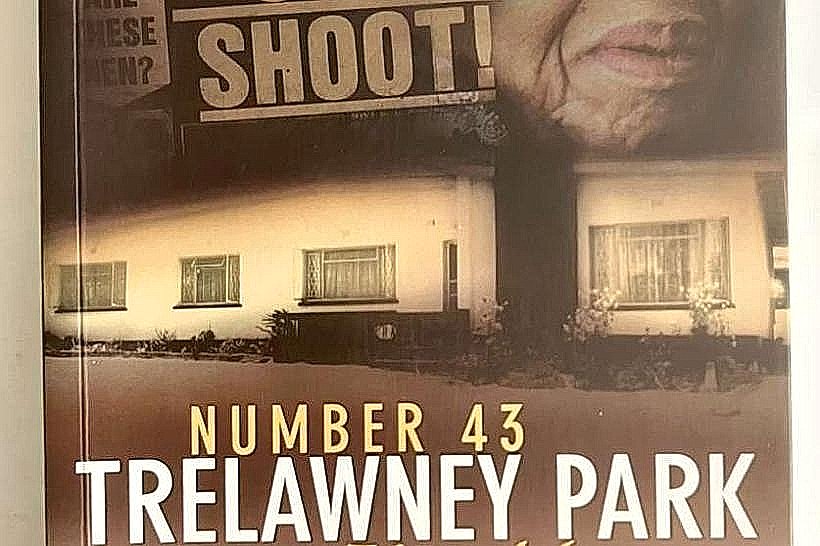
A verified historical oddity of the property involves the tactical use of the southeast mango tree by both sides of the conflict: while ANC operatives climbed into its dense upper foliage to hide from security sweeps, local colonial and South African undercover police forces frequently perched in the exact same branches overnight to execute armed ambushes on unsuspecting arriving couriers. The house achieved significant literary and theatrical prominence following the 2007 publication of the historical memoir Number 43 Trelawney Park, KwaMagogo, written by the youngest son of the family, which detailed how the house successfully avoided permanent state closure despite continuous surveillance, weapon raids, and geopolitical cross-border targeted assassinations.
Nearby Landmarks
Manzini Market: 1.5km North
Bhunu Mall: 1.6km Northwest
Somhlolo Park: 1.7km Northwest
Manzini National Library: 1.7km Northwest
King Sobhuza I Statue: 1.7km Northwest