Landmark: Manzini Market
City: Manzini
Country: Eswatini
Continent: Africa
Manzini Market, Manzini, Eswatini, Africa
The Manzini Market is a central commercial and cultural trading hub located in the downtown core of Manzini, Eswatini. Operating as the primary municipal market for the city, it serves as a critical distribution point for local agricultural produce, traditional Swazi crafts, and indigenous medicinal items.
Visual Characteristics
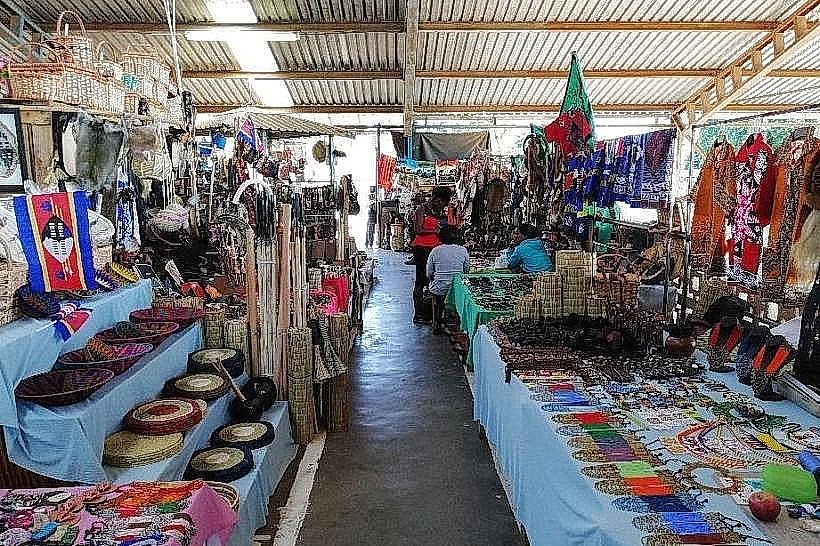
The market consists of a dense network of covered concrete stalls, open-air trading blocks, and corrugated iron roofing structures that span a large municipal plot. The layout is highly compartmentalized, featuring a dedicated handicraft section filled with vibrant woven sisal baskets, carved soapstone and wooden figures, and bright Swazi textiles. Another distinct section contains traditional medicine stalls filled with rows of dried indigenous barks, roots, herbs, and animal components. The outer perimeters are characterized by tightly packed tables displaying heaps of fresh, locally grown fruits and vegetables organized by variety and size.
Location & Access Logistics
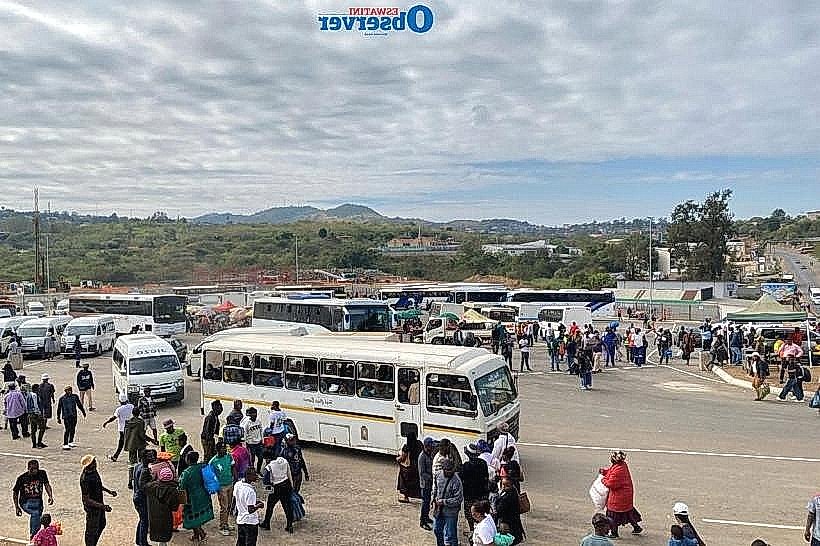
The market is positioned at the intersection of Mancishane Street and Mhlakuvane Street in central Manzini, approximately 0.5 kilometers east of the absolute city center. It sits within immediate walking distance of the central Manzini Bus Rank, which handles the majority of the region's public kombis (minibuses) and long-distance buses. Drivers can access the market via the MR3 highway, turning onto central urban roads; however, formal parking at the immediate site is highly restricted, consisting mostly of tight parallel street parking and busy loading zones.
Historical & Ecological Origin
The Manzini Market was officially established in its formal capacity in 1983 by the Municipal Council of Manzini to centralize trade in what was rapidly developing as Eswatini's primary commercial hub. Prior to this, the site functioned as an informal trading ground where rural farmers converged to exchange goods. The location is deeply intertwined with the recovery of the city, which was originally known as Bremersdorp and served as the national colonial capital until it was burned down during the Anglo-Boer War in 1902.
Key Highlights & Activities
Sisal basket weaving and wood carving demonstrations are performed live by artisans on site, particularly within the handicraft sections. Purchasing authentic Swazi traditional attire, including the mahiya (printed fabrics worn wrapped around the body), is a primary logistical activity. Exploration of the traditional healing section offers a direct look into the inventory of local sangomas (traditional spiritual healers) and inyangas (herbalists). On Thursdays, the market capacity expands dramatically as the formal Thursday Market event brings hundreds of rural craftspeople to the nearby satellite transit zones to sell directly to wholesale and retail buyers.
Infrastructure & Amenities
The market is equipped with basic public restrooms managed by the municipal authority, which typically charge a small entry fee for maintenance. The indoor stalls and covered corrugated awnings provide complete shade from the tropical sun, though the open-air perimeter paths remain fully exposed. Cell phone signal is excellent across all major local networks, with consistent 4G and 5G coverage throughout the grid. Dozens of small, local food stalls operate inside the complex, cooking traditional, hot Swazi meals like porridge and grilled meats for traders and visitors.
Best Time to Visit
The market operates daily from 06:00 to 18:00, but the absolute best time for transactional variety and activity is Thursday and Friday mornings, when rural vendors arrive to restock the stalls with fresh inventory. For photography, mid-morning light provides optimal illumination for the open-air perimeter stalls without the harsh shadows of midday. The dry winter months from May to August offer the most comfortable walking temperatures, minimizing the high humidity and heavy afternoon downpours common during the summer.
Facts & Legends
While the city of Manzini is modern, the market preserves an unbroken lineage of traditional Swazi botanical science, with vendors accurately identifying and prescribing centuries-old remedies for physical and spiritual ailments using specific tree barks collected from remote mountain ranges. A historical oddity rests in the naming of the city itself: before being renamed Manzini in 1960, the surrounding area was named Bremersdorp after Arthur Bremer, a merchant who established a local trading post and hotel here in the late 19th century, making the modern market a direct descendant of the town's original founding business.
Nearby Landmarks
Bhunu Mall: 0.3km West
Cathedral of Our Lady of Assumption: 0.6km Northwest
Manzini Club: 1.1km Southwest
Masjid Al Huda: 1.2km West
Number 43 Trelawney Park: 2.0km Southeast