Landmark: Museum of Religions
City: Stara Zagora
Country: Bulgaria
Continent: Europe
Museum of Religions, Stara Zagora, Bulgaria, Europe
The Museum of Religions is a unique architectural and cultural site located in the city center of Stara Zagora. It is housed within the former Eski Mosque, which is the only surviving building from the Ottoman era in the city. The site is a rare "architectural palimpsest," where layers of different religious practices from different eras are physically superimposed.
Visual Characteristics
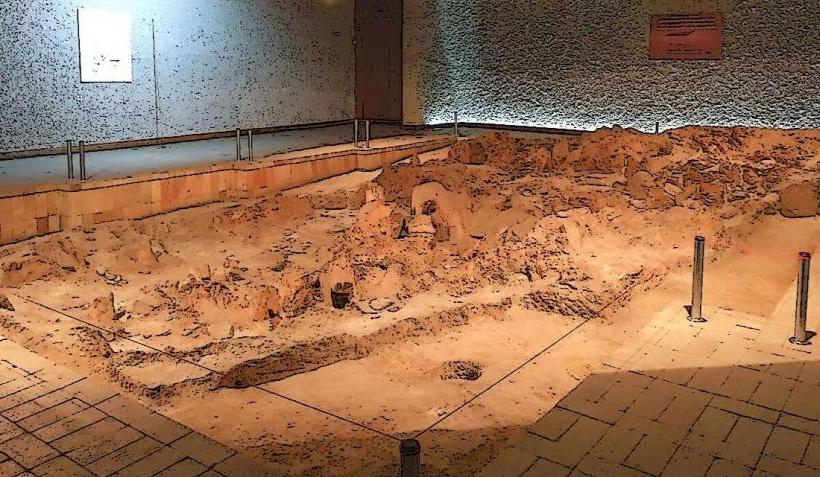
The museum is defined by the massive, 15th-century dome of the Eski Mosque, which features intricate, well-preserved frescoes from the 18th and 19th centuries. Inside, the floor is glass-paneled, allowing visitors to look down into the excavations. This reveals the structural remains of a 10th-century Christian church and an earlier 2nd-century Thracian sanctuary. The interior is characterized by the juxtaposition of Islamic calligraphy and floral motifs on the walls with the rough-hewn stone foundations of the older religious structures below.
Location & Access Logistics
The museum is located at Gladstone Street, situated at the southern edge of the central pedestrian zone. It is approximately a 10-minute walk (850m) from the Stara Zagora railway station. It is easily accessible via all public transport lines serving the "City Hall" or "Alana" stops. Street parking is available in the city's "Green Zone" along the perimeter.
Historical & Ecological Origin
The site has functioned as a sacred space for over two millennia:
Thracian Period (2nd–3rd Century AD): A pagan sanctuary dedicated to the Thracian Horseman.
Medieval Period (10th–13th Century): A Christian cross-domed church stood on the site.
Ottoman Period (1409): The Eski Mosque was built by Hamza Bey, utilizing the ruins and materials of the previous structures.
Modern Era: Following the 1877 burning of Stara Zagora, the building survived and was later converted into a museum to showcase religious continuity.
Key Highlights & Activities
The primary activity is the "archaeological walk" over the glass floor to view the cross-section of three different religions. Visitors can examine the detailed Islamic mural paintings, which are distinct for their lack of human figures and focus on architectural and floral symmetry. The museum also hosts temporary exhibitions related to spiritual history and local archaeology.
Infrastructure & Amenities
The facility is a single, large vaulted hall. It is climate-controlled to protect the frescoes and stone remains. Information placards are provided in multiple languages. Public restrooms are not available inside the monument but are located in the adjacent municipal park. 5G cellular signal is strong throughout the site.
Best Time to Visit
The museum is open Tuesday through Saturday from 10:00 to 18:00. The best time for interior photography is during the morning when natural light enters through the high-placed windows under the dome, illuminating the frescoes without heavy artificial glare.
Facts & Legends
A verified architectural fact is that the building's acoustic properties are exceptional, originally designed to carry the voice of a prayer leader throughout the hall without amplification. Local history suggests the mosque survived the devastating fire of 1877 because it was built with such massive stone walls that the flames could not penetrate the interior, preserving the Christian and Thracian layers beneath.
Nearby Landmarks
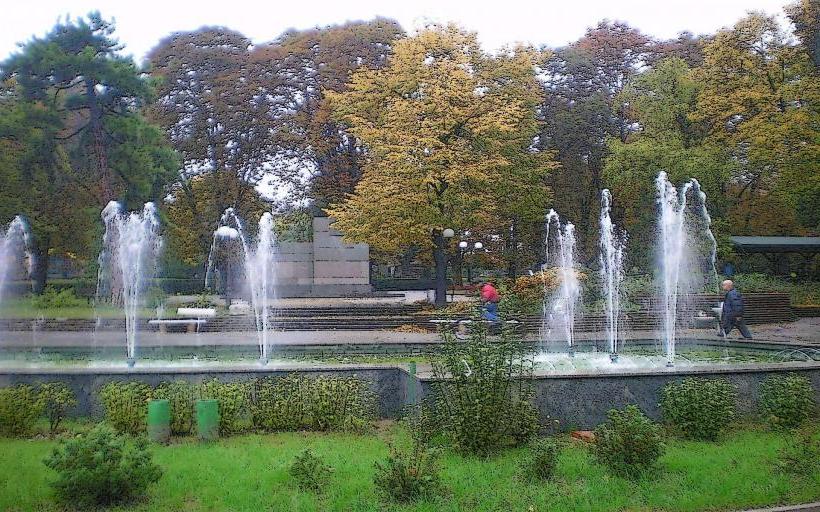
Alana Park - 0.1km East
Stara Zagora City Hall - 0.2km Northwest
Tsar Simeon Veliki Pedestrian Boulevard - 0.05km North
Regional History Museum - 0.3km North
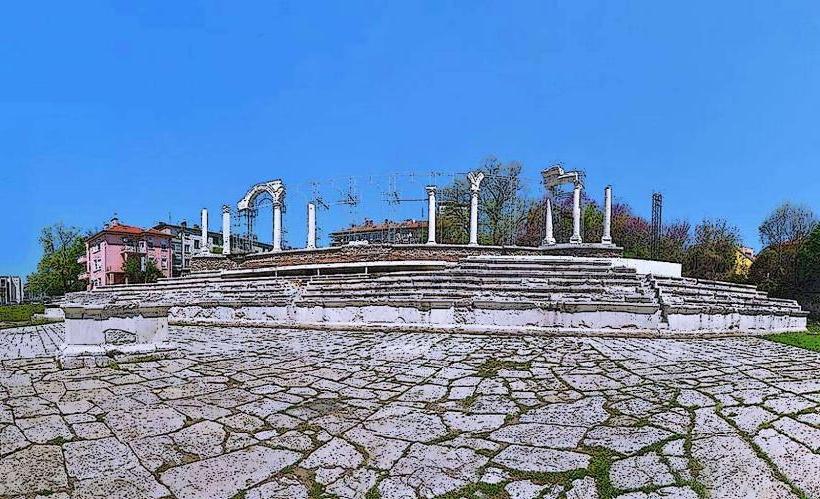
Antique Forum of Augusta Trajana - 0.35km Northwest