Landmark: Our Lady of Zahle and Bekaa
City: Zahle
Country: Lebanon
Continent: Asia
Our Lady of Zahle and Bekaa, Zahle, Lebanon, Asia
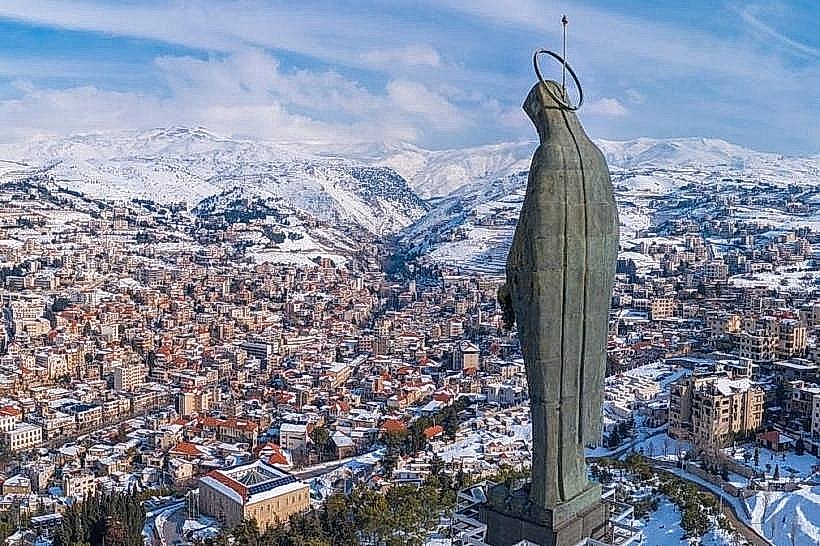
The Our Lady of Zahle and Bekaa is a prominent Marian shrine and modern religious monument situated on a high hilltop overlooking the city of Zahle within the Zahle District of the Beqaa Governorate, Lebanon. It stands as the most visible landmark in the region, serving as a symbol of unity, peace, and spiritual protection for the population of the Beqaa Valley.
Visual Characteristics
The complex is dominated by a 54-meter-high, slender concrete tower built in a minimalist modern architectural style with a smooth cream-colored finish. Mounting the apex of this tower is a 10-meter-high bronze statue of the Virgin Mary holding the infant Jesus, who extends a bunch of grapes as a symbolic nod to the agricultural heritage of the valley. The base of the tower incorporates a small circular chapel, while the wide stone promenade surrounding the monument functions as an expansive viewing deck that offers a complete, unobstructed panoramic outlook across the checkerboard agricultural fields of the Beqaa Valley and the city of Zahle below.
Location & Access Logistics
The monument occupies the summit of the absolute hill along the western ridge of Zahle, approximately 53 kilometers east of Beirut. Access from the capital is via the international Beirut-Damascus highway, crossing Mount Lebanon and descending into the Beqaa Valley before turning north at the Chtaura junction toward Zahle. From the city center of Zahle, a steep, fully paved winding asphalt road leads directly up to the entrance pavilion of the shrine. A large, paved public parking lot is situated at the base of the monument deck. Public transport options include direct intercity minivans from Beirut's Cola intersection to Zahle, from which a local taxi must be hired to complete the final uphill mountain transit.
Historical & Ecological Origin
The project was officially conceptualized and initiated in 1958 by the Melkite Greek Catholic Archbishop of Zahle, Eftimios Youakim, to create a centralized landmark of faith following a period of regional political instability. Designed by local structural engineers, the construction of the massive concrete tower and the casting of the bronze statue in Italy were completed in 1967, followed by an official inauguration. Geologically, the shrine sits on a prominent limestone ridge along the eastern foothills of the Mount Lebanon range, composed primarily of porous Cretaceous limestone that naturally limits dense tall vegetation on the exposed peak.
Key Highlights & Activities
Primary activities focus on the observation of the modern monument architecture, interior visitation of the base chapel to view modern icons, and landscape photography from the surrounding observation platforms. Visitors can walk the wide stone promenade to trace the geographic layouts of the surrounding mountain ranges and the agricultural plains. The site is an active center for religious pilgrimages, candle lighting, and major nocturnal processions, particularly during the Feast of the Nativity of Mary in early September.
Infrastructure & Amenities
The monument complex features a dedicated administrative office, a small religious article gift shop, and public restroom facilities located beneath the main viewing deck. Natural shade is virtually non-existent on the open, wind-swept concrete promenade, though the interior chapel provides full shelter from solar radiation. Cellular network coverage (4G/5G) is exceptionally strong and stable across the entire hilltop site. No permanent commercial restaurants operate directly on the holy grounds, but extensive traditional Lebanese restaurants, cafes, and historic hotels are positioned within a 1 to 2-kilometer drive along the descending ridge toward central Zahle.
Best Time to Visit
The late afternoon hours (17:00 to 19:00) offer the most optimal conditions for photography, as the setting sun directly illuminates the bronze statue and casts soft light across the vast Beqaa plain below. The dry months from April through November provide clear road access and favorable outdoor walking temperatures. The winter period from December to March experiences freezing temperatures, dense low-lying fog banks, and occasional snowstorms that can significantly restrict visibility and driving conditions on the summit roads.
Facts & Legends
A verified historical detail regarding the monument is that during the Lebanese Civil War (1975–1990), the high-altitude concrete tower was severely damaged by shelling due to its strategic military observation capabilities over the valley access roads; following the conflict, a comprehensive municipal restoration campaign successfully repaired the structure and re-gilded the bronze accents of the statue. Local civic history notes that the infant Jesus holding a cluster of grapes was a deliberate artistic choice to explicitly sanctify the historic winemaking and viticultural industry that has driven the local economy of Zahle since antiquity.
Nearby Landmarks
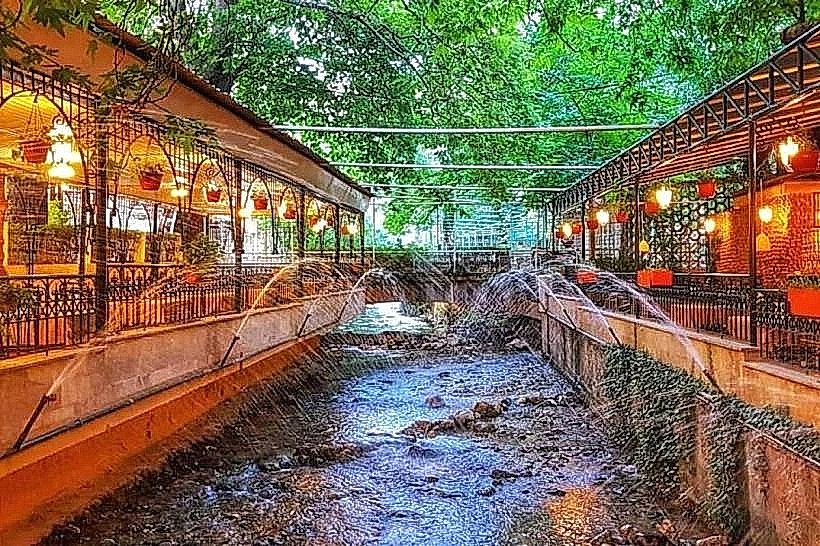
Berdawni River Restaurants: 1.5km Northeast
Grand Serail of Zahle: 1.8km East
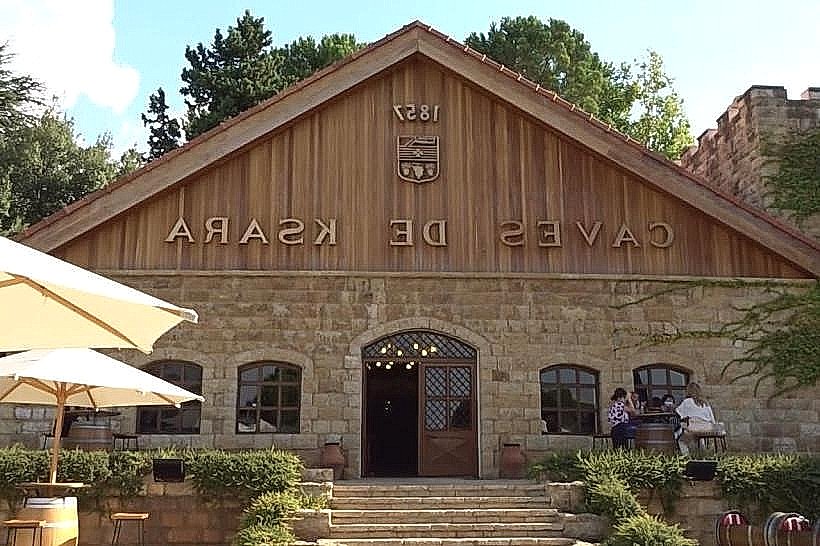
Chateau Ksara Winery: 2.2km Southeast
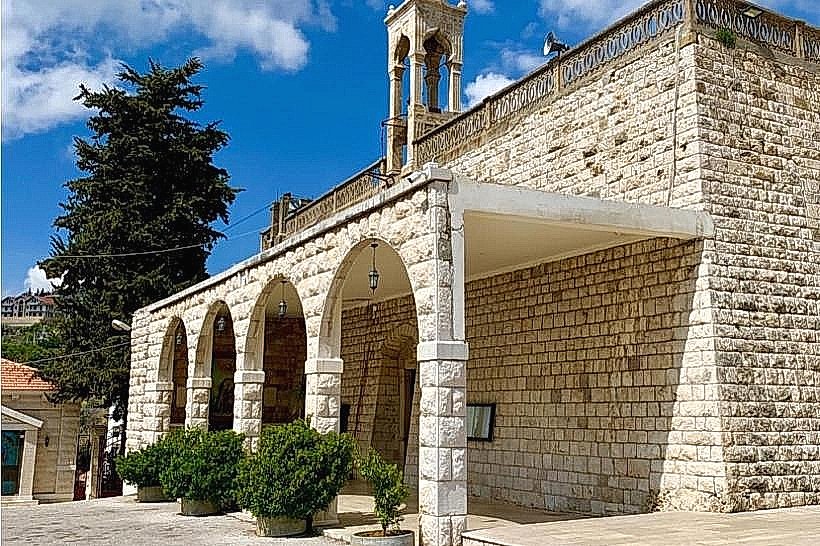
Saint Maron Church (Zahle): 1.2km Northeast
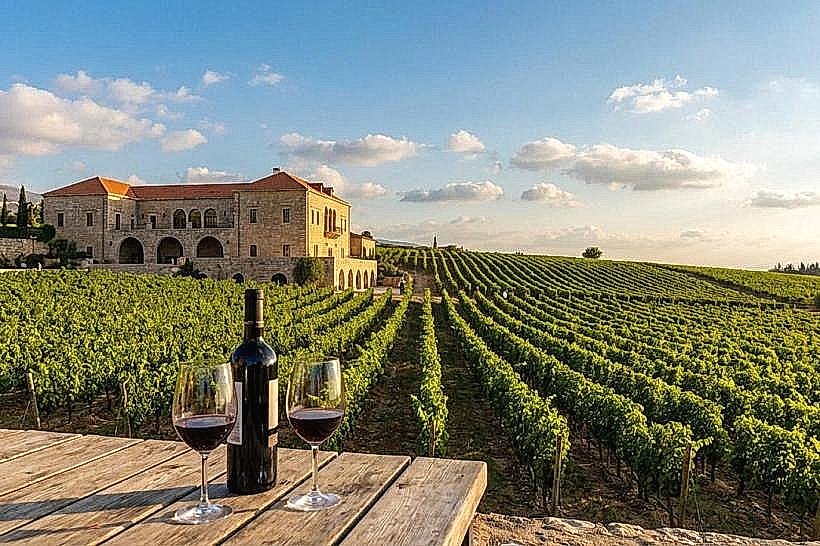
Chateau St Thomas: 3.5km South