Landmark: Saint Elias Monastery
City: Zahle
Country: Lebanon
Continent: Asia
Saint Elias Monastery, Zahle, Lebanon, Asia
The Saint Elias Monastery (Deir Mar Elias) is a prominent, historic Christian monastic complex situated on an elevated ridge in the village of Bikfaya, within the Metn District of the Mount Lebanon Governorate. It stands as a vital spiritual, cultural, and agricultural landmark for the Antonine Maronite Order and the local mountain communities.
Visual Characteristics
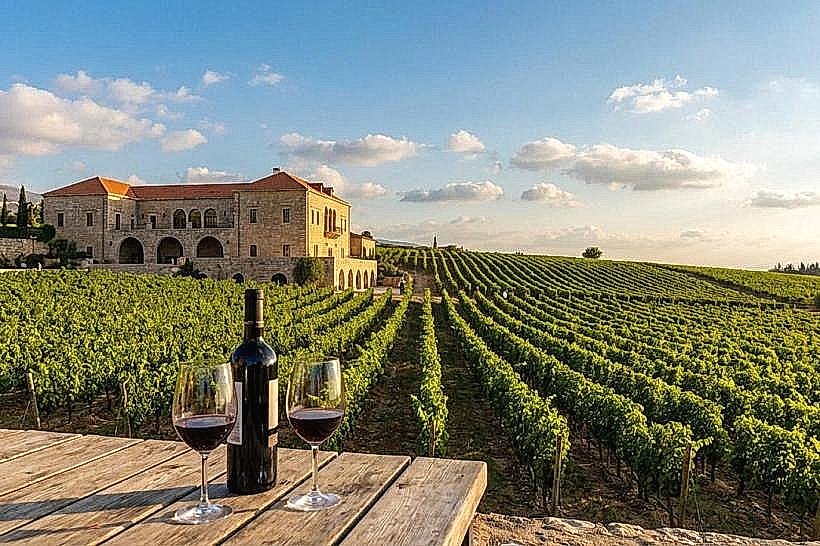
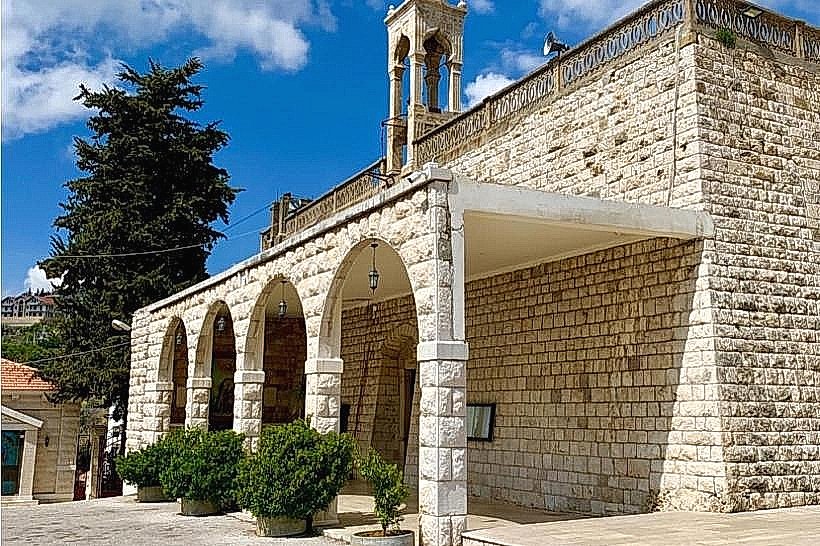
The monastery features a monumental multi-story architectural layout constructed from local golden-yellow sandstone masonry blocks. The design is characterized by its heavy stone arcades, vaulted loggias, and distinctive red-tiled gabled roofs that contrast sharply with the surrounding greenery. A traditional open-arched bell tower marks the main chapel wing. The interior includes a central church decorated with historic Maronite iconography and intricate woodwork, while the outdoor grounds feature wide stone-paved courtyards and manicured terraces offering expansive views over the Metn valleys.
Location & Access Logistics
The complex is located in the upper section of Bikfaya, approximately 28 kilometers northeast of Beirut. Access from the capital is via the main Emile Lahoud northern highway, ascending eastward through Antelias and Mazraat Yachouh up to the Bikfaya regional route. A dedicated, paved private parking facility is situated directly at the front entrance of the monastic grounds. Public transportation options are limited to regional minivans connecting Beirut to Bikfaya's central square, from which visitors can take a local taxi or complete a 15-minute uphill walk to reach the main gates.
Historical & Ecological Origin
The monastery was initially established in the early 18th century, around 1712 CE, by monks of the Antonine Maronite Order who sought out the high-altitude terrain for religious isolation and agricultural development. The site was built within a dense Mediterranean pine forest ecosystem characteristic of the middle-elevation zones of the Mount Lebanon range. Geologically, the ridge is composed of stable Jurassic-era limestone formations, which sustain multiple localized freshwater springs that historically supplied the monastery’s extensive terraced farms.
Key Highlights & Activities
Primary activities focus on liturgical visits, silent reflection, and the architectural inspection of the historic sandstone complex. Visitors can tour the main vaulted church, view the preserved religious manuscripts and icons, and walk across the open stone promenade to photograph the surrounding mountain scenery. The monastery remains a functional religious hub, regularly hosting seasonal feasts, community workshops, and spiritual retreats managed by the resident Antonine community.
Infrastructure & Amenities
The facility is fully equipped to handle visitors and pilgrims, featuring an administration desk, public restroom installations, and outdoor stone benches beneath mature pine and oak trees. Cellular network coverage (4G/5G) is exceptionally strong and stable across the entire hilltop site. No commercial vendors operate inside the holy monastery walls, but traditional Lebanese restaurants, historic cafes, and full municipal retail shops are situated within a 1 to 2-kilometer radius in central Bikfaya.
Best Time to Visit
The late afternoon hours (16:00 to 18:00) offer the most optimal conditions for photography, as the low-angle sunlight highlights the rich texture of the yellow sandstone facades against the pine forest background. The months from April through November provide clear road access and comfortable mountain temperatures. Winter visits (December to March) experience cold alpine weather, heavy rainfall, and occasional low-lying fog that can significantly restrict visibility along the ascending mountain roads.
Facts & Legends
A verified historical attribute of the Saint Elias Monastery is its foundational role in the expansion of sericulture (silk production) in the Metn district during the 18th and 19th centuries; the monks systematically planted rows of white mulberry trees across their terraced lands to raise silkworms, transforming the monastery into a critical economic engine for the region. Local ecclesiastical history records that during periods of regional conflict, the fortified, thick-walled masonry of the monastery functioned as a vital sanctuary and grain storage depot for surrounding villagers fleeing coastal instability.
Nearby Landmarks
Bikfaya Old Serail: 1.2km Southwest
Our Lady of Deliverance Shrine (Bikfaya): 1.8km West
Loco Beach Club & Coastal Ruins: 14.5km West (at the coast)
Deir el-Qala'a Roman Ruins: 11.0km South
Zaarour Ski Resort: 13.5km Northeast