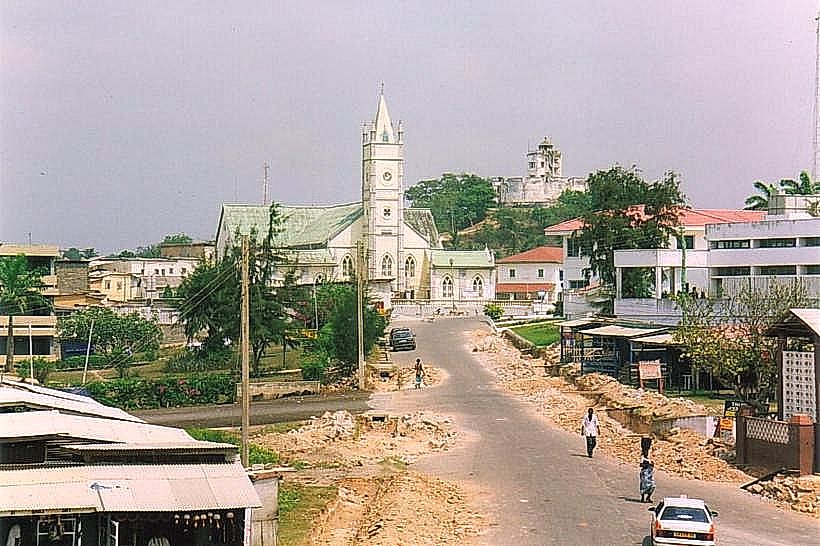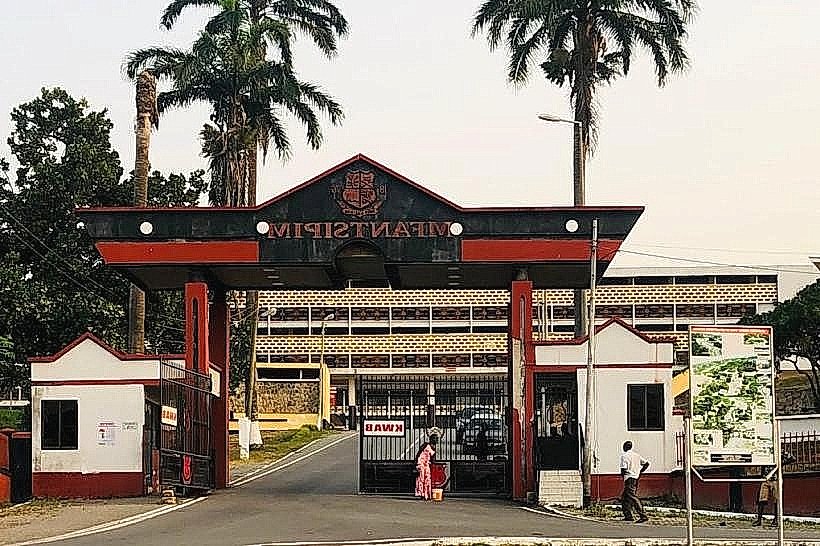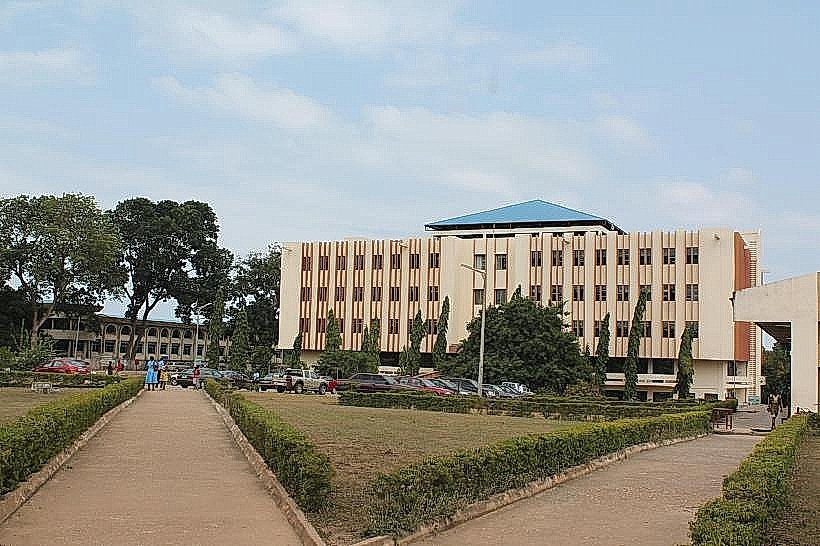
Landmark: Cape Coast University Campus
City: Cape Coast
Country: Ghana
Continent: Africa
Cape Coast University Campus, Cape Coast, Ghana, Africa
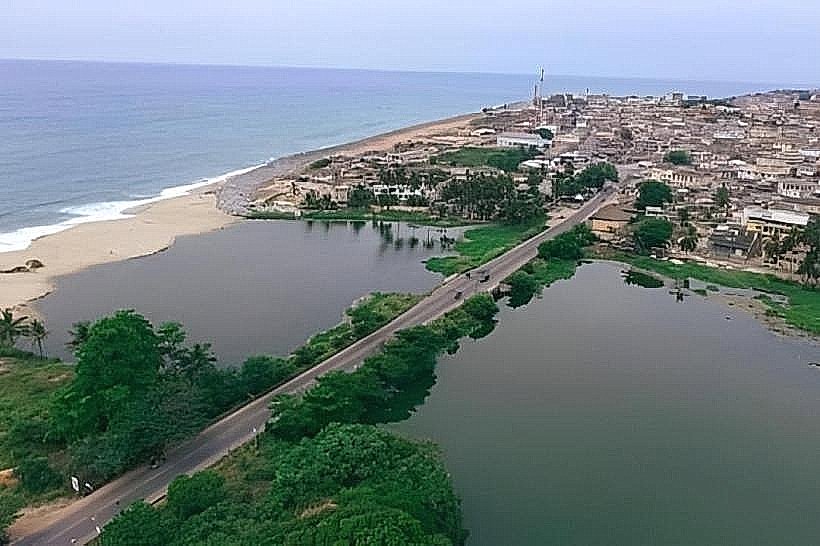
The University of Cape Coast (UCC) is a prominent public research university campus situated along the Atlantic coast in Cape Coast, Ghana. It occupies a large expanse of undulating land that stretches from the shoreline to the inland hills, serving as a major academic and architectural landmark in West Africa.
Visual Characteristics
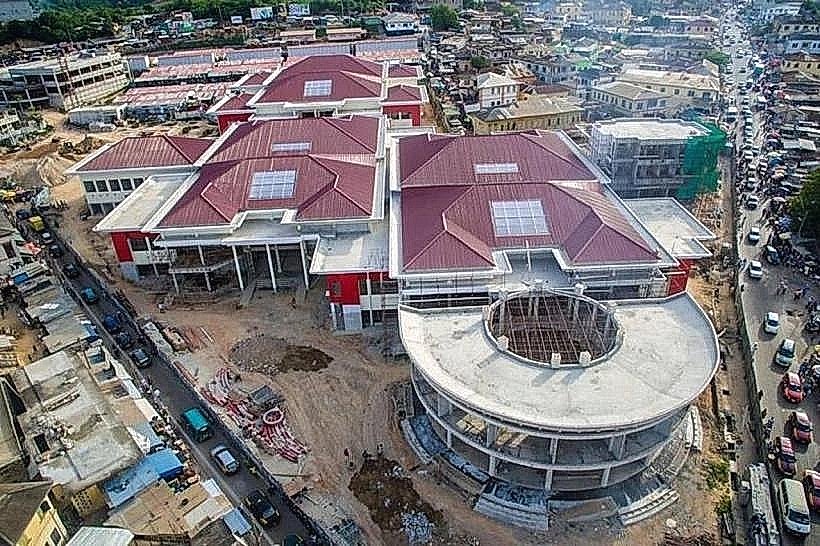
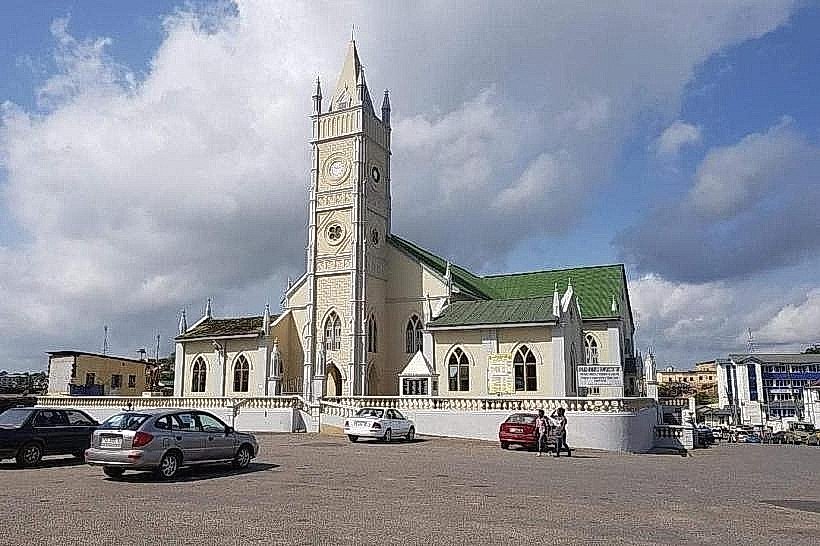
The campus is characterized by a mix of mid-century tropical modernism and contemporary functionalist architecture, featuring reinforced concrete structures with wide louvers for natural ventilation. The landscape is dominated by manicured lawns, palm-lined avenues, and steep coastal cliffs that offer direct views of the Gulf of Guinea. Key structures, such as the Sam Jonah Library and the New Administration Block, feature expansive white and sand-colored facades with large glass panels.
Location & Access Logistics
The campus is located along the N1 highway (Accra-Takoradi Road), approximately 5km west of the Cape Coast city center. It is bisected by the main highway into "North Campus" and "South Campus." Accessible via private vehicle or public "tro-tro" from the Kotokuraba station, the campus has multiple entry gates including the Main Gate and the Science Gate. An internal shuttle system and registered taxis operate between the residential halls and academic blocks.
Historical & Ecological Origin
Established in October 1962 as a university college in a special relationship with the University of Ghana, it attained full university status in 1971. The campus was built on a site originally consisting of coastal scrub and secondary forest. Ecologically, the university manages several green belts and a botanical garden to preserve indigenous plant species and maintain the coastal watershed.
Key Highlights & Activities
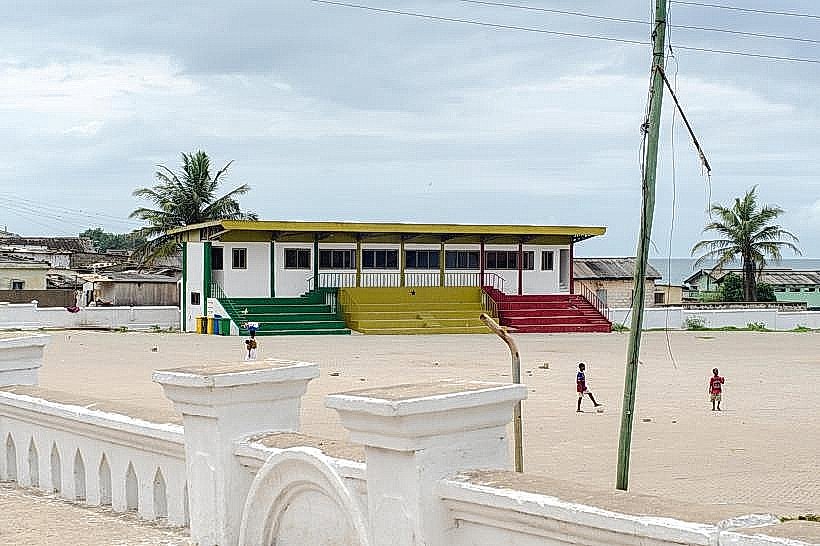
Academic and recreational activities are concentrated around the Sam Jonah Library, one of the largest academic libraries in Ghana, and the Casely Hayford Hall. The campus shoreline allows for coastal research and scenic walks, while the university's stadium hosts regional athletic events. Guided tours of the academic facilities and the University Botanical Garden are available by arrangement with the administration.
Infrastructure & Amenities
The campus functions as a self-contained precinct with a university hospital, a police station, a post office, and numerous banking halls. Large cafeterias and "Science Market" provide various food options. Shade is abundant under mature tropical trees and covered walkways. High-speed 4G/5G cellular coverage is maintained across the campus by all major Ghanaian telecommunications providers.
Best Time to Visit
The campus is most active during the academic semesters (August–December and January–May). For logistical ease and photography, weekend mornings (08:00–10:00) provide the best light and reduced foot traffic. The dry season from November to February offers the clearest coastal views and the most favorable conditions for traversing the hilly terrain between the North and South campuses.
Facts & Legends
The university is colloquially known as the "University of Competitive Choice" due to its rigorous admission standards and examination culture. A long-standing campus tradition involves "Morale" sessions-rhythmic drumming and chanting-organized by the various residential halls during sporting events and festivals, particularly by the Casely Hayford and Atlantic Hall residents.
Nearby Landmarks
Adisadel College – 2.5km East
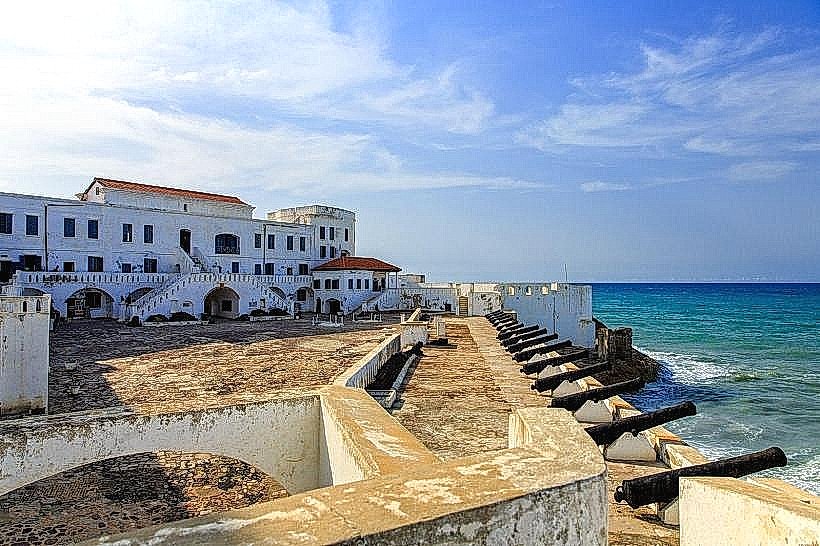
Cape Coast Castle – 5.0km East
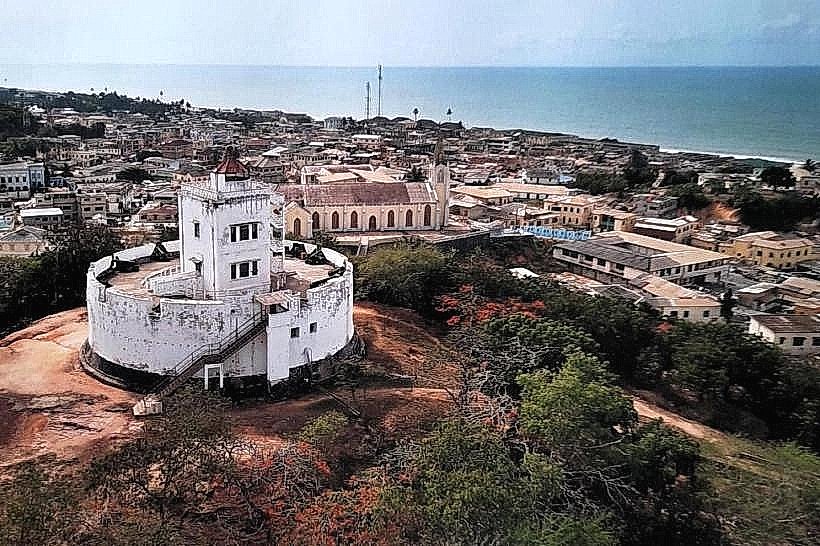
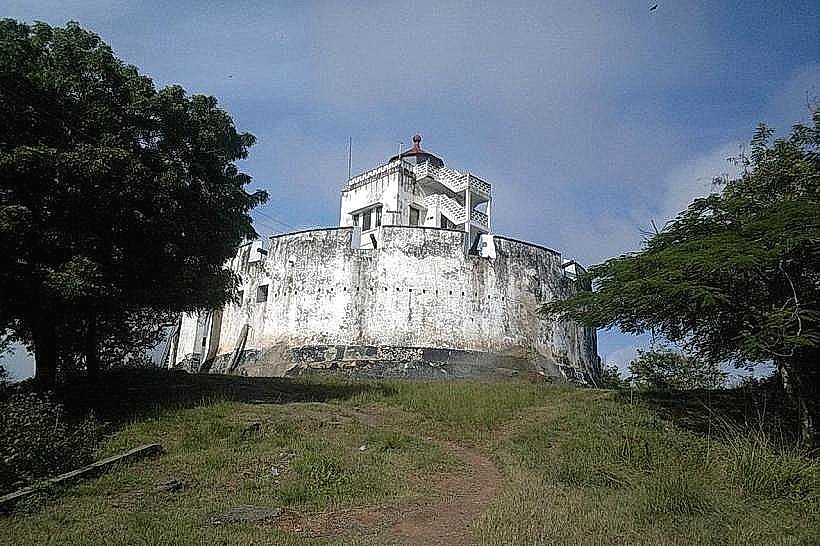
Fort Victoria – 4.2km East
Fosu Lagoon – 3.5km East
Elmina Castle – 7.5km West