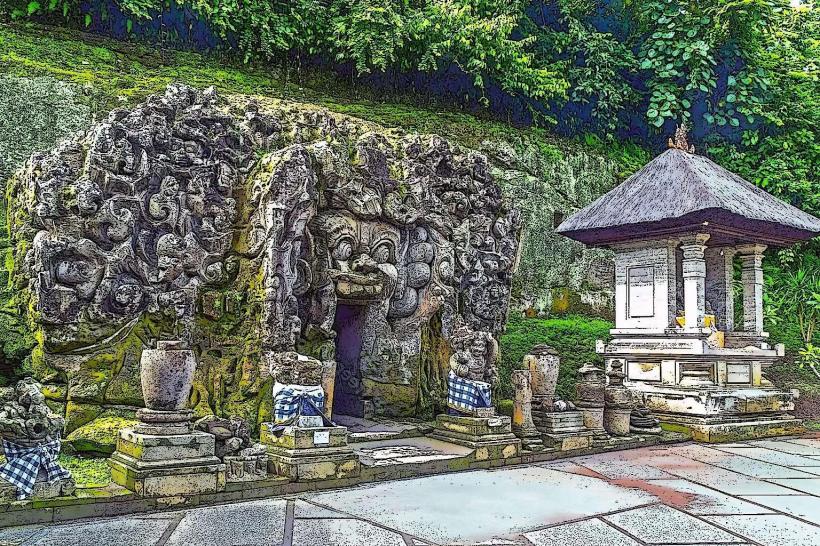
Landmark: Goa Gajah (Elephant Cave)
City: Bali
Country: Indonesia
Continent: Asia
Goa Gajah (Elephant Cave), Bali, Indonesia, Asia
Goa Gajah, also known as Elephant Cave, is an archaeological site located near Ubud, Bali, Indonesia.
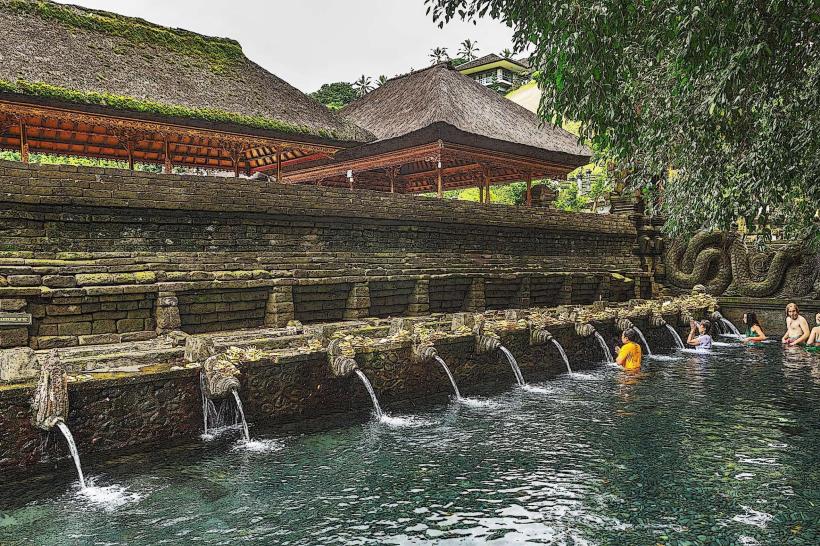
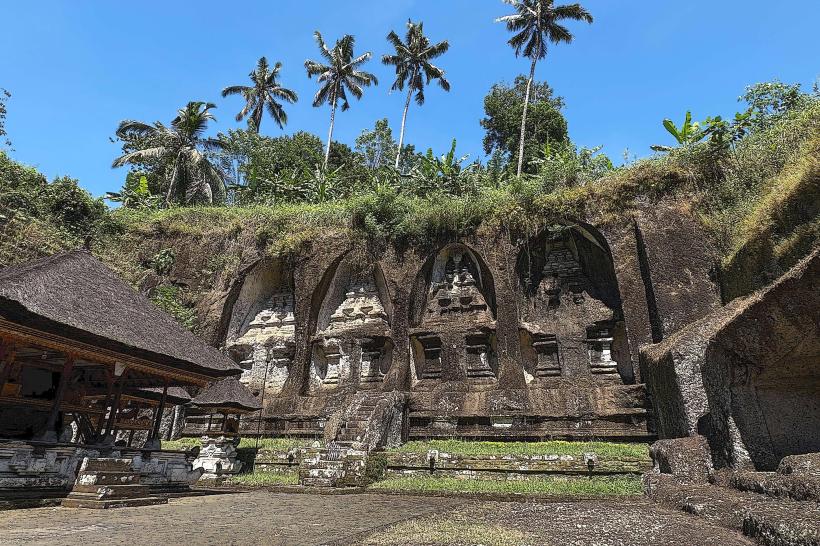
This site features a cave entrance carved into a rock face, a bathing pool, and ancient relics.
Visual Characteristics
The primary feature is a cave entrance shaped like a demon's mouth, carved from a large rock. The cave interior is approximately 15 meters long and 5 meters wide. Adjacent to the cave is a stone-carved bathing pool with several statues, including a fountain held by a statue of a woman. The surrounding area is a tropical forest with dense vegetation.
Location & Access Logistics
Goa Gajah is situated approximately 2 kilometers southeast of Ubud. Access is via Jalan Raya Goa Gajah. Parking is available on-site for vehicles. Public transportation directly to the site is limited; taxis or ride-sharing services from Ubud are the most common methods of arrival. The site is accessible by foot from the main road.
Historical & Ecological Origin
The cave is believed to have been carved in the 9th or 10th century, likely serving as a hermitage or sanctuary. The exact purpose and original builders remain subjects of archaeological study. The site is situated within a humid tropical forest ecosystem.
Key Highlights & Activities
Exploration of the Elephant Cave entrance and interior. Observation of the ancient bathing pool and carved statues. Walking the pathways through the surrounding forest. Viewing the archaeological remnants scattered throughout the complex.
Infrastructure & Amenities
Restrooms are available on-site. Shaded areas are provided by trees and some covered structures. Cell phone signal (4G) is generally available. Food vendors are located near the entrance and parking area.
Best Time to Visit
The best time of day for photography is typically mid-morning (9:00 AM - 11:00 AM) or late afternoon (3:00 PM - 5:00 PM) to avoid harsh midday sun and capture softer lighting on the carvings. The dry season, from April to September, offers the most favorable weather conditions.
Facts & Legends
Local belief suggests the cave was created to ward off evil spirits. The name "Elephant Cave" is thought to derive from the large rock formation near the entrance that resembles an elephant's head, although no actual elephant carvings are present within the cave itself.
Nearby Landmarks
- Tirta Empul Temple (4.5km Northeast)
- Ubud Monkey Forest (2.2km Northwest)
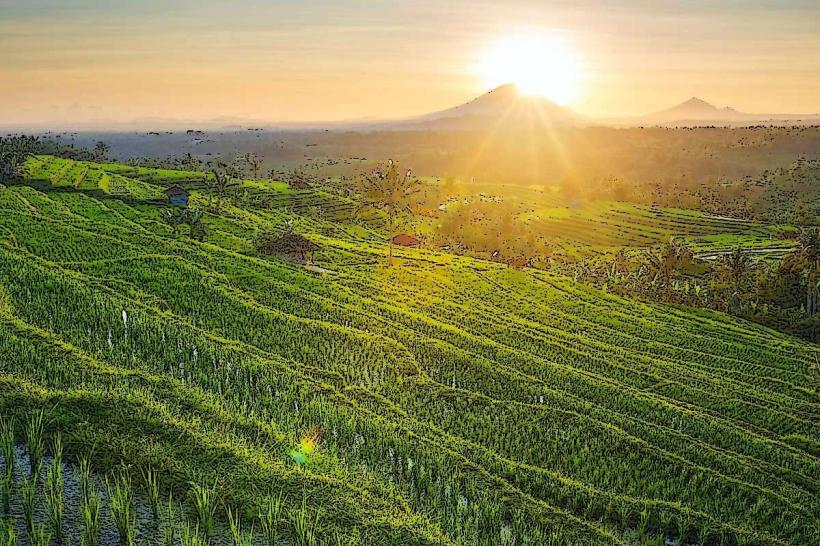
- Tegalalang Rice Terraces (10km North)
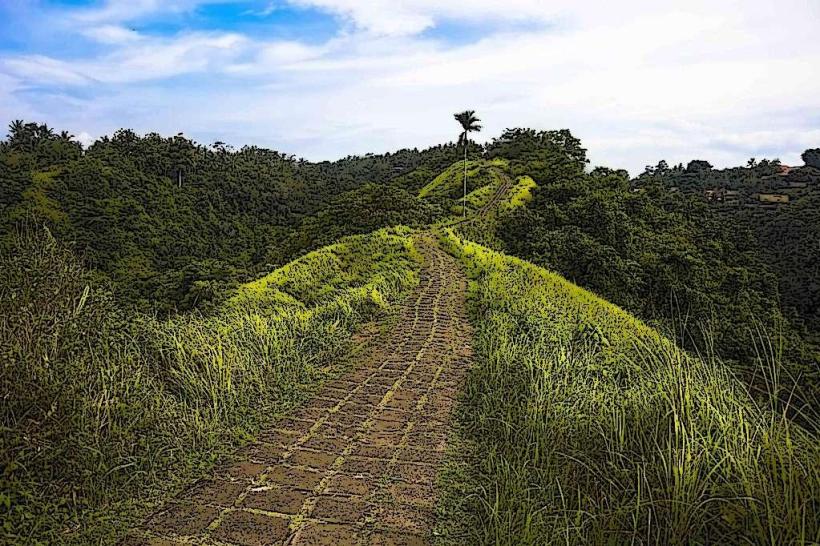
- Campuhan Ridge Walk (2.8km Northwest)
- Puri Saren Agung (Ubud Royal Palace) (2.5km Northwest)