Landmark: Nusa Lembongan Devil's Tear
City: Bali
Country: Indonesia
Continent: Asia
Nusa Lembongan Devil's Tear, Bali, Indonesia, Asia
Devil's Tear is a coastal rock formation located on the southwestern coast of Nusa Lembongan, an island off the coast of Bali, Indonesia.
Visual Characteristics
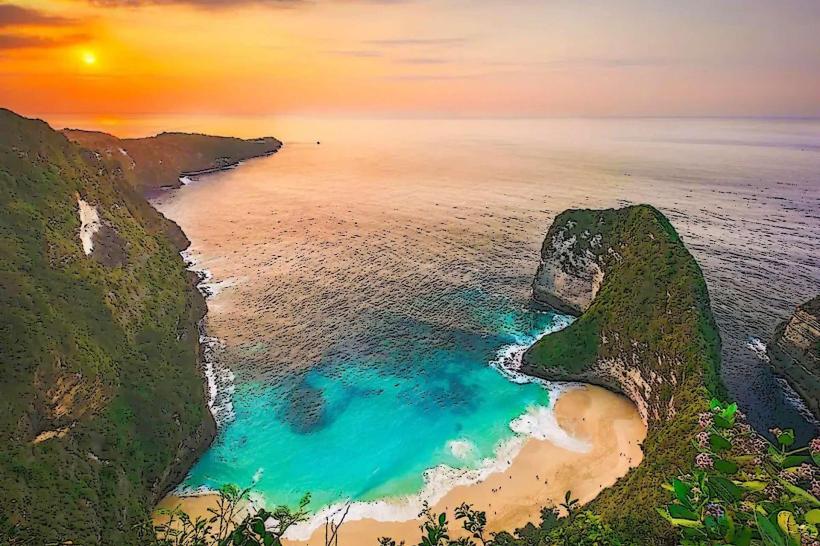
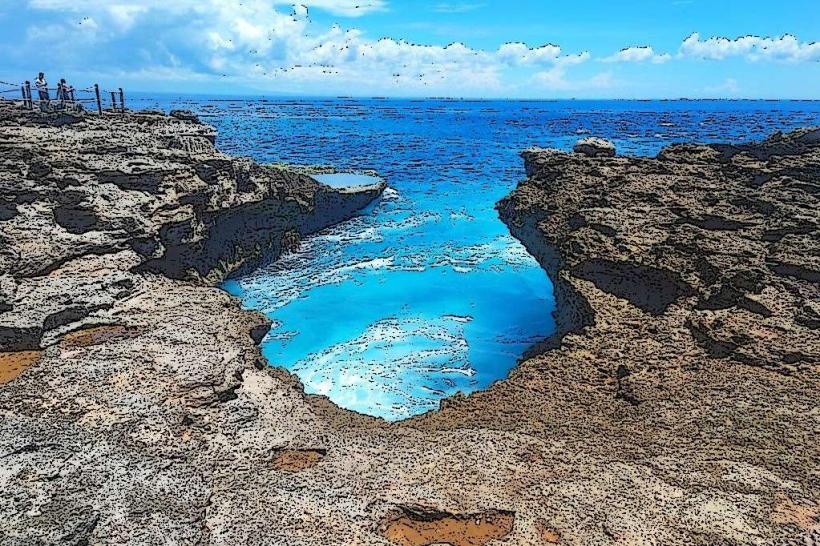
The site features a rugged limestone cliff face that drops directly into the ocean. During high tide, waves crash against the cliff, creating a powerful spray that erupts upwards through a natural blowhole and fissures in the rock. The water color is typically a deep blue or turquoise, depending on sunlight and wave conditions. The surrounding area is sparsely vegetated with low-lying scrub and grasses.
Location & Access Logistics
Devil's Tear is situated approximately 2 kilometers southwest of Jungut Batu village. Access is via a paved road leading from Jungut Batu, followed by a short walk along a dirt path. Parking is available roadside near the main viewing areas. No public transport directly serves the site; transport typically involves scooters or taxis from Jungut Batu or Mushroom Bay.
Historical & Ecological Origin
This geological feature is a result of coastal erosion, where the relentless action of the Indian Ocean waves has carved into the limestone bedrock over millennia. The blowhole and associated spray are a direct consequence of wave energy being forced through subterranean cavities and fissures.
Key Highlights & Activities
Observation of wave action and the resulting water spray is the primary activity. Visitors can stand on the cliff edge to witness the phenomenon. Photography is common, particularly during periods of strong wave activity. Swimming is not advised due to strong currents and submerged rocks.
Infrastructure & Amenities
There are no permanent structures or amenities directly at Devil's Tear. Basic food and drink vendors may be present during peak tourist hours. Cell phone signal (4G) is generally available. Limited natural shade is present.
Best Time to Visit
The most dramatic spray occurs during high tide, especially when combined with larger swells. Late afternoon, approximately 1-2 hours before sunset, offers favorable lighting conditions for photography. The dry season (April to September) generally provides calmer seas, but larger waves can occur year-round.
Facts & Legends
Local lore suggests the name "Devil's Tear" originates from the sound of the crashing waves and the spray, which some believe resembles the tears of a mythical sea creature. A practical tip is to wear footwear with good grip, as the rock surfaces can become slippery from sea spray.
Nearby Landmarks
- Dream Beach (0.3km Northeast)
- Sandy Bay Beach Club (0.5km North)
- Tamarind Beach (1.2km Northwest)
- Pura Segara (1.8km East)