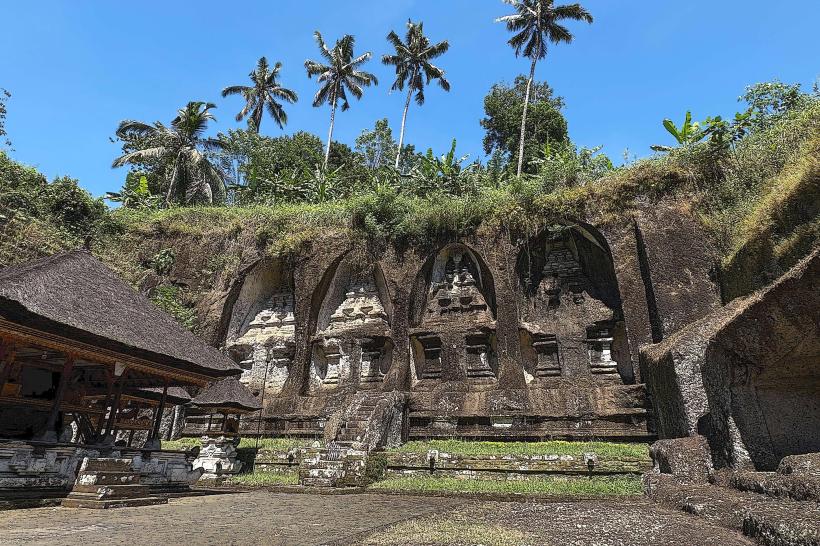
Landmark: Gunung Kawi
City: Bali
Country: Indonesia
Continent: Asia
Gunung Kawi, Bali, Indonesia, Asia
Gunung Kawi is a temple complex located in Tampaksiring, Bali, Indonesia. It features ancient royal tombs carved into rock faces.
Visual Characteristics
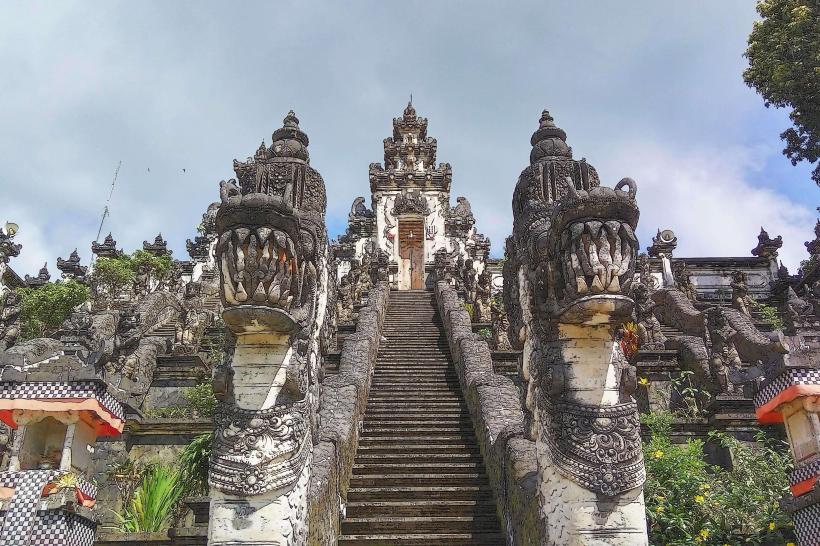
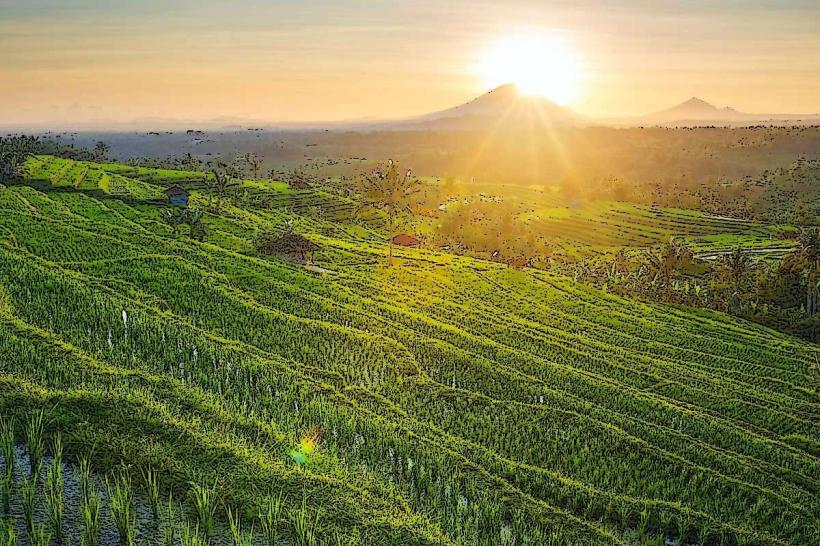
The site consists of ten monolithic shrines (candi) carved directly into the cliff face, reaching approximately 7 meters in height. The shrines are arranged in two rows on opposite sides of the Pakerisan River. The rock is primarily sandstone, with intricate carvings depicting figures and architectural elements. The surrounding area is characterized by dense, green rice paddies and tropical vegetation.
Location & Access Logistics
Gunung Kawi is situated approximately 1.5 kilometers southeast of Tampaksiring town center. Access involves descending approximately 300 stone steps from the parking area. The parking area is located off Jalan Gunung Kawi. Public transport directly to the site is limited; private vehicles or taxis are the most common modes of transport. From Denpasar, it is approximately a 1-hour drive.
Historical & Ecological Origin
The shrines are believed to have been carved in the 11th century. They are attributed to King Udayana of the Warmadewa dynasty and his consorts. The original purpose was to serve as memorials or tombs for the royal family. The site is situated within a valley carved by the Pakerisan River, a geological feature common in Bali's volcanic landscape.
Key Highlights & Activities
Visitors can observe the carved shrines and the surrounding rice terraces. Walking down the stone steps provides views of the river and the natural environment. Photography of the architectural details is permitted. Small offerings can be made at designated areas.
Infrastructure & Amenities
Restrooms are available near the parking area. Small food and drink vendors operate at the entrance and along the path leading to the shrines. Shade is provided by the natural canopy of trees and the overhang of the rock carvings. Cell phone signal (4G) is generally available.
Best Time to Visit
The best time of day for photography is in the early morning (between 8:00 AM and 10:00 AM) or late afternoon (after 3:00 PM) to avoid harsh midday sun and capture softer light on the carvings. The dry season, from April to September, offers the most favorable weather conditions. There are no tide-dependent activities.
Facts & Legends
A local legend suggests that the shrines were created by the giant Kala Rau in a single night. While historically inaccurate, it reflects the awe inspired by the scale and craftsmanship of the carvings. Visitors should be aware of the numerous steps involved in accessing the site.
Nearby Landmarks
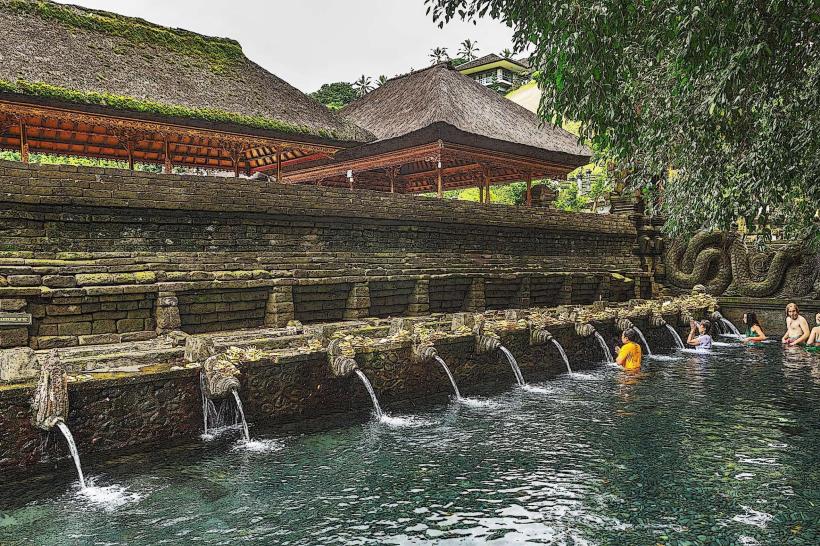
- Tirta Empul Temple (0.8km Northwest)
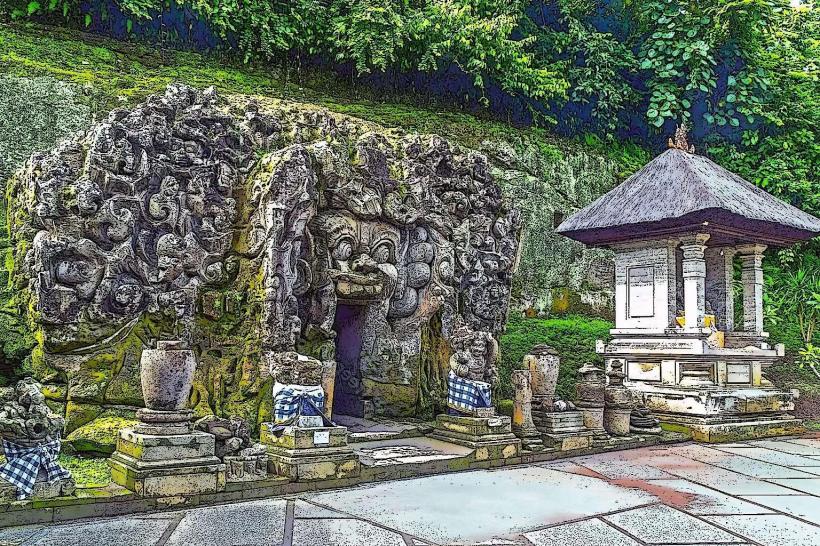
- Goa Gajah (Elephant Cave) (6.2km Southwest)
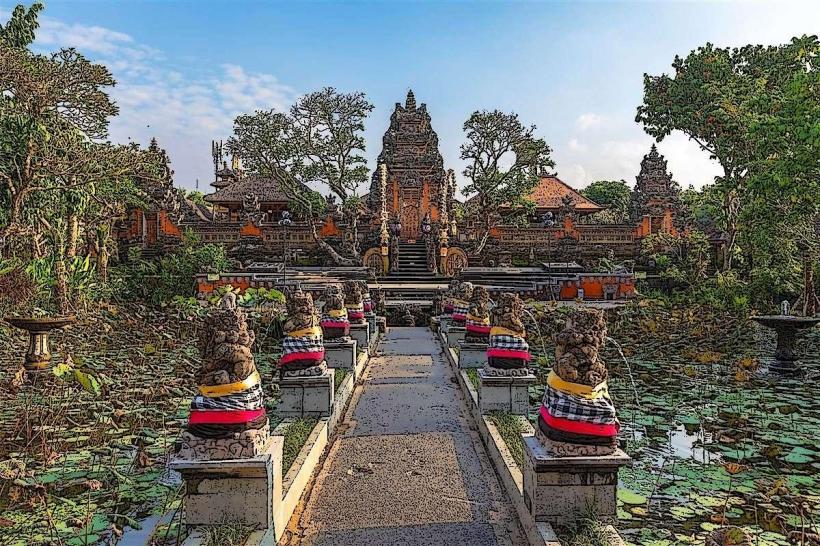
- Taman Saraswati Temple (Ubud) (12.5km Southwest)
- Ubud Monkey Forest (13.1km Southwest)
- Mount Batur (25.8km Northeast)