Information
Landmark: Miami SeaquariumCity: Miami
Country: USA Florida
Continent: North America
Miami Seaquarium, Miami, USA Florida, North America
The Miami Seaquarium is a marine life attraction located on the Rickenbacker Causeway in Miami, Florida.
It features a variety of marine animals and exhibits for public viewing and educational purposes.
Visual Characteristics
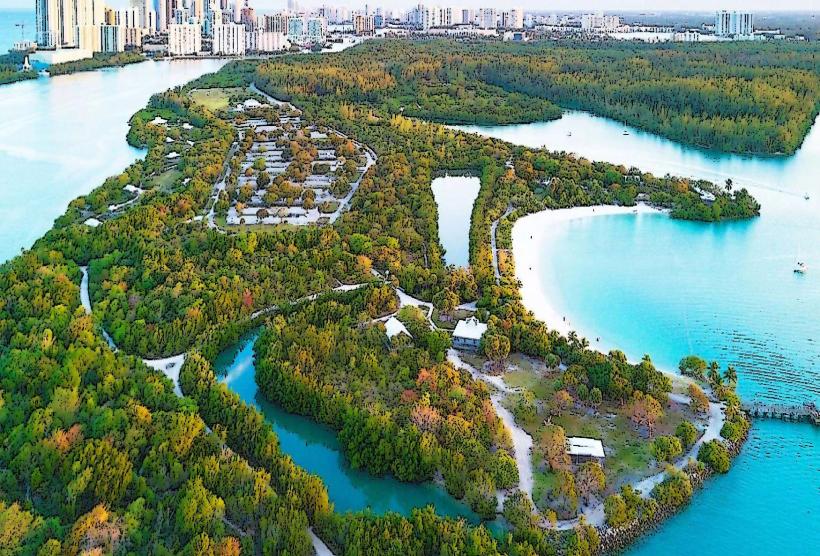
The facility comprises multiple outdoor pools and tanks constructed from concrete and reinforced fiberglass. Exhibit structures are primarily concrete with some metal framing. The main exhibition stadium has tiered seating for approximately 4,000 spectators. Animal habitats vary in depth and size, designed to house different species. The overall color palette is functional, with concrete gray dominating structural elements and water colors ranging from clear blue to green depending on filtration and depth.
Location & Access Logistics
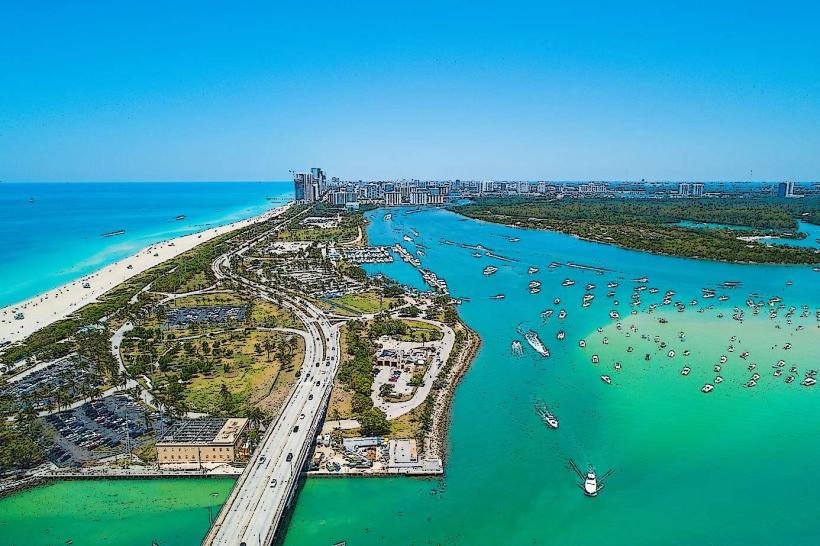
The Miami Seaquarium is situated at 4400 Rickenbacker Causeway, Miami, FL 33149. It is approximately 8 kilometers (5 miles) southeast of downtown Miami. Access is via the Rickenbacker Causeway, a toll road. Ample parking is available on-site for vehicles, with a fee typically associated. Public transport options include Miami-Dade Transit bus routes, specifically the 120 Beach Express, which stops directly at the Seaquarium entrance.
Historical & Ecological Origin
The Miami Seaquarium opened in 1955. It was conceived as an educational and entertainment facility to showcase marine life. The site itself is on Virginia Key, an island formed by natural geological processes and later developed for recreational and infrastructure purposes. The facility's design and construction aimed to create controlled environments for marine animal husbandry and public display.
Key Highlights & Activities
Visitors can observe dolphin and whale shows in the main stadium. Opportunities exist for animal encounters, including swimming with dolphins and sea lions (additional fees apply). Exhibits include a shark lagoon, a manatee exhibit, and a sea turtle rehabilitation area. Educational presentations on marine conservation are scheduled throughout the day.
Infrastructure & Amenities
Restrooms are available throughout the park. Shaded areas are provided by canopies over seating in exhibit areas and walkways. Cell phone signal (4G/5G) is generally consistent within the park. Food and beverage vendors operate within the facility, offering various concessions.
Best Time to Visit
For optimal lighting for photography, early morning or late afternoon provides softer light. The best months for weather are typically from November to April, avoiding the peak heat and humidity of summer. Animal shows are scheduled at specific times, so checking the daily schedule upon arrival is recommended.
Facts & Legends
The Seaquarium was one of the first facilities to train marine mammals for public performance. A notable historical oddity is its role in the filming of the 1963 film "Flipper," which significantly boosted the popularity of bottlenose dolphins in popular culture.
Nearby Landmarks
- Virginia Key Beach Park (0.8km West)
- Bill Baggs Cape Florida State Park (4.5km Southwest)
- Vizcaya Museum & Gardens (3.2km Northwest)
- Key Biscayne (3.5km South)