Landmark: Nyandungu Urban Wetland Eco-Tourism Park
City: Kigali
Country: Rwanda
Continent: Africa
Nyandungu Urban Wetland Eco-Tourism Park, Kigali, Rwanda, Africa
Nyandungu Urban Wetland Eco-Tourism Park is a 121-hectare restored ecosystem located between the Gasabo and Kicukiro Districts in Kigali. It sits along the RN3 highway, spanning the valley between the Kimironko and Kanombe residential sectors.
Visual Characteristics
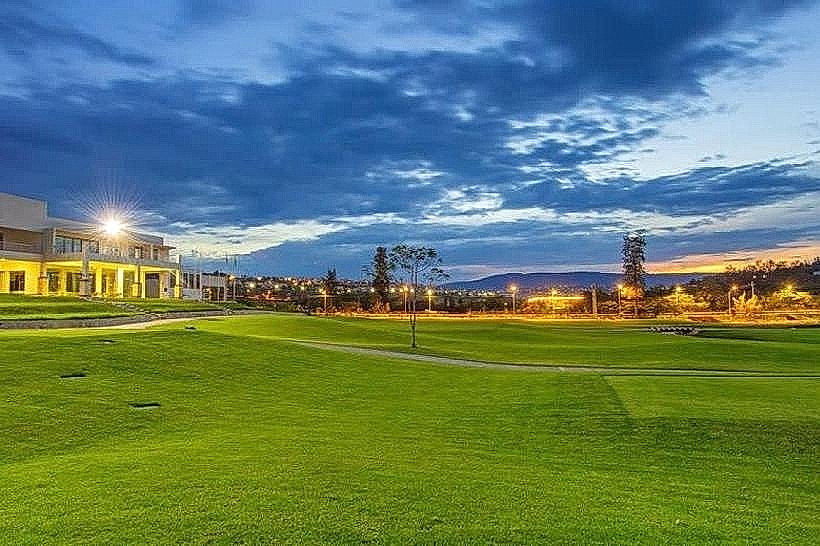
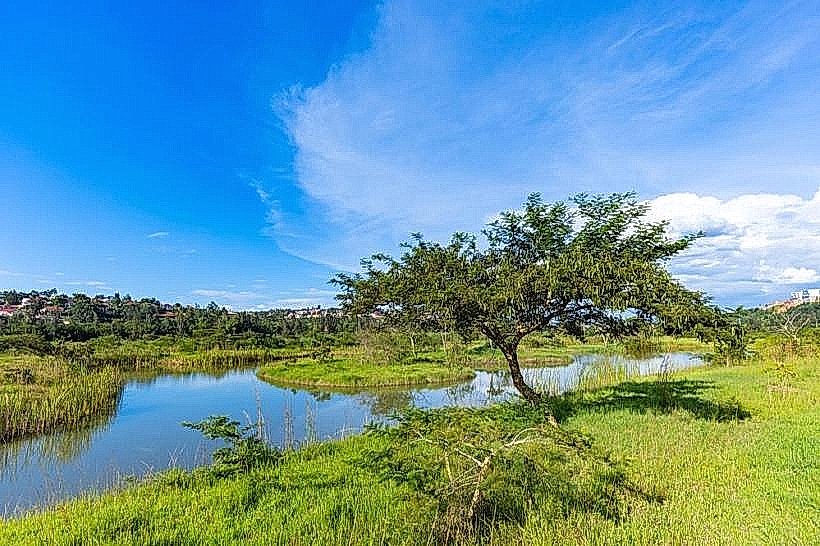
The park features a series of interconnected ponds, lush marshlands, and a regenerated indigenous forest containing over 70 species of native trees. Architectural elements include 10 kilometers of paved walking and cycling paths made from grey permeable pavers and several wooden boardwalks elevated above the wetlands. The "Pope's Garden" section is characterized by manicured lawns and symmetrical stone-lined water features, while the rest of the park maintains a wilder, dense thicket appearance with various shades of aquatic green vegetation and brown silt-bed ponds.
Location & Access Logistics
The main entrance is located on the Kigali-Rwamagana Road (RN3), approximately 5km from Kigali International Airport. Access is available via private vehicle, with a large paved parking lot located at the main gate. Public transport "matatus" (minibuses) stopping at the "Nyandungu" or "La Palisse" stages provide direct access, followed by a 200-meter walk to the visitor center. The park is fully fenced with gated entry points at both the Nyandungu and Nnera ends.
Historical & Ecological Origin
The site was a degraded wetland used for sand mining and agriculture until a $4.5 million restoration project began in 2016, led by the Rwanda Environment Management Authority (REMA). It officially opened in July 2022 as Kigali’s first eco-tourism park. Geologically, it is a valley floor catchment area designed to manage floodwaters and naturally filter pollutants from the city’s runoff before they reach the Akagera River system.
Key Highlights & Activities
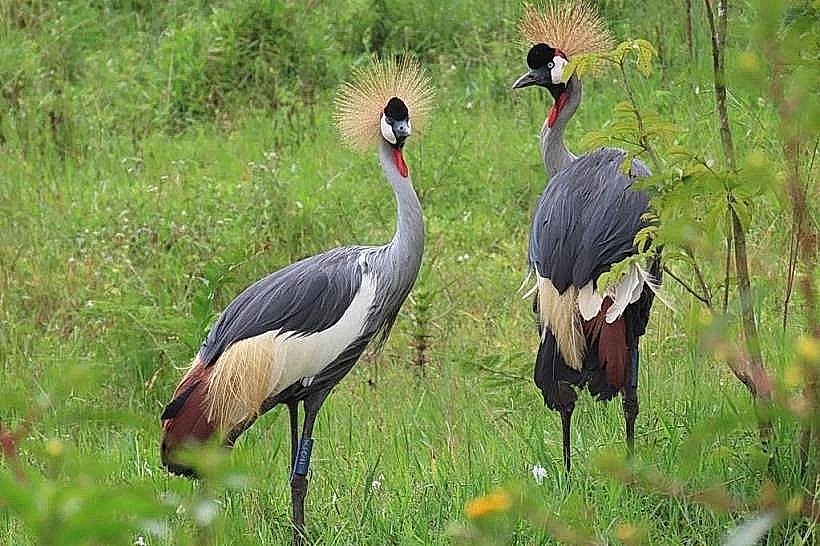
Bird watching is a primary activity, as the park hosts over 100 bird species, including the Great Blue Turaco. The 10km trail network is dedicated to hiking and cycling; bicycles are available for rent at the visitor center. Guided nature tours depart regularly, focusing on the medicinal properties of the indigenous plants. The park also includes a dedicated medicinal garden and several viewing platforms overlooking the crane habitat.
Infrastructure & Amenities
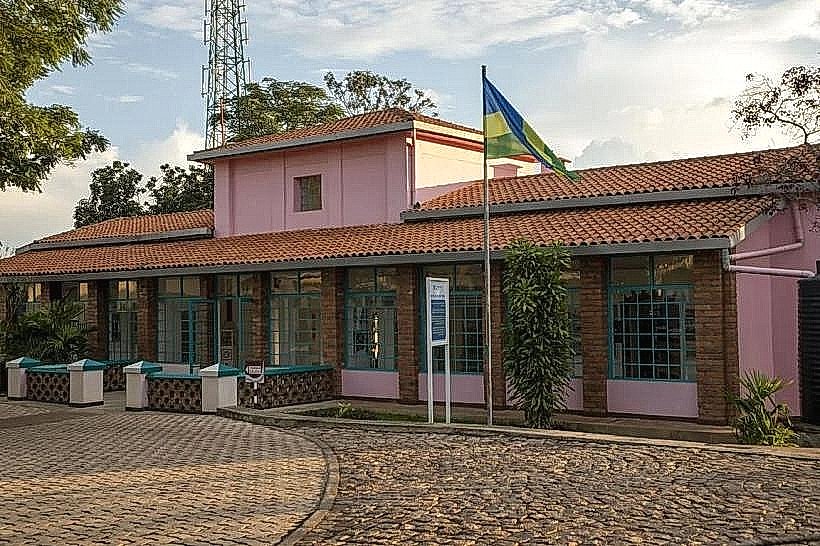
The visitor center houses a restaurant and a cafe with outdoor seating. Modern public restrooms are available at the main entrance and at several intervals along the trails. The entire park has 4G and 5G cellular coverage. Benches and shaded wooden gazebos are positioned every 500 meters along the paths. The facility is wheelchair accessible on all main paved routes, though some secondary dirt trails may be difficult to navigate.
Best Time to Visit
The best time for bird watching is between 06:00 and 09:00. For general recreation, the late afternoon (16:00 to 18:00) offers cooler temperatures and optimal lighting for landscape photography. The park is open daily from 06:00 to 18:00. Visiting during the short dry season (January–February) or long dry season (June–August) ensures the trails are dry and the water levels in the ponds are stable for viewing aquatic life.
Facts & Legends
A verified historical fact is that a portion of the park is located on the exact site where Pope John Paul II held a massive outdoor mass during his visit to Rwanda in 1990, now commemorated as the "Pope's Garden." A unique ecological tip: the park uses a completely natural "bio-filter" system consisting of specific reed types to purify the water, a first for an urban park of this scale in East Africa.
Nearby Landmarks
Kigali International Airport – 3.2km Southwest
La Palisse Hotel Nyamata – 0.5km South
Kigali Parents' School – 1.8km North
Mulindi Factory Store – 2.5km East
Kanombe Military Hospital – 4.0km South