City: Carthage
Country: Tunisia
Continent: Africa
Carthage, Tunisia, Africa
Carthage is an affluent seaside suburb of Tunis and one of the most significant archaeological sites in the Mediterranean. Situated on a peninsula overlooking the Gulf of Tunis, it serves as a bridge between Tunisia’s ancient superpower past and its modern administrative present.
Historical Timeline
Carthage was founded in the 9th century BC by Phoenician settlers led by Queen Dido. It became the center of a maritime empire that rivaled Rome until its total destruction by the Romans in 146 BC. The Romans later rebuilt it as the capital of their African province. After the Arab conquest in the late 7th century, the city’s political importance faded in favor of Tunis, eventually becoming a site for archaeological preservation and high-end residential development.
Demographics & Population
The estimated population for the Carthage municipality in 2026 is approximately 26,000. It is a wealthy enclave characterized by high-income residents, government officials, and a significant expatriate community. The median age is higher than the national average, reflecting its status as a settled residential suburb rather than a high-growth urban center.
Urban Layout & Key Districts
Carthage is not a single enclosed park but a series of archaeological sites scattered throughout a quiet, leafy residential neighborhood.
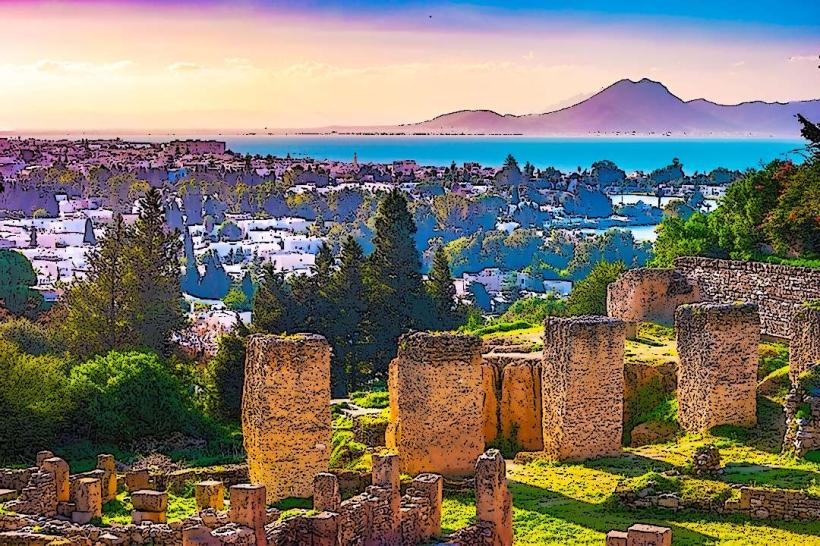
Byrsa Hill: The historical citadel and the highest point, offering panoramic views.
Salammbo: The coastal southern area housing the ancient ports and Tophet.
Carthage Présidence: The high-security administrative zone surrounding the Presidential Palace.
Dermech & Hannibal: Primary residential and commercial nodes centered around TGM train stations.
Top City Landmarks
Baths of Antoninus: The largest Roman bath complex in North Africa, located along the shoreline.
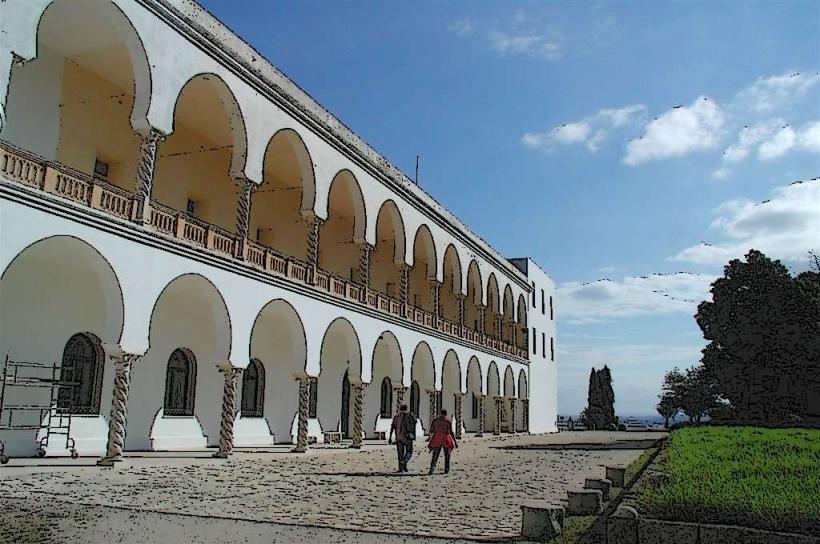
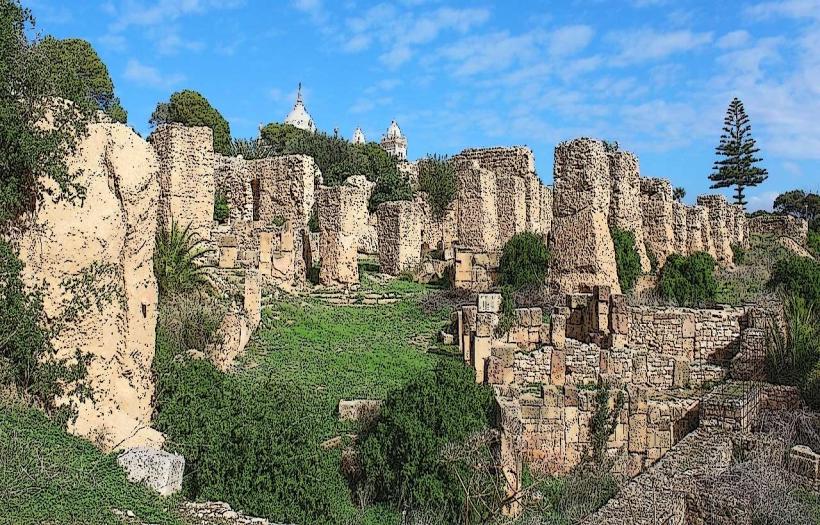
Byrsa Hill & Carthage National Museum: The heart of Punic Carthage, featuring artifacts and the ruins of the Hannibalic quarter.
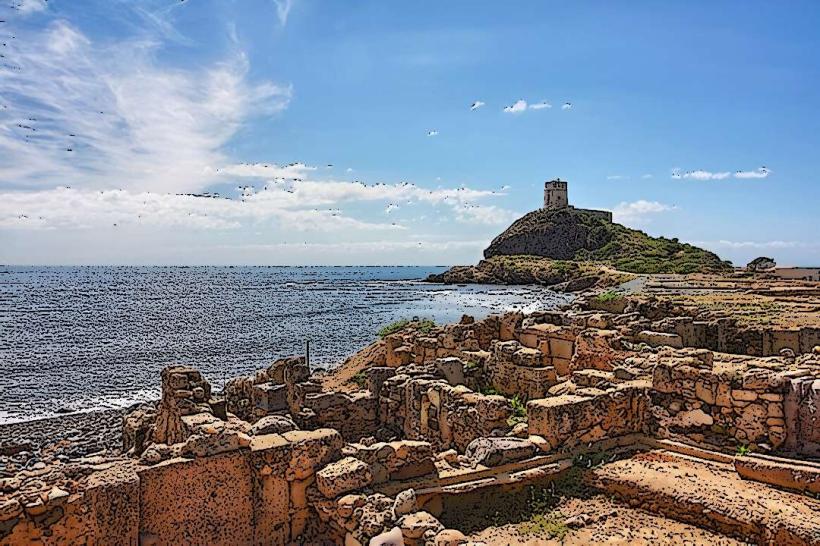
Punic Ports: Two circular lagoons that once served as the military and mercantile hubs of the Carthaginian navy.
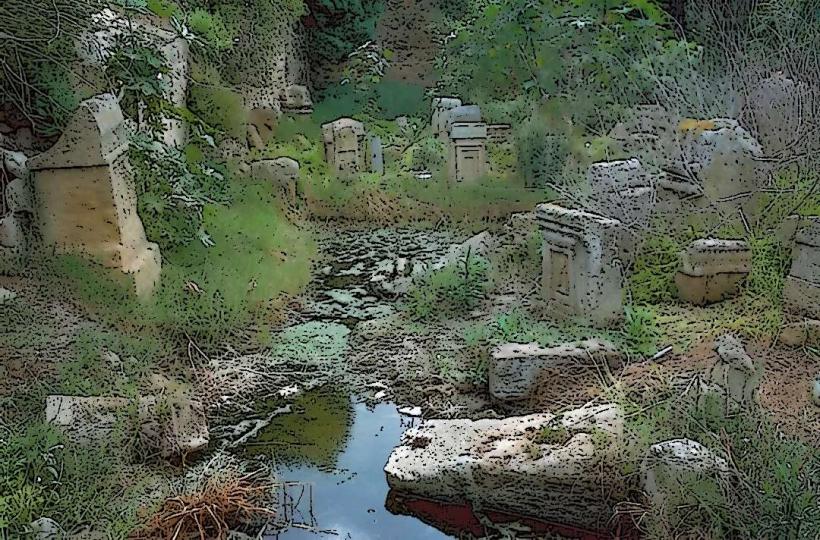
Salammbo Tophet: A sacred Punic site and burial ground.
Roman Villas & Villa of the Aviary: Restored ruins of wealthy Roman homes featuring intricate mosaics.
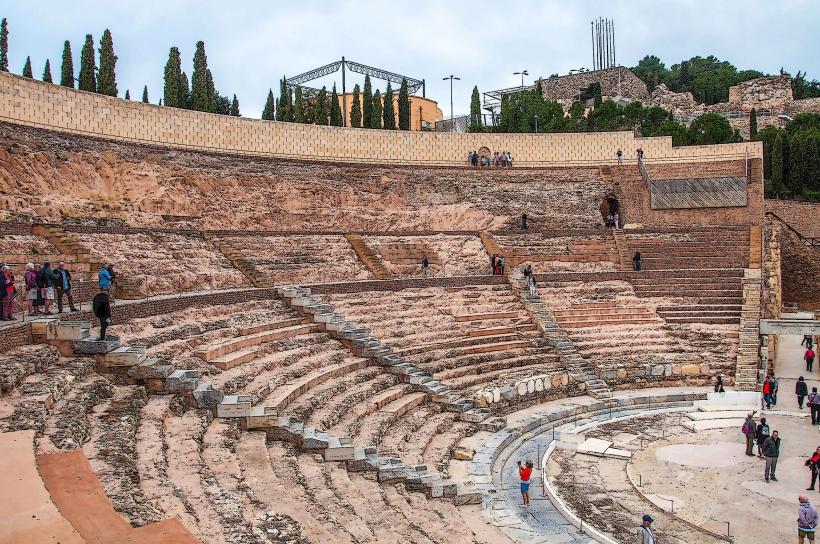
The Roman Theater: A 2nd-century theater still used today for the International Festival of Carthage.
Transportation Network
Intra-city transit is primarily managed by the TGM (Tunis-Goulette-Marsa) light rail, which has several stops (Salammbo, Byrsa, Dermech, Hannibal, and Présidence) providing easy access to different ruins. Yellow Taxis are highly active and affordable. The town is 15 kilometers from central Tunis and 20 minutes from Tunis-Carthage International Airport. Walking is common between sites, though the total archaeological circuit covers several kilometers.
Safety & "Red Zones"
The safety level is high. As a wealthy residential area and home to the Presidential Palace, the security presence is dense. Travelers should strictly avoid photographing the Presidential Palace or any government buildings guarded by soldiers, as this is illegal and strictly enforced. Petty theft is rare but can occur near the main ruins during peak tourist hours.
Digital & Financial Infrastructure
Internet speeds average 30–50 Mbps. Main carriers are Tunisie Telecom, Ooredoo, and Orange. M-Pesa does not exist here; cash (Tunisian Dinar) is king for small transactions. ATMs are widely available near the Carthage Hannibal and Dermech stations. Credit cards are accepted at luxury hotels and mid-to-high-range restaurants.
Climate & Air Quality
Temperatures range from 8°C in winter to 34°C in summer. The Mediterranean breeze keeps the air quality exceptionally high compared to central Tunis. Significant weather risks include extreme heat during July and August, which can make midday archaeological tours hazardous without hydration and sun protection.
Culture & Social Norms
Arabic is the official language, though French is the primary language of business and daily suburban life. The local culture is Mediterranean-cosmopolitan. While more liberal than rural areas, modest dress is still expected when visiting religious or historical sites. Tipping is standard at 10% in cafes and restaurants.
Accommodation Zones
Carthage Coast: Recommended for high-end boutique hotels with sea views.
Sidi Bou Said Border: Recommended for a more artistic atmosphere and proximity to cafes.
Local Cost Index
1 Espresso: 4.5 TND ($1.45 USD)
1 Standard Lunch (Seafood/Couscous): 35 TND ($11.30 USD)
1 TGM Train Ticket (from Tunis): 1.5 TND ($0.50 USD)
Nearby Day Trips
Sidi Bou Said: 3 km (Famous blue-and-white village).
La Marsa: 5 km (Coastal promenade and upscale dining).
Gammarth: 8 km (Nightlife and luxury beach resorts).
Facts & Legends
Carthage’s name (Qart-Hadasht) literally translates to "New City." A local legend tells of Queen Dido, who was told she could have as much land as an oxhide could cover; she cleverly cut the hide into thin strips to encircle the entire Byrsa Hill. A verified historical oddity is that the Roman senator Cato the Elder famously ended every speech with "Carthago delenda est" ("Carthage must be destroyed"), leading to a war so thorough that Romans allegedly salted the earth to prevent anything from growing-though archaeological evidence suggests this "salting" may be a later historical myth.