Landmark: Sanctuary of Tanit
City: Carthage
Country: Tunisia
Continent: Africa
Sanctuary of Tanit, Carthage, Tunisia, Africa
The Sanctuary of Tanit is an archaeological site located in the ancient city of Carthage, Tunisia. It is a significant Punic religious complex dedicated to the goddess Tanit.
Visual Characteristics
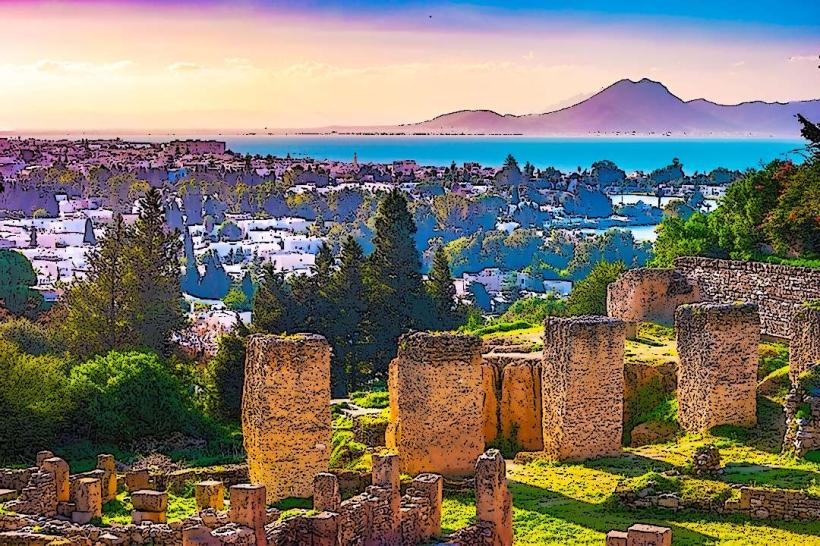
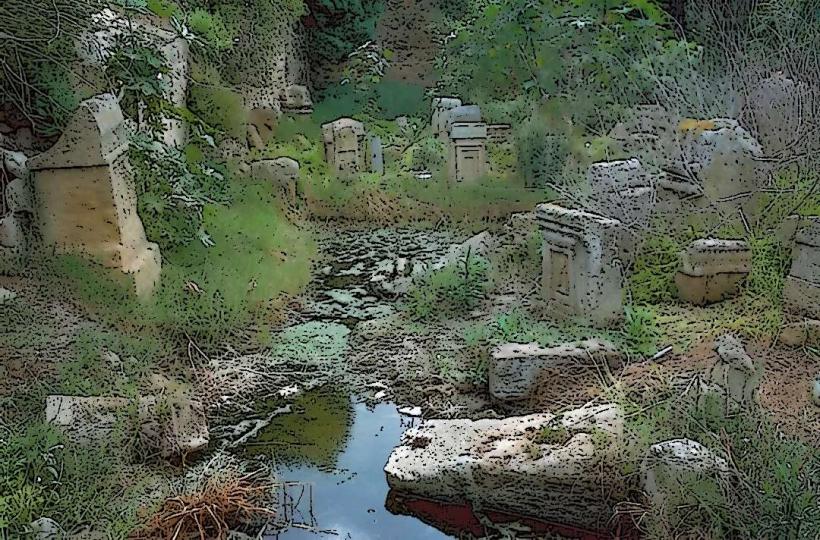
The site consists of a large, open-air sanctuary area with numerous stelae (stone slabs) arranged in rows. Many stelae are carved with symbols, including the sign of Tanit (a triangle with a horizontal line and a vertical line extending from its apex). The ground is primarily composed of compacted earth and stone fragments. Remains of low walls and foundation structures are visible, indicating the former presence of buildings.
Location & Access Logistics
The Sanctuary of Tanit is situated in the modern-day city of Carthage, approximately 15 kilometers east of Tunis city center. Access is via the Rue Hannibal. Parking is available on adjacent streets, though it can be limited during peak tourist seasons. Public transport options include the TGM (Tunis-Goulette-Marsa) train line, disembarking at the Carthage Hannibal station, followed by a 10-minute walk.
Historical & Ecological Origin
The sanctuary dates primarily to the Punic period, with evidence of use from the 5th century BCE to the 2nd century BCE. It served as a major religious center for the worship of Tanit, a principal deity of the Carthaginian pantheon, often associated with fertility and the moon. The site is built on a coastal plain, characteristic of the Punic settlement's strategic location.
Key Highlights & Activities
Visitors can observe the extensive collection of stelae and interpret the Punic inscriptions and symbols. Walking through the excavated areas provides insight into the layout of the ancient sanctuary. Photography of the stelae and ruins is permitted.
Infrastructure & Amenities
Basic signage is present. Restrooms are not directly on-site but are available at nearby museums or public facilities in Carthage. Shade is minimal, provided only by sparse vegetation. Cell phone signal (4G/5G) is generally good in this urban area. Food vendors are not present at the sanctuary itself; options are available in the town of Carthage.
Best Time to Visit
The best time of day for photography is in the morning or late afternoon when the sun angle creates shadows that highlight the carvings on the stelae. The most favorable months for visiting are from March to May and September to November, avoiding the extreme heat of summer. No tide-specific considerations apply.
Facts & Legends
A notable feature of the Sanctuary of Tanit is its association with the Punic Tophet, a burial ground for infants and young children, though the exact nature of this practice remains a subject of scholarly debate. The sheer number of stelae suggests a continuous and intensive period of worship and commemoration.
Nearby Landmarks
- Carthage Museum (Musée National de Carthage) - 0.3km Southwest
- Antonine Baths - 0.6km West
- Punic Ports - 0.8km Southeast
- Roman Amphitheatre of Carthage - 1.2km Northwest
- Byrsa Hill - 0.4km West