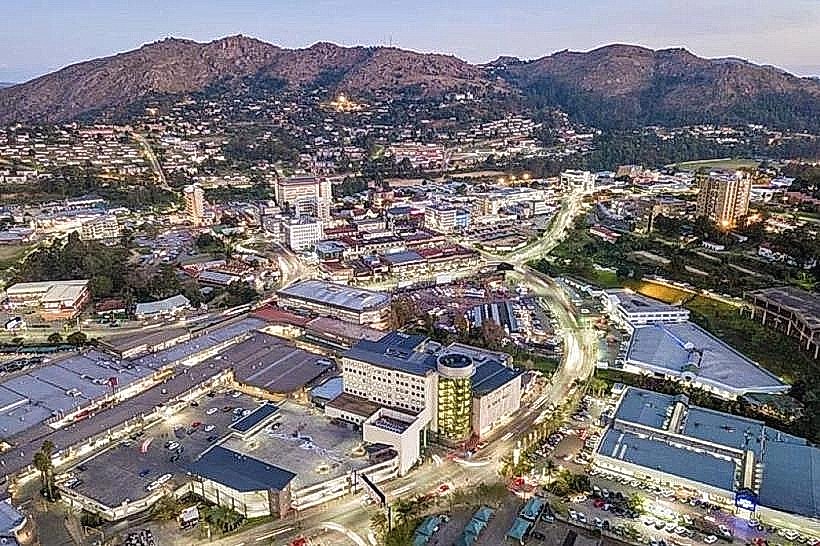
City: Mbabane
Country: Eswatini
Continent: Africa
Mbabane, Eswatini, Africa
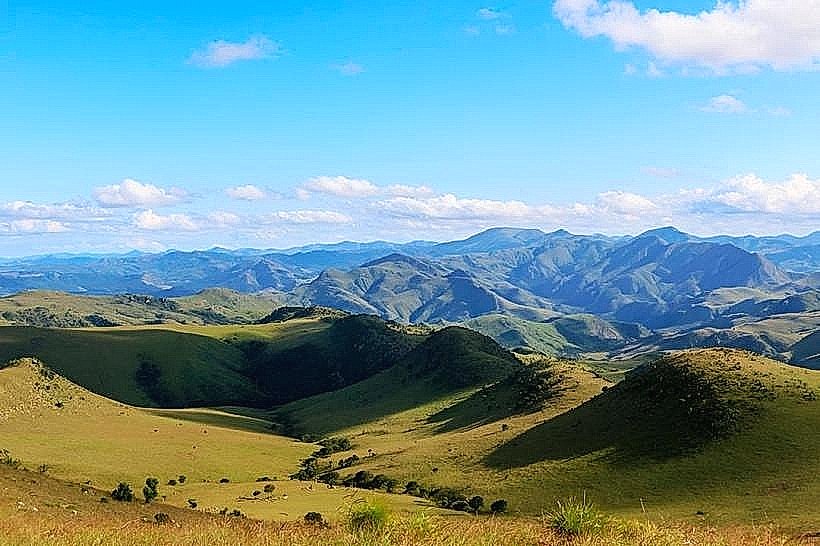
Mbabane is the executive capital and largest city of Eswatini, serving as the country's political, administrative, and economic headquarters. The city is located in the Dlangeni Hills within the Highveld region, positioned along the Mbabane River and its tributary, the Polinjane River.
Historical Timeline
1902: Founded as a colonial administrative post by British forces following the Anglo-Boer War.
1903: Designated as the official administrative capital of the British Swaziland Protectorate, replacing the traditional royal capital of Bremersdorp (now Manzini).
1968: Established as the capital city of the independent Kingdom of Swaziland (renamed Eswatini in 2018).
1990s: Implementation of the Mbabane Urban Development Project, which executed major infrastructure upgrades and informal settlement formalization.
Primary Urban Event: The construction of the MR3 highway connecting Mbabane directly to Ngwenya/Oshoek (the South African border crossing) and Manzini structurally locked the city into a linear mountain corridor development pattern.
Demographics & Population
City Limits Population: 61,000
Metropolitan Area Population: 95,000
Top Three Demographics: Swazi (96.5%), Zulu (1.2%), Mozambican/Other (2.3%).
Median Age: 22.5 years
Urban Layout & Key Districts
Mbabane is organized topographically, nestled inside the Ezulwini Valley mountains with steep elevation changes across its sectors.
Central Business District (CBD): The flat commercial core centered around Allister Miller Street and the Swazi Plaza shopping complexes.
Mbabane Heights / Eveni: Located east of the CBD, a high-income residential area holding several foreign embassies and diplomatic housing.
Msunduza: Located northeast of the city center, a high-density, low-income informal and formal residential sector built along the hillsides.
Top City Landmarks
The Swazi Plaza and Corporate Place: Two adjacent open-air commercial developments forming the modern architectural and retail hub of the capital.
Government Hill / Cabinet Offices: The administrative quarter containing the prime minister's office and core ministries.
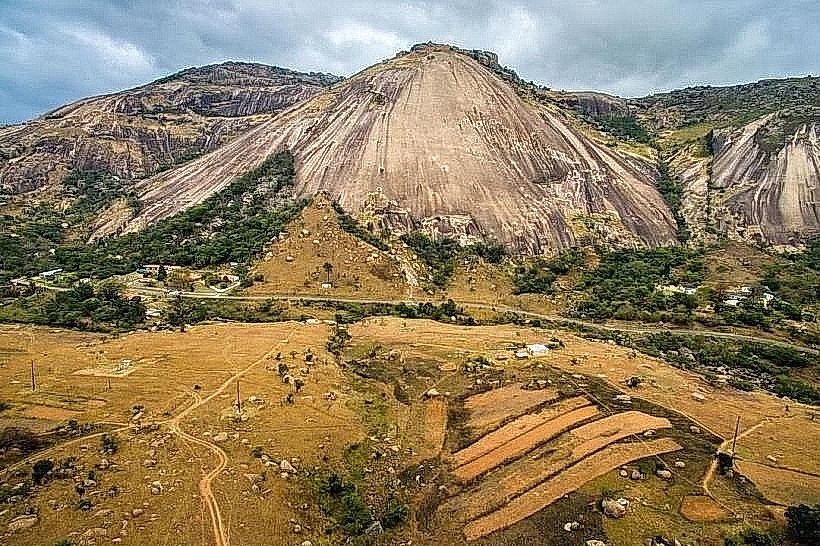
Sibebe Rock: The world's largest volcanic granite pluton (monolith), located 10 km northeast of the city center, immediately outside municipal boundaries.
All Saints Cathedral: A prominent Anglican church complex anchoring the historical religious sector of the upper town.
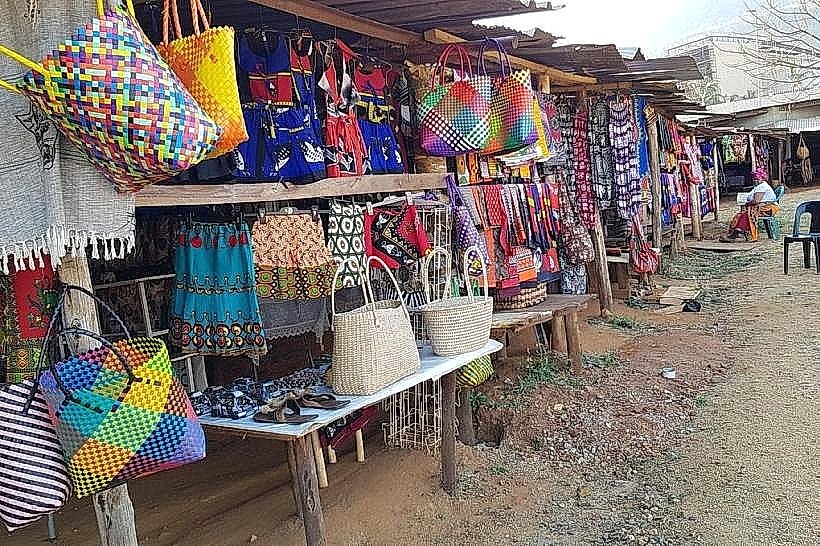
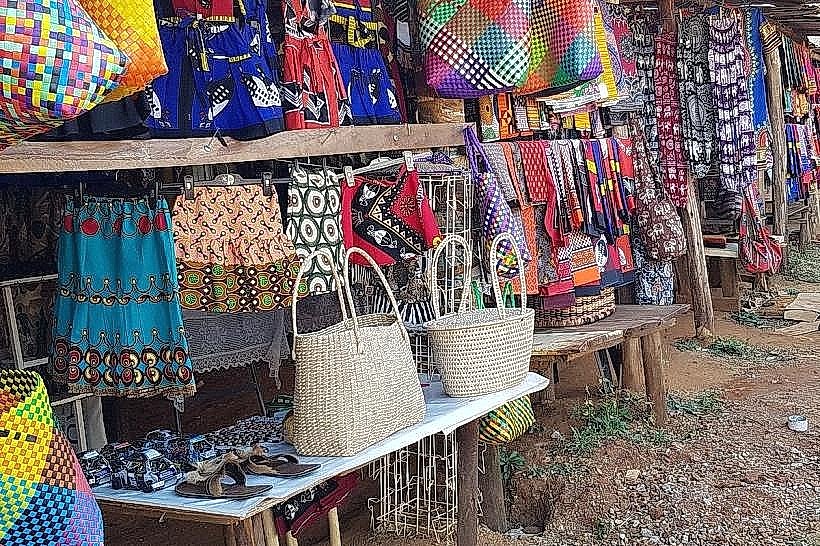
Mbabane Market: A traditional covered marketplace specializing in indigenous crafts, fresh produce, and traditional Swazi medicinal herbs.
Transportation Network
Intra-city transport is dominated by a network of white 15-seater public minibuses (locally called "kombis") that operate from the central Mbabane Bus Rank. There is no rail or tram network. Metered private taxis are available but must be booked via phone or at designated ranks; there are no major international ride-sharing apps (like Uber or Bolt) operating within the city. Traffic density is moderate, experiencing bottlenecks at the city entrance and exit on the MR3 highway during commuting hours (07:30–08:30 and 16:30–17:30).
Safety & "Red Zones"
Mbabane is generally safer than neighboring South African cities, but opportunist petty crime occurs. Areas to avoid after dark include the central Mbabane Bus Rank, the vicinity around the Swazi Plaza, and the unlit pathways of the Msunduza and Sidwashini informal neighborhoods. Common scams are limited to pickpocketing in crowded transport hubs and short-changing by informal vendors.
Digital & Financial Infrastructure
Average Internet Speed: 25 Mbps fixed broadband; 15 Mbps mobile.
Main Mobile Carriers: MTN Eswatini, Eswatini Mobile.
Card Acceptance: Moderate to High; South African Visa and Mastercard are accepted at major grocery stores, hotels, and fuel stations, but cash is strictly required for local markets and transport.
ATMs: Readily available throughout the CBD (Standard Bank, Nedbank, FNB, SwaziBank); they issue the local currency, Lilangeni (SZL), which is pegged 1:1 to the South African Rand (ZAR). South African Rand notes are accepted interchangeably everywhere.
Climate & Air Quality
Mbabane has a subtropical highland climate with moderate temperatures due to its high altitude (1,243 meters).
Winter (Jun–Aug): 5°C to 19°C; dry and clear, with cold nights and occasional frost in valley basins. Air quality decreases due to residential wood burning.
Summer (Dec–Feb): 15°C to 25°C; frequent afternoon thunderstorms and heavy downpours.
Weather Risks: Thick mountain fog during summer afternoons can reduce driving visibility on mountain passes to near zero.
Culture & Social Norms
Tipping: 10% is standard in formal sit-down restaurants; it is not expected in casual fast-food establishments or taxi rides.
Greeting: A polite verbal greeting ("Sanibona") followed by a soft, three-way African handshake (normal, thumb-lock, normal) is the social standard.
Dress Code: Highly conservative; knees and shoulders should be covered in public, and swimwear is restricted entirely to pool areas.
Alcohol & Smoking: Public drinking outside licensed venues is illegal. Smoking in enclosed public spaces is legally restricted, and smoking outdoors is widely frowned upon in public view.
Accommodation Zones
Mbabane Central / Eveni: Recommended for immediate logistical access to corporate offices, banks, restaurants, and central transport links.
Ezulwini Valley (10-15 km south via MR3): Recommended for better hotel variety, lower elevations with warmer temperatures, and proximity to tourist activities outside the dense urban core.
Local Cost Index
1 Espresso: 35 SZL ($1.95 USD)
1 Standard Lunch (Daily meal at local eatery): 120 SZL ($6.70 USD)
1 Kombi Transit Ticket (Within city limits): 12 SZL ($0.67 USD)
Nearby Day Trips
Sibebe Rock: Massive granite dome ideal for hiking and trail running; 10 km northeast, reachable by local road or taxi within 15 minutes.
Mlilwane Wildlife Sanctuary: Eswatini’s oldest conservation area, allowing walking and cycling safaris; 23 km south, reachable via the MR3 highway in 25 minutes.
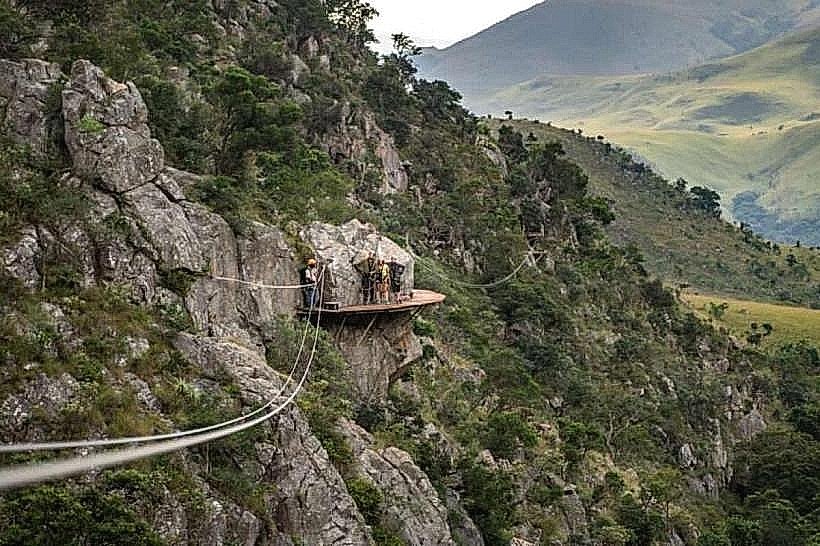
Malolotja Nature Reserve: High-altitude wilderness area featuring deep gorges and the country’s highest waterfall; 35 km northwest, reachable via the MR1 road in 35 minutes.
Ngwenya Glass Factory: A community-driven recycling glass workshop and craft center located near the South African border; 18 km west, reachable via the MR3 in 20 minutes.
Facts & Legends
An enduring geographic legend surrounds Execution Rock (Nyonyane Mountain), visible from the southern approaches of Mbabane. Local oral tradition holds that ancient Swazi royals utilized the sheer, granite peak as a primitive court room and execution site. Convicted criminals or those suspected of witchcraft were allegedly forced at spearpoint to walk off the edge of the precipice to their deaths in the valley below.