Landmark: Traditional Swazi Craft Markets
City: Mbabane
Country: Eswatini
Continent: Africa
Traditional Swazi Craft Markets, Mbabane, Eswatini, Africa
The Traditional Swazi Craft Markets, primarily anchored by the expansive Ezulwini Craft Market, form a centralized cultural and artisanal trading hub located in the heart of the Ezulwini Valley. The complex comprises approximately 126 permanent indoor and outdoor stalls dedicated exclusively to the production, exhibition, and distribution of indigenous Eswatini handicrafts and heritage textiles.
Visual Characteristics
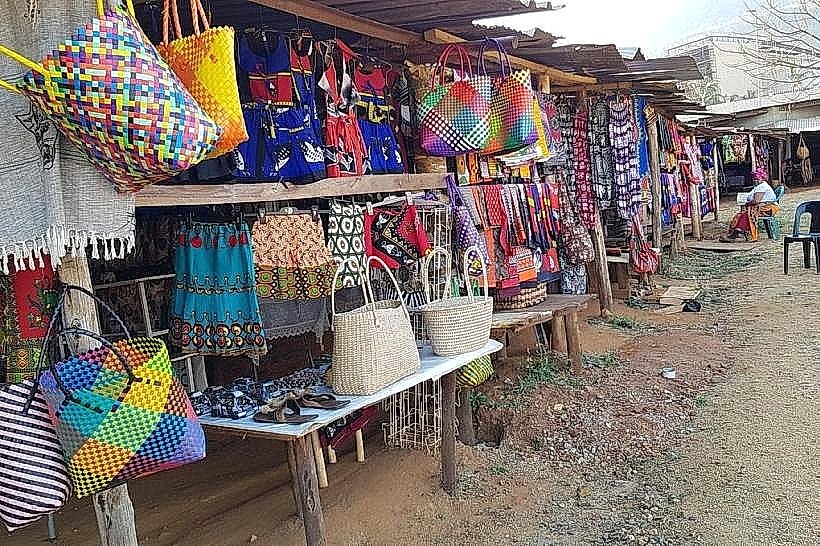
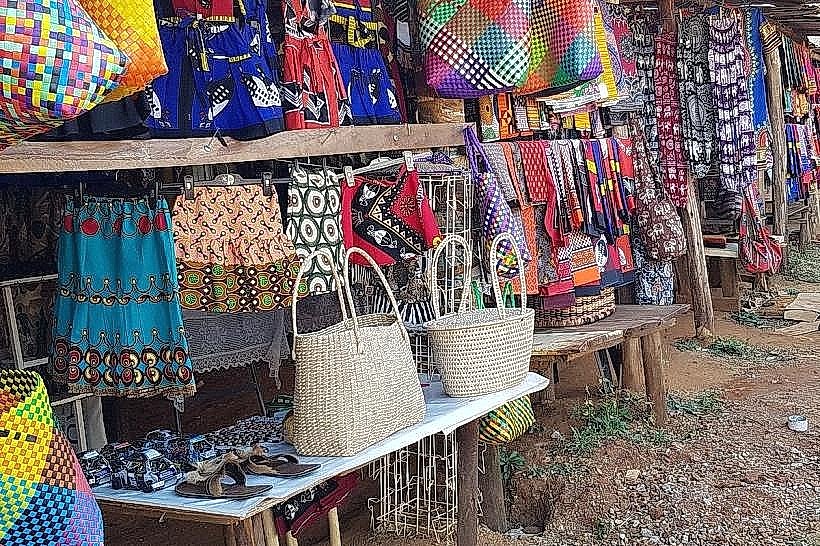
The market complex features a dense cluster of timber-framed and corrugated-iron sheltered stalls arranged along interconnected gravel and concrete pathways. Visually, the site is dominated by deep textures of natural fibers, displaying thousands of hand-coiled lutindzi grass baskets dyed in geometric earth tones, heavy soapstone and ironwood carvings, and multi-colored glass seed bead arrangements. The physical perimeter is open-air, surrounded by tall indigenous canopy trees and bordered by parking zones along the main valley road.
Location & Access Logistics
The main market facility is situated directly off the MR3 highway in the Ezulwini Valley, within the royal legislative district of Lobamba, approximately 12 kilometers south of the capital city of Mbabane. Travelers using private vehicles can access the site via the dedicated Ezulwini exit on the paved MR3 dual-carriageway, parking in the gravel lot directly adjacent to the stalls. Public transit via local minibuses (kombis) operating between the Mbabane Bus Rank and Manzini runs continuously along the main valley road, dropping passengers directly at the market entrance gates.
Historical & Ecological Origin
The market system evolved from informal roadside trade cooperatives established during the mid-20th century, which were later formalized by the Eswatini government and local aid organizations to create sustainable economic platforms for rural artisans. The products utilize raw materials harvested from specialized ecosystems across Eswatini, including wild lutindzi grass collected from sheer highveld mountain cliffs, mountain sisal, soapstone deposits from regional quarries, and sustainably gathered native hardwoods like kiaat and olive wood.
Key Highlights & Activities
The central activity consists of self-guided pedestrian navigation through the linear rows of independent merchant stalls to purchase traditional items. Visitors can watch master weavers actively constructing intricate, structural baskets or see woodcarvers refining raw timber blocks with hand chisels behind their displays. Cultural exploration extends to examining authentic traditional attire, including sidvwaba (leather skirts), emahiya (printed wraps), and complex ceremonial beadwork motifs that denote specific social status.
Infrastructure & Amenities
The market complex is equipped with structural municipal amenities, including communal public restroom facilities, concrete drainage infrastructure, and a gravel parking lot capable of accommodating commercial tour buses. High-speed cellular network coverage (4G/5G) is fully active across the site due to its location within the primary tourism corridor of the country. While financial transactions are predominantly handled via physical cash (Eswatini Lilangeni and South African Rand), a growing number of permanent stalls utilize digital mobile money applications or portable card payment terminals.
Best Time to Visit
The market is active year-round, but the dry winter months from May to September offer the most comfortable atmospheric conditions for open-air shopping, with cool temperatures and zero rainfall. Operational hours run daily from 08:00 to 17:00, with mid-morning between 09:00 and 11:00 presenting optimal conditions for photography due to diffused, clear natural light filtering through the tree canopy before midday glare occurs. The summer wet season from November to March introduces high humidity and sudden afternoon rain showers that can disrupt access to the uncovered outdoor stalls.
Facts & Legends
The intricate patterns woven into the traditional Swazi baskets are not merely decorative but often communicate specific familial histories or geographic origins of the weaver. Local legend asserts that the art of weaving lutindzi grass carries ancestral blessings, as the grass grows exclusively on high, dangerous mountain precipices, and the successful harvesting and crafting of the fiber is traditionally viewed as a testament to the weaver's spiritual resilience and physical endurance.
Nearby Landmarks
Mantenga Lifestyle & Craft Centre - 1.1km West
Mantenga Cultural Village - 2.3km West-Southwest
Eswatini National Museum - 3.4km South-Southeast
King Sobhuza II Memorial Park - 3.5km South-Southeast
The Gables Shopping Centre - 3.8km East-Southeast