Landmark: Ngwenya Old Mine
City: Mbabane
Country: Eswatini
Continent: Africa
Ngwenya Old Mine, Mbabane, Eswatini, Africa
The Ngwenya iron mine is an ancient open-cast industrial site located on the ridges of Ngwenya Mountain within the southern boundary of the Malolotja Nature Reserve. It is officially documented as the oldest known mining site on Earth, containing geological extractions that date back tens of thousands of years.
Visual Characteristics
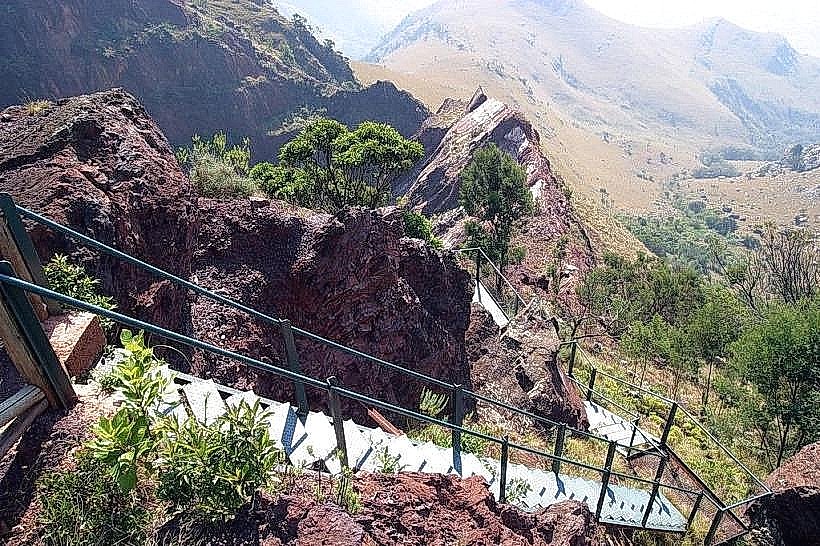
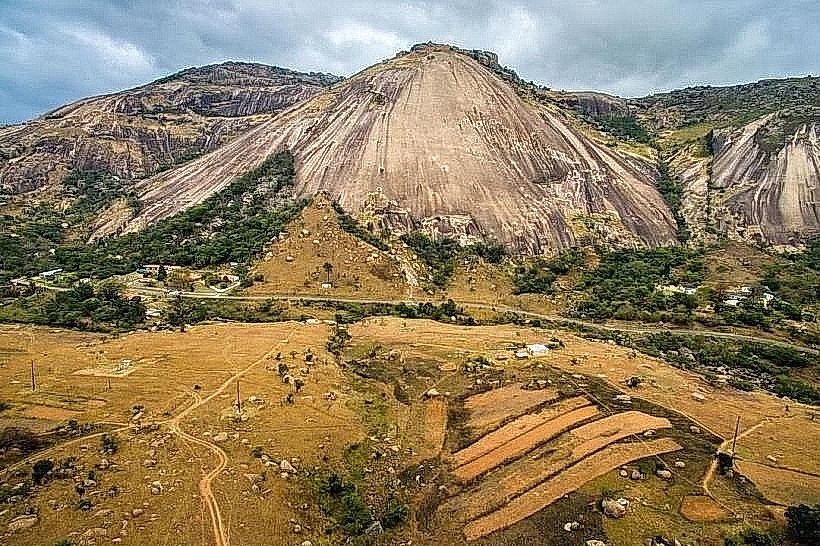
The landmark presents a massive, deep open-cast amphitheater carved directly into the western face of the mountain ridge. The exposed rock layers display heavy concentrations of dark, metallic iron ore and glittering specular hematite, contrasted against highly oxidized, deep-red ochre earth. The surrounding topography is exceptionally steep and rugged, featuring sheer rock cliffs, skeletal remains of 20th-century heavy machinery, and low-growing montane grasses encroaching on the abandoned excavation terraces.
Location & Access Logistics
The site is situated approximately 5 kilometers north of the town of Ngwenya and roughly 32 kilometers northwest of Mbabane. Access is achieved by turning north off the paved MR1 highway onto a designated, unpaved gravel road leading past the Ngwenya Glass complex up into the mountain ridges. Public transport minibuses drop passengers at the main highway junction, leaving a steep 3-kilometer uphill walk to the visitor center. Vehicles can park in a graded gravel lot situated directly adjacent to the site’s information center.
Historical & Ecological Origin
The mine contains excavations where San and early iron-age populations extracted red ochre and specularite for cosmetic, ritual, and symbolic purposes starting around 43,000 BC. In the modern era, the Swaziland Iron Ore Development Company conducted large-scale industrial mining here between 1964 and 1977, exporting millions of tons of ore before abandoning the site. Ecologically, the area is incorporated into the protected Malolotja Nature Reserve, sitting within a high-altitude mist-belt ecosystem that supports specialized, endemic flora adapted to heavy metal soils.
Key Highlights & Activities
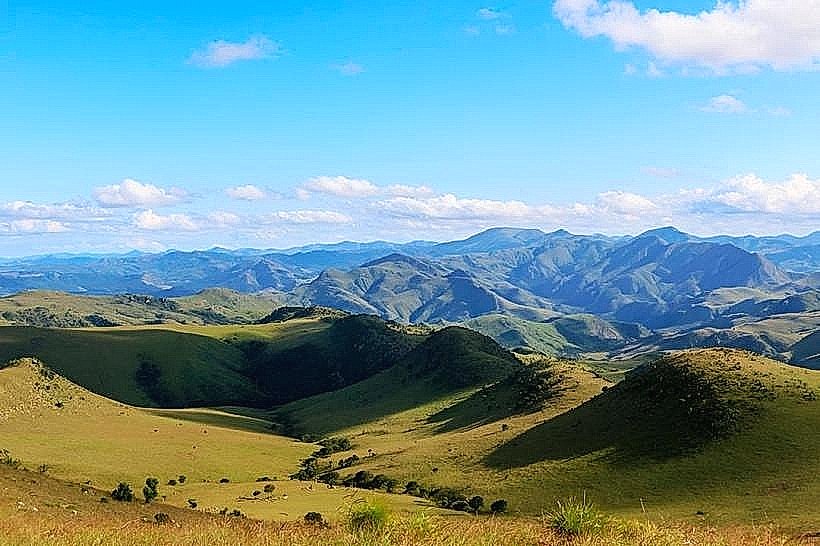
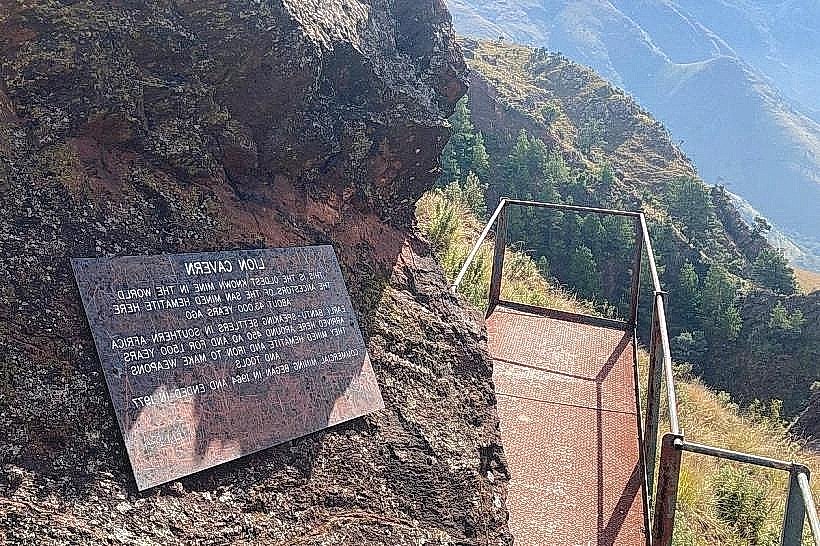
Guided walking tours are mandatory and depart from the visitor center, leading participants along a structural pathway to the edge of the ancient open-cast pit and the older Lion Cavern. Visitors can examine the prehistoric extraction points where charcoal remains and stone tools were uncovered by archaeologists. Birdwatching along the mountain trail allows for views of rare cliff-dwelling raptors, while the elevated viewing decks provide panoramic sightlines extending westward across the South African border.
Infrastructure & Amenities
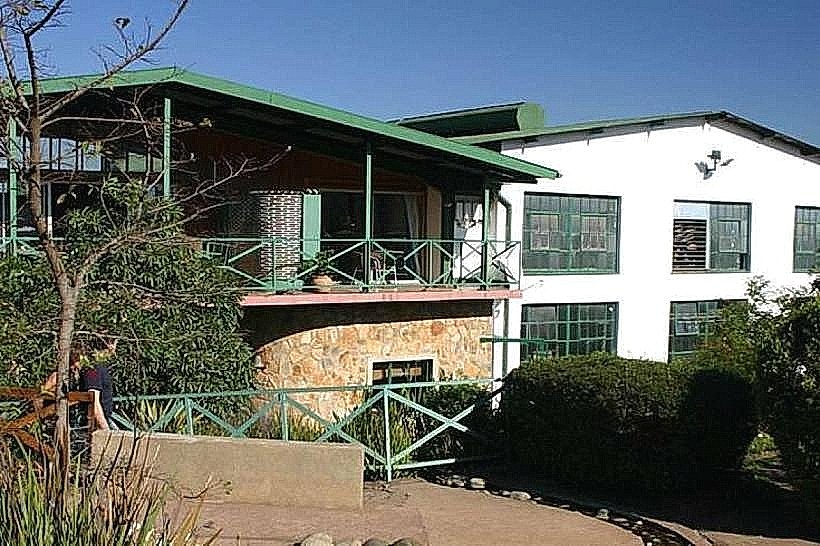
The entry point features a dedicated Visitor Centre that contains historical exhibits, archaeological displays, and basic public restroom facilities. The actual mining trails are steep, rugged dirt paths completely devoid of shelters, shade, or drinking water access points. Cellular network coverage (4G) is functional at the high-altitude viewpoint facing the main valley but becomes unstable or drops entirely when descending into the older deep rock caverns.
Best Time to Visit
The optimal timeframe for visiting is during the dry winter season from May to August, when clear weather ensures stable trail footings and moderate walking temperatures. Mid-morning between 09:00 and 11:00 is the best period for photography, as direct sunlight enters the deep open pit, highlighting the red coloration of the iron walls. Summer months from November to March bring frequent, sudden torrential downpours and thick mountain fog that completely obscures visibility and makes the unpaved mountain access roads treacherous.
Facts & Legends
Archaeological excavations at the site during the late 20th century recovered specialized stone mining tools, such as heavy dolerite hammers, that were utilized by prehistoric miners before the discovery of metal forging. Local oral history records that the deep, red coloration of the soil and the glittering specularite found inside the Lion Cavern were considered sacred materials, representing the blood of the earth and the presence of powerful ancestral spirits.
Nearby Landmarks
Ngwenya Glass Factory - 2.9km South
Oshoek Border Post - 5.0km South-Southwest
Hawane Dam and Nature Reserve - 4.2km Southeast
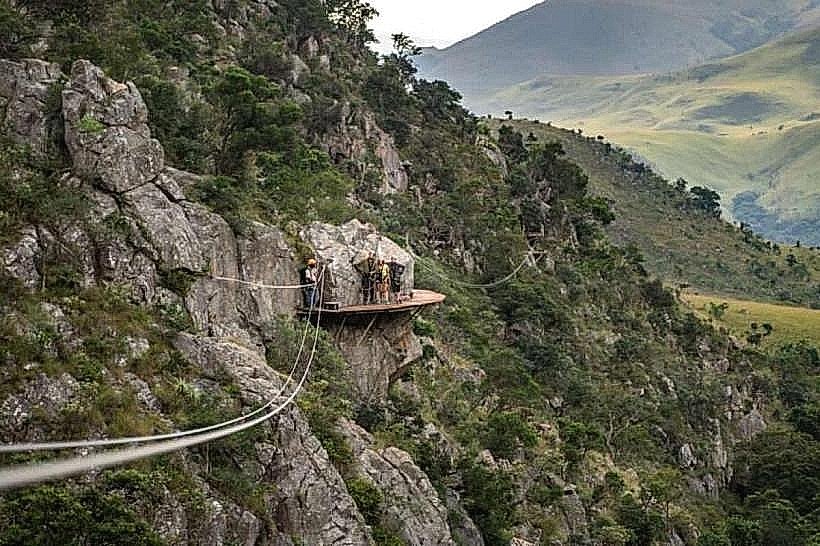
Malolotja Canopy Tour - 4.4km North