Landmark: Herodian Port
City: Caesarea
Country: Israel
Continent: Asia
Herodian Port, Caesarea, Israel, Asia
The Herodian Port, historically known as Sebastos, was a feat of Roman-era engineering and the first artificial deep-sea harbor of its scale in the ancient world. Commissioned by Herod the Great between 22 and 10 BCE, it transformed a minor Phoenician anchorage into the primary gateway to Judea and a major hub of Mediterranean trade.
Visual Characteristics
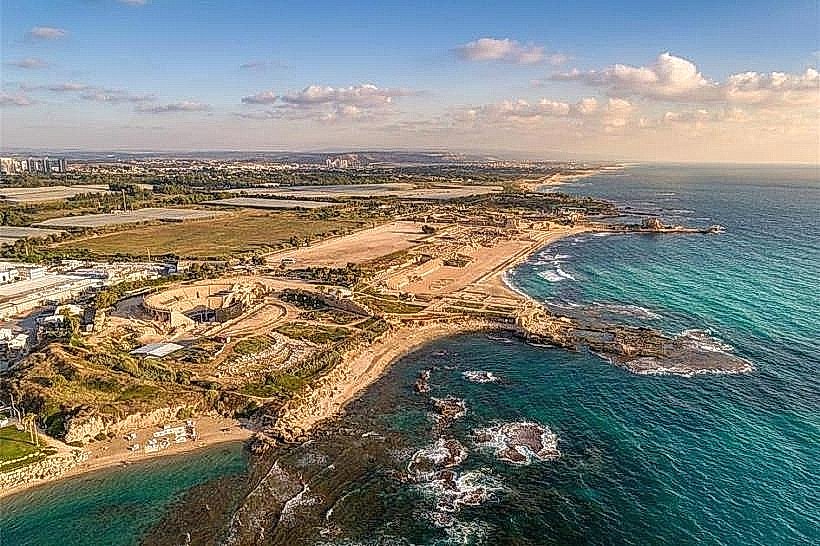
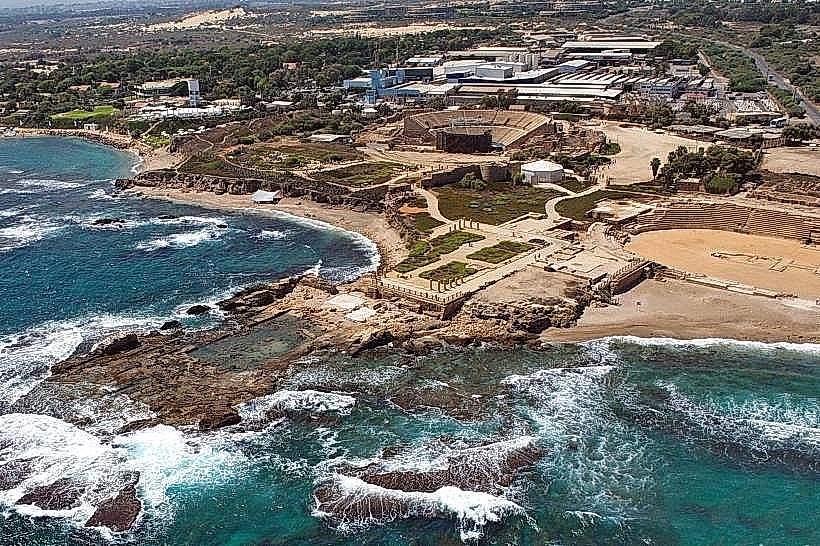
Today, the Herodian Port is primarily an underwater site, as the original breakwaters have subsided 5 to 10 meters below sea level. At the surface, visitors see the smaller, renovated Crusader Harbor, which utilizes only a fraction of the original Herodian footprint. The most striking visual remains are the massive submerged concrete blocks and granite columns visible through clear water, particularly from the harbor's southern and northern "arms."
Location & Access Logistics
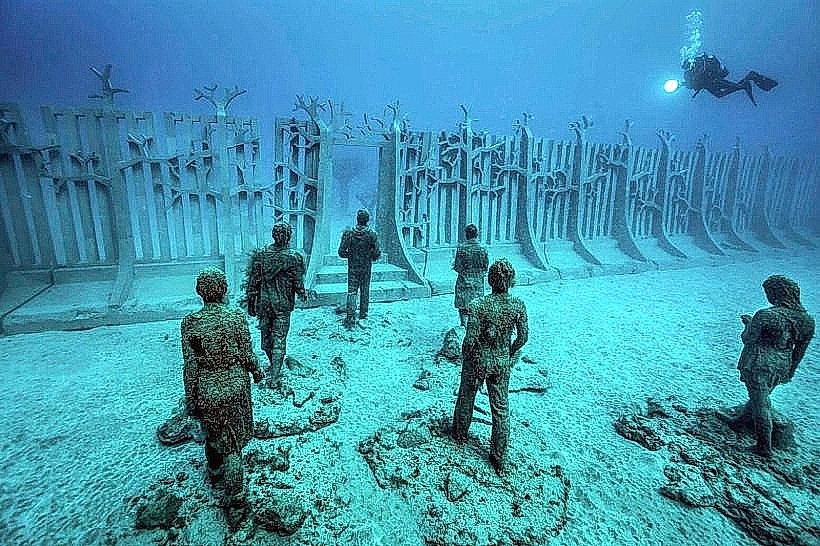
The port is the central feature of Caesarea-national-park_caesarea" class="underline">Caesarea National Park. Access is through the park's main entrance or the specialized "Harbor Gate." It is roughly a 10-minute walk from the Roman Theater. While the land-based ruins are accessible to all, viewing the true Herodian port requires snorkeling or scuba diving via the Underwater Archaeological Park (accessible through the local diving center). Paved parking is available at the national park's harbor entrance.
Historical & Engineering Origin
The harbor's construction was revolutionary because it was built on a straight coastline with no natural protection. Herod’s engineers used pozzolana (volcanic ash from Italy) to create hydraulic concrete that hardened underwater.
The Breakwaters: Two massive moles were constructed; the southern breakwater extended 600 meters into the sea, curving north to protect the basin.
Subsidence: Within a century of its completion, the outer harbor began to fail. Current archaeological theories suggest this was caused by a combination of seismic activity (two fault lines run through the harbor) and the settling of the heavy concrete blocks into the soft seabed sand.
Key Highlights & Activities
The Sunken City: Divers can explore Track A or B of the underwater park to see the foundations of the "Victory Tower" and the original mooring stones.
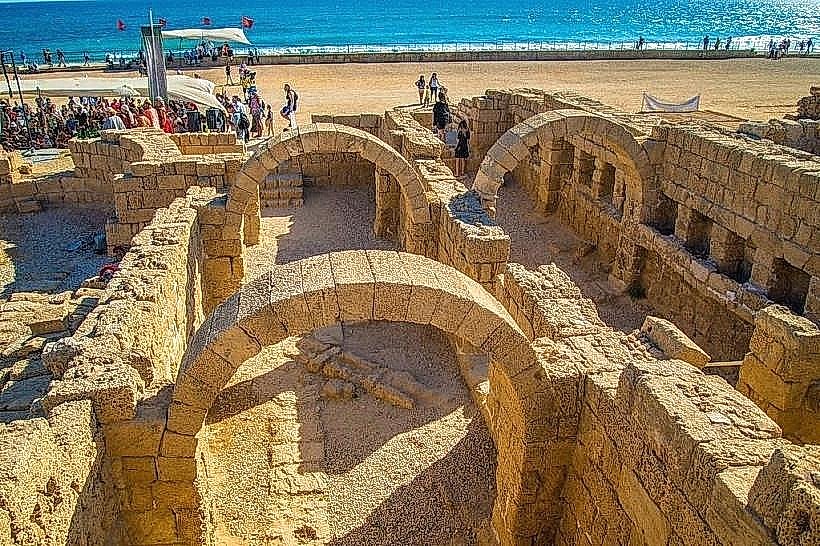
The Vaults: On land, the massive vaults that once supported the Temple of Augustus and Roma (built to be visible from ships miles at sea) have been excavated and house the park's visitor center.
The Quay Walk: A modern promenade follows the line of the ancient Crusader walls, offering views over the submerged Herodian ruins.
Multimedia "Time Tower": Located in the harbor area, this provides a 4D historical overview of the port’s construction and eventual decline.
Infrastructure & Amenities
The harbor area is the most developed part of the national park, featuring upscale restaurants, art galleries, and cafes. Public restrooms and drinking fountains are abundant. The Old Caesarea Diving Center provides gear for those wishing to visit the submerged sections. 5G cellular coverage is excellent throughout the terrestrial harbor area.
Best Time to Visit
The best time for visibility of the underwater ruins is late spring or autumn when the Mediterranean is calm. For land-based visitors, the hour before sunset provides the best lighting for the harbor's stone masonry and the "Time Tower" presentations. The area is open daily, though some restaurants and galleries in the harbor may have varying hours.
Facts & Legends
The name "Sebastos" is the Greek translation of "Augustus," honoring Herod's patron, the Roman Emperor. A verified historical curiosity is the "Pilate Stone"-found near the theater but belonging to the city's administrative era-which was repurposed as a building block in later centuries. Legend says that the harbor was so large that its entrance was flanked by six colossi (massive statues), though only their pedestals have been identified by maritime archaeologists.
Nearby Landmarks
Underwater Archaeological Park: 0.0km (Within the basin)
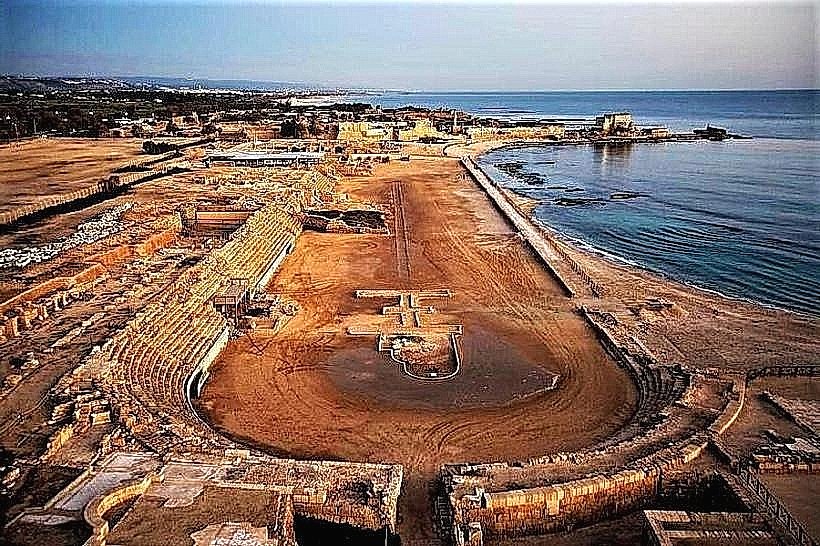
Hippodrome/Stadium: 0.3km South
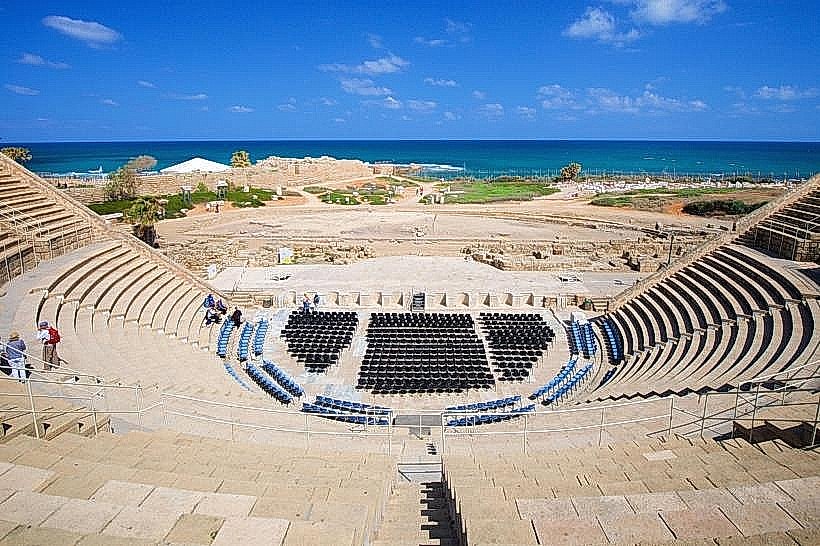
Roman Theater: 0.6km South
Crusader Fortress Walls: 0.1km East
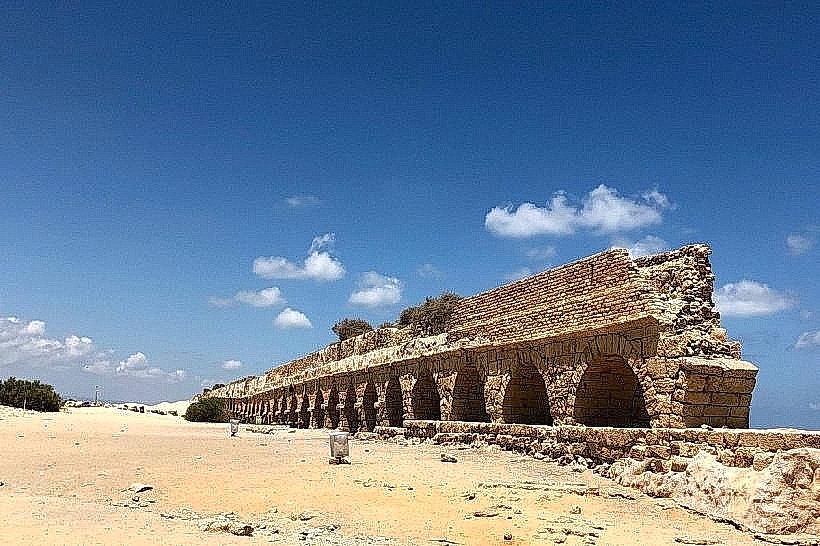
Caesarea Aqueduct: 2.6km North