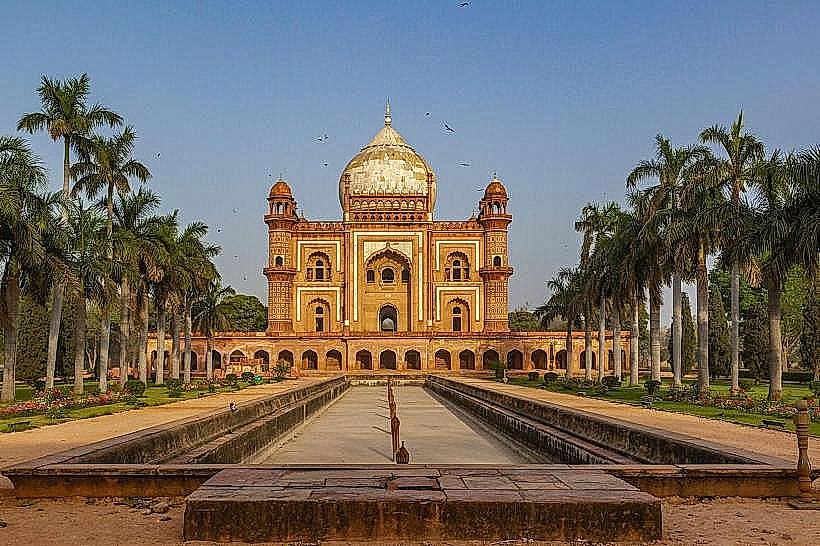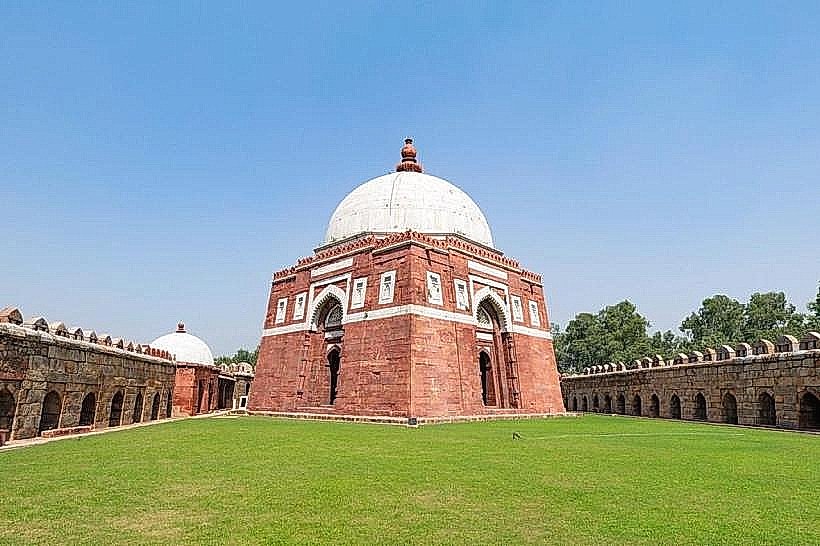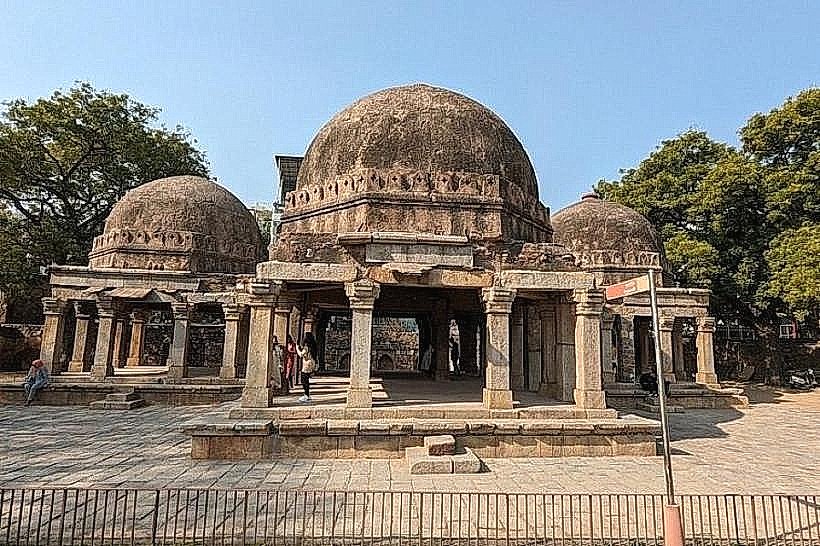
Landmark: Jantar Mantar
City: New Delhi
Country: India
Continent: Asia
Jantar Mantar, New Delhi, India, Asia
Jantar Mantar is an astronomical observation site located in New Delhi, India. It is one of five such observatories built by Maharaja Jai Singh II of Jaipur.
Visual Characteristics
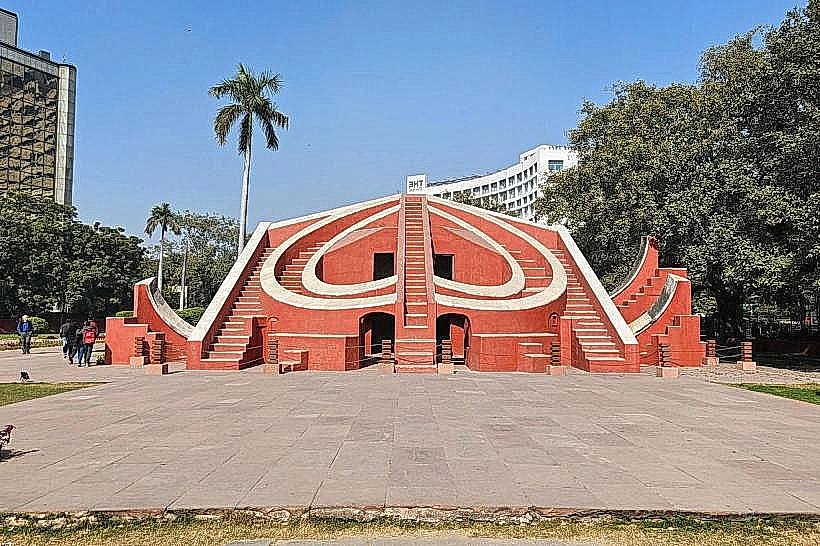
The observatory consists of nineteen architectural astronomical instruments. Constructed primarily from local stone and plastered with lime rendering, the structures are geometric in form. Key instruments include the Samrat Yantra (a large gnomon), the Jai Prakash Yantra (a hemispherical bowl), and the Ram Yantra (a cylindrical structure). The largest gnomon of the Samrat Yantra stands approximately 27 meters high.
Location & Access Logistics
Jantar Mantar is situated in the heart of New Delhi, adjacent to Connaught Place. It is accessible via Sansad Marg. The nearest metro station is Patel Chowk on the Yellow Line, approximately 0.5km West. Auto-rickshaws and taxis are readily available. Limited parking is available in the vicinity, with paid parking lots near Connaught Place.
Historical & Ecological Origin
Construction of the New Delhi Jantar Mantar was completed in 1724. It was designed and built under the supervision of Maharaja Jai Singh II, who was a keen astronomer. The primary purpose was to compile astronomical tables and predict the movements of celestial bodies with greater accuracy than was possible with existing instruments.
Key Highlights & Activities
Visitors can observe the function of the various astronomical instruments. The Samrat Yantra can measure time to within two seconds. Guided tours are available, explaining the principles behind each instrument. Photography is permitted.
Infrastructure & Amenities
Restrooms are available on-site. Limited shaded areas are present. Cell phone signal (4G/5G) is generally good within the complex. No food vendors are located within the Jantar Mantar site itself, but numerous options exist in the surrounding Connaught Place area.
Best Time to Visit
For optimal viewing of the Samrat Yantra's shadow and its timekeeping function, visit during daylight hours. The period between 9:00 AM and 5:00 PM is recommended. Clear skies are essential for observing the instruments' intended use. The months of October through March offer pleasant weather conditions.
Facts & Legends
The accuracy of the instruments at Jantar Mantar was considered revolutionary for its time. It is said that Maharaja Jai Singh II consulted European astronomical texts but found them lacking in precision compared to his own designs.
Nearby Landmarks
- 0.3km North-East: Connaught Place
- 0.8km South-West: Agrasen ki Baoli
- 1.2km North: Jantar Mantar (Jaipur) - Note: This is a different observatory, but the name is the same. The Jaipur Jantar Mantar is approximately 250km away.
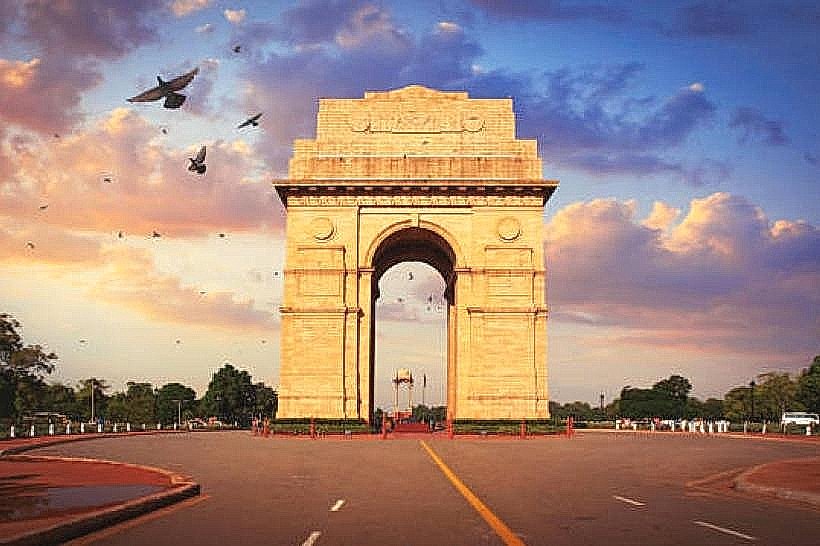
- 1.5km South: India Gate