Landmark: Louvre Museum
City: Paris
Country: France
Continent: Europe
Louvre Museum, Paris, France, Europe
The Louvre Museum (Musée du Louvre) is the world's largest art and antiques museum and a historic monument in Paris. Located on the Right Bank of the Seine in the 1st arrondissement, it serves as a global cultural landmark and the former seat of French royal power.
Visual Characteristics
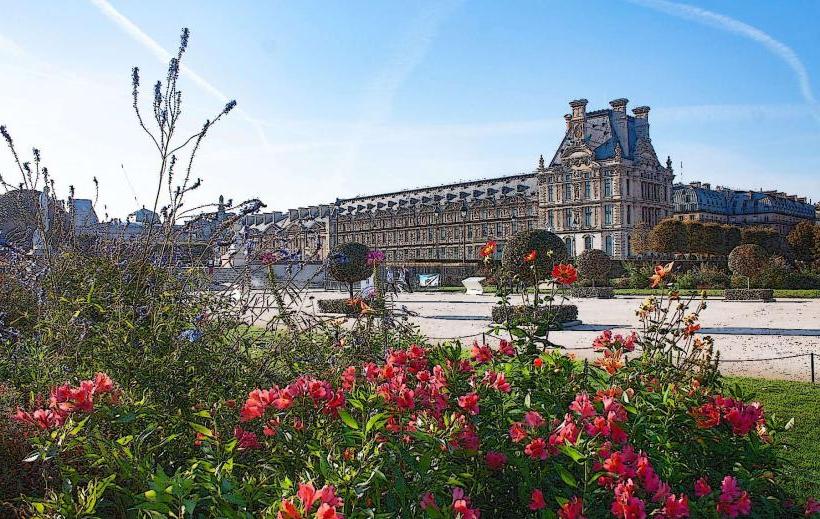
The museum is housed in the Louvre Palace, a sprawling complex of Renaissance and Baroque architecture. Its most iconic modern feature is the Louvre Pyramid, a large glass and metal structure in the central Cour Napoléon that serves as the main entrance. The interior is divided into three wings-Richelieu, Sully, and Denon-covering a floor area of approximately 72,735 square meters.
Location & Access Logistics
The museum is situated at Rue de Rivoli. It is served by the Métro stations Palais Royal–Musée du Louvre (Lines 1 and 7) and Louvre–Rivoli (Line 1). Access is through the Pyramid (main entrance), the Carrousel du Louvre (underground shopping mall), or the Porte des Lions. Advanced time-slot reservations are strictly required for entry. Large-scale public parking is available at the "Parc de stationnement Indigo" under the Carrousel.
Historical Origin
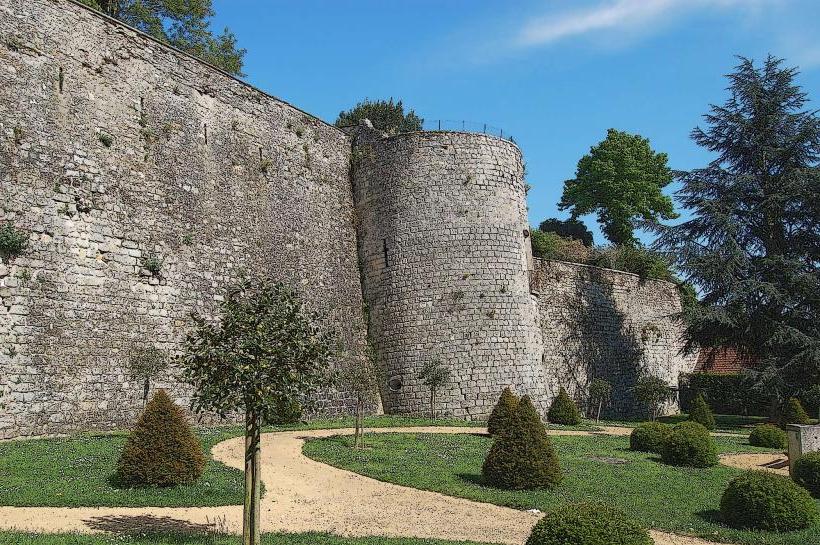
Originally built as a fortress in the late 12th century under Philip II to defend Paris from Viking raids, the structure was converted into a royal palace in the 14th century. It became a museum during the French Revolution in 1793, with an initial collection of 537 paintings. The glass Pyramid, designed by architect I.M. Pei, was inaugurated in 1989 as part of the "Grand Louvre" project to modernize the facility.
Key Highlights & Activities
The museum's collection spans from ancient civilizations to the mid-19th century. Key masterpieces include:
Mona Lisa (La Joconde) by Leonardo da Vinci (Denon Wing, Room 711)
Venus de Milo (Sully Wing, Room 345)
Winged Victory of Samothrace (Denon Wing, Daru Staircase)
The Coronation of Napoleon by Jacques-Louis David
Great Sphinx of Tanis (Department of Egyptian Antiquities)
Infrastructure & Amenities
The Louvre includes multiple bookstores, cafes, and fine-dining restaurants such as Le Café Marly. It features full cloakroom facilities, equipment rentals (strollers, wheelchairs), and an extensive museum shop. 5G/4G signals are strong in the courtyards but can be weak in the lower vaulted galleries. The museum is fully accessible via elevators and lifts, though the vast distances require significant physical exertion.
Best Time to Visit
To avoid peak congestion, Monday and Thursday mornings (09:00) or Wednesday and Friday evening sessions (until 21:45) are recommended. The museum is closed every Tuesday. For a faster entry, the Carrousel du Louvre entrance often has shorter queues than the main Pyramid entrance.
Facts & Legends
The museum is so vast that it is estimated it would take 100 days to see every piece of art for just 30 seconds. A persistent urban legend, popularized by The Da Vinci Code, suggests that the glass Pyramid is composed of exactly 666 panes; however, the Louvre official count confirms there are 673 glass segments (603 rhombi and 70 triangles).
Nearby Landmarks
Tuileries Garden: 0.1km West
Palais-Royal: 0.2km North
Pont des Arts: 0.3km South
Musée d'Orsay: 0.8km Southwest (across the Seine)
Place de la Concorde: 1.2km West