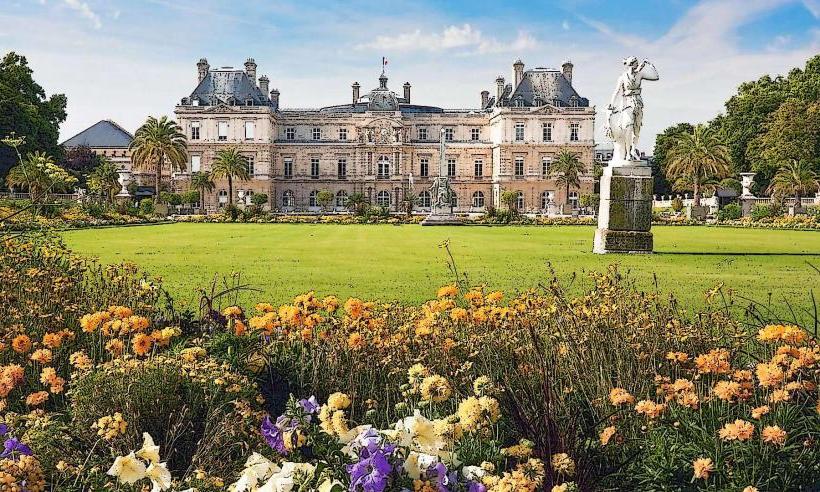
Landmark: Palace of Versailles
City: Paris
Country: France
Continent: Europe
Palace of Versailles, Paris, France, Europe
The Palace of Versailles (Château de Versailles) is a former royal residence located in the city of Versailles, approximately 20 kilometers southwest of central Paris. It is the preeminent symbol of the absolute monarchy of the Ancien Régime and is a UNESCO World Heritage site.
Visual Characteristics
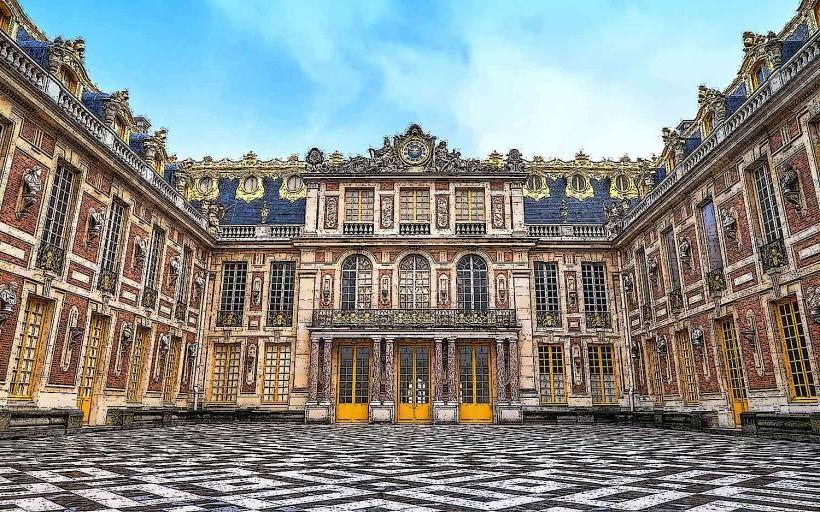
The palace is a masterpiece of French Baroque architecture. The exterior is characterized by its rhythmic stone facades and golden gates. The interior contains 2,300 rooms, most notably the Hall of Mirrors (Galerie des Glaces), which features 357 mirrors opposite 17 glass-door windows overlooking the gardens. The estate covers 800 hectares, including the Gardens of Versailles, designed with extreme geometric precision.
Location & Access Logistics
The palace is located at Place d'Armes, 78000 Versailles. The most common access from Paris is via the RER C train to the Versailles Château Rive Gauche station, followed by a 10-minute walk. It is also accessible via SNCF trains to Versailles Chantiers or Versailles Rive Droite. Timed-entry reservations are mandatory for the main palace. The estate is closed on Mondays.
Historical Origin
Originally a humble hunting lodge built by Louis XIII in 1623, the site was transformed by Louis XIV (the "Sun King") starting in 1661. He moved the royal court and government there in 1682, effectively making Versailles the de facto capital of France. It remained the seat of power until the French Revolution in 1789, when Louis XVI and the royal family were forced to return to Paris. In 1919, the Treaty of Versailles, ending World War I, was signed in the Hall of Mirrors.
Key Highlights & Activities
The King’s State Apartments: A sequence of seven prestigious rooms used for official court functions.
The Gardens: Featuring 50 fountains, 200,000 trees, and the Grand Canal.
The Estate of Trianon: Includes the Grand Trianon, the Petit Trianon, and Marie Antoinette’s Hamlet (Le Hameau de la Reine), a rustic retreat built for the queen.
Musical Fountains Show: Seasonal events where the fountains "dance" to Baroque music.
Infrastructure & Amenities
The estate features multiple dining options, including the high-end Ore by Alain Ducasse and several casual cafes in the gardens. 5G/4G signals are strong in the courtyards but can be inconsistent within the thick-walled palace interior. The ground floor of the palace is wheelchair accessible; the gardens are accessible via a small electric train (for a fee) that connects the main palace to the Trianons.
Best Time to Visit
To avoid peak crowds, arrive for the earliest time slot (09:00) or visit during the low season (November–March). The gardens are free to enter most days, except during "Musical Fountains" days. Tuesdays and weekends are generally the busiest.
Facts & Legends
A logistical fact: at its height, the palace could house up to 10,000 people. A common legend involves the "Moberly-Jourdain incident" of 1901, in which two academics claimed to have experienced a "time slip" at the Petit Trianon, allegedly encountering Marie Antoinette.
Nearby Landmarks
The Royal Tennis Court (Salle du Jeu de Paume): 0.5km West
The King’s Kitchen Garden (Potager du Roi): 0.8km South
Versailles Cathedral: 1.0km Southeast
Lambinet Museum: 0.9km Northeast