Landmark: Our Lady of the Waterfall
City: Jezzine
Country: Lebanon
Continent: Asia
Our Lady of the Waterfall, Jezzine, Lebanon, Asia
The Shrine of Our Lady of the Waterfall (Saydet el-Challal, also known locally as Saydet el-Maabour) is a Maronite Catholic Marian monument built on a prominent rocky platform overlooking the canyon edge in the mountain town of Jezzine, within the Jezzine District of the South Governorate, Lebanon. It serves as a central point of religious devotion and a scenic viewing platform directly adjacent to the town’s landmark chasm.
Visual Characteristics
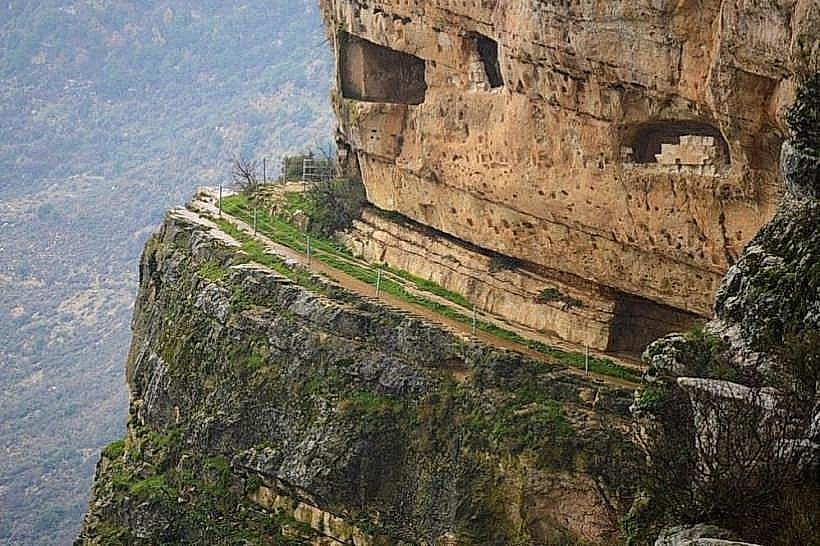
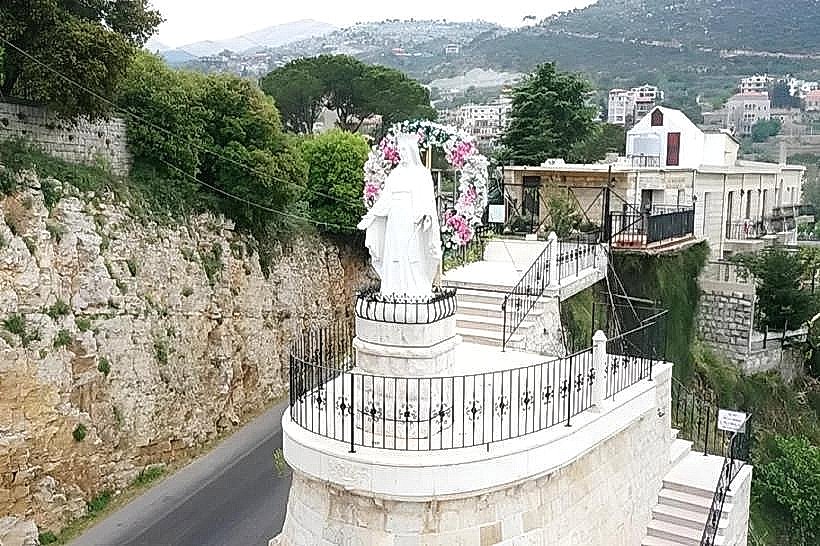
The landmark is defined by a life-sized, pure white stone statue of the Virgin Mary standing with open arms in a gesture of welcome and protection. The statue is mounted upon a multi-tiered cylindrical stone pedestal at the apex of a semicircular defensive bastion built from dressed regional cream limestone blocks. The observation balcony is enclosed by decorative black wrought-iron railings. The monument stands directly against a vertical limestone rock face on one side and drops off into the open canyon on the other, creating a stark visual profile against the backdrop of the Wadi Jezzine ravine.
Location & Access Logistics
The shrine is positioned on the main western entry highway of Jezzine, approximately 70 kilometers south of Beirut and 30 kilometers east of Sidon. Access from the coast involves driving up the winding regional highway through Kfar Hatta and Roum. The monument is built directly on the shoulder of the primary mountain road, making it immediately visible to arriving vehicles. A small, paved pull-off lane provides short-term parking for a few cars, while broader municipal parking is situated 400 meters further east in the town center. Public transport options include regional minivans from Sidon to Jezzine, which pass directly by the shrine's base.
Historical & Ecological Origin
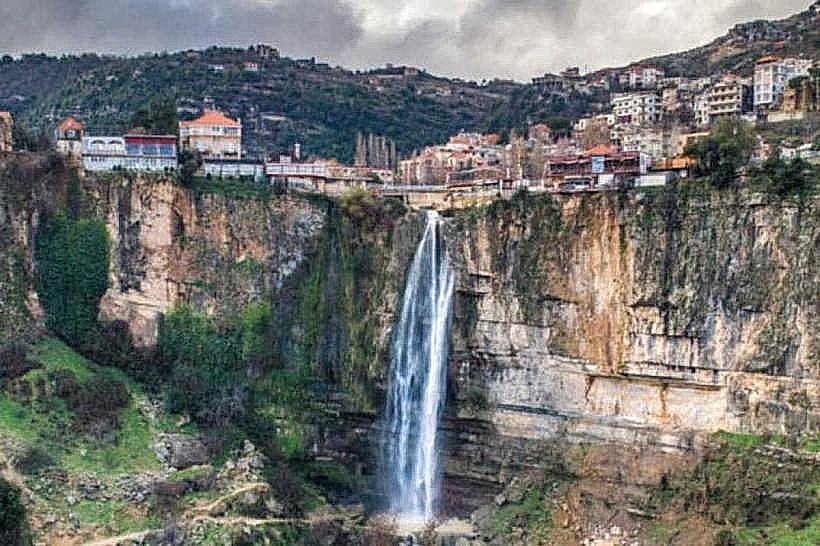
The shrine was established in the mid-20th century by the local ecclesiastical authorities and municipal leaders of Jezzine to serve as a symbolic gatekeeper for the mountain district. Geologically, the platform is anchored into stable Jurassic-era limestone formations that form the upper rim of the 74-meter-deep Jezzine canyon. The site directly overlooks the point where the seasonal mountain streams fed by the karst aquifers of Mount Niha converge before plunging over the cliff edge to form the Jezzine Waterfall.
Key Highlights & Activities
Primary activities focus on Marian pilgrimage, candle lighting, and landscape photography. Visitors ascend a short flight of stone steps from the roadside to reach the open balcony at the statue's feet. This vantage point offers an unobstructed view of the sheer limestone cliffs, the upper crest of the waterfall, and the red-tiled mountain architecture of Jezzine. The shrine is a focal point during the Feast of the Assumption on August 15, hosting major candlelight processions and nocturnal prayer vigils.
Infrastructure & Amenities
The monument is a public roadside sanctuary with basic infrastructure consisting of paved steps, safety railings, and night-time spotlights that illuminate the statue. There are no public restroom facilities or administrative offices directly on the platform. Shade is limited on the exposed stone deck but available under the mature pine and oak trees lining the opposite side of the highway. Cellular network coverage (4G/5G) is powerful and stable. Full urban amenities, including traditional restaurants, banking services, pharmacies, and artisanal shops, are situated within a 5-minute walk along the main town avenue.
Best Time to Visit
The optimal time for photography is during the late afternoon and golden hour, when the setting sun directly illuminates the white statue and the western-facing limestone cliffs of the gorge. The dry months from April to November provide clear road conditions and pleasant walking temperatures. Winter visits (December to March) face cold, rainy alpine weather and frequent low-lying mountain fog banks that can temporarily obscure the panoramic views into the lower valley floor.
Facts & Legends
A verified civic detail is that the shrine's alternative name, Saydet el-Maabour (Our Lady of the Pass), references its exact historical and geographical placement at the narrow natural choke-point that historically controlled all transit between the maritime coast of Sidon and the high-altitude hunting grounds of the southern Mount Lebanon range. Local religious tradition holds that the monument has acted as a spiritual shield for the town, with residents attributing Jezzine's preservation during various historical conflicts to the protection of the Virgin Mary facing out toward the valley access roads.
Nearby Landmarks
Jezzine Waterfall: 0.4km East
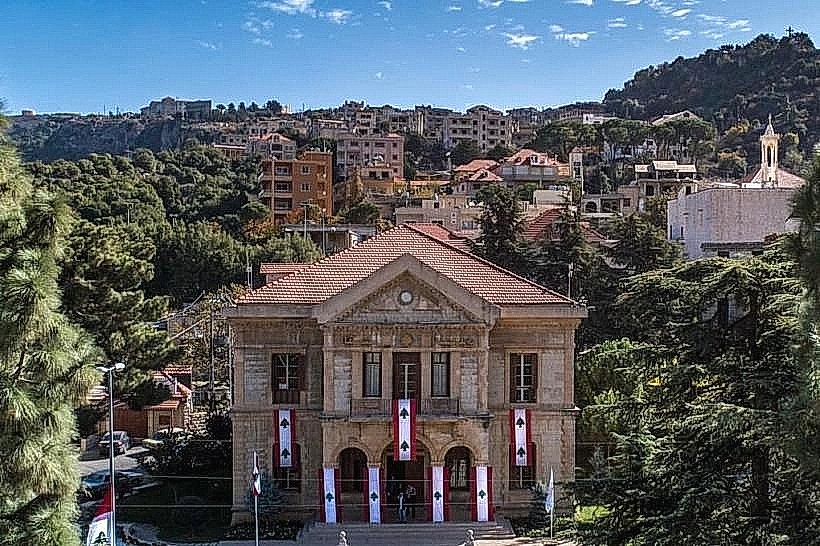
Serail of Jezzine: 0.4km Northwest
Fakhreddine Grotto: 0.8km East
Bkassine Pine Forest: 4.5km Northwest
Our Lady of Machmoucheh Monastery: 6.4km North