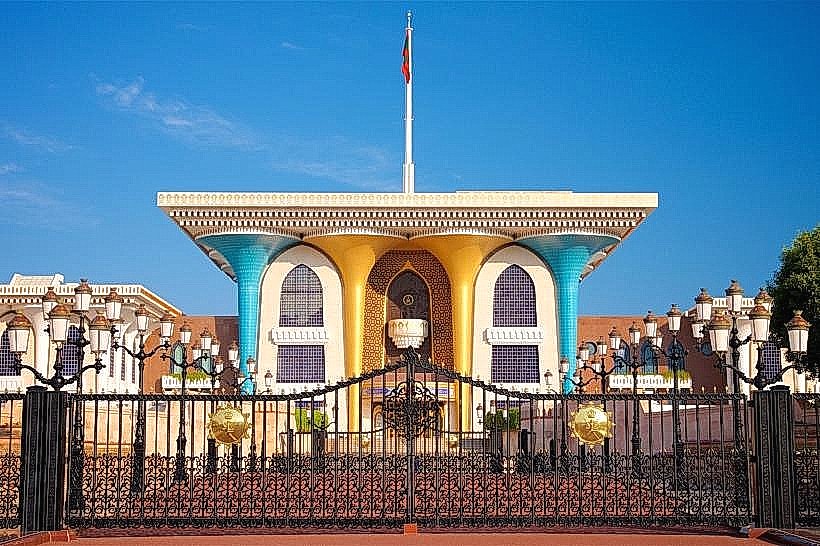
Landmark: Al Alam Palace
City: Muscat
Country: Oman
Continent: Asia
Al Alam Palace, Muscat, Oman, Asia
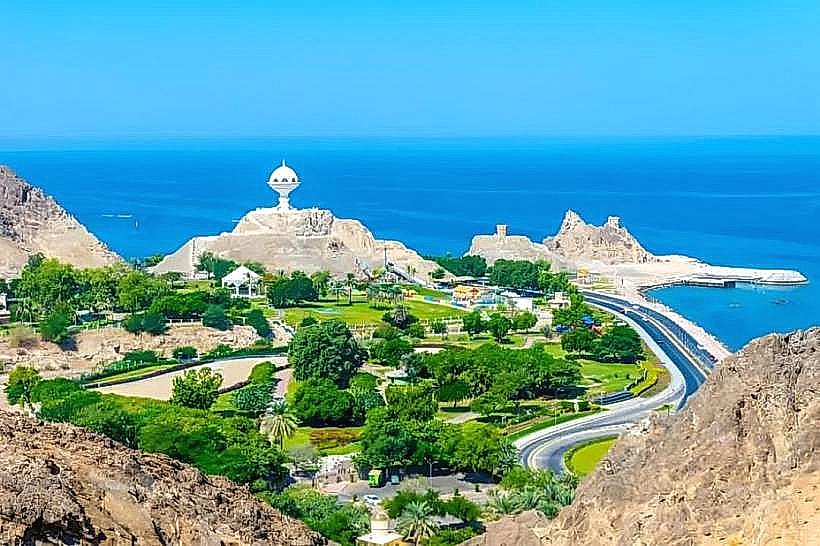
Al Alam Palace is the ceremonial residence of the Sultan of Oman, located in the Old Muscat district of the capital city. Rebuilt in 1972, the palace is situated between the twin 16th-century Portuguese forts of Al Jalali and Al Mirani, overlooking the Gulf of Oman.
Visual Characteristics
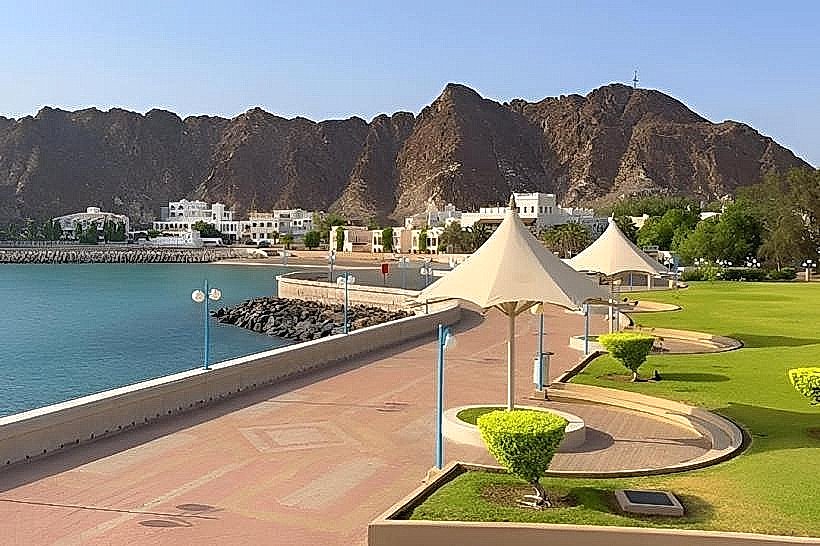
The palace is distinguished by its unique flared gold and blue chrome-plated columns that support a flat, overhanging roof. The facade features polished marble surfaces and intricate mosaic tilework in vibrant shades of azure and gold. The surrounding grounds are paved with red and gray granite, bordered by manicured floral gardens and white administrative buildings in a contemporary Islamic style.
Location & Access Logistics
The site is located at the eastern end of Al Alam Street in Old Muscat, approximately 30km east of the Sultan Qaboos Grand Mosque. Access is via the Al Bustan-Muscat coastal road; public parking is available in large designated lots approximately 400 meters from the palace gates. Public bus Route 4 terminates at the nearby Muscat station, a 5-minute walk from the pedestrian approach.
Historical & Ecological Origin
While the current structure was commissioned by Sultan Qaboos bin Said and completed by Indian contractors in 1972, the site has served as a royal residence for over 200 years. The original palace on this footprint was built by Imam Sultan bin Ahmed, the seventh direct ancestor of the current Sultan.
Key Highlights & Activities
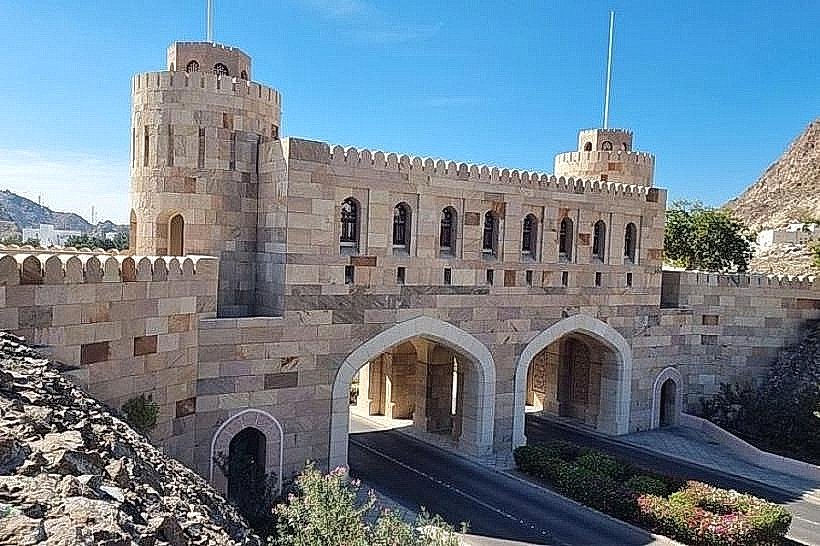
Visitors are restricted to the exterior pedestrian plaza and are not permitted to enter the palace buildings. Photography is allowed from the gates, focusing on the symmetrical columns and the perspective of the palace framed by the historic forts. Walking tours often include the "Muscat Gate" nearby to view the remains of the old city walls.
Infrastructure & Amenities
The pedestrian boulevard leading to the palace is wide and fully accessible with no stairs. There are no restrooms or food vendors within the immediate palace precinct; public facilities and cafes are located 1.2km away in the Mutrah or Sidab areas. 5G cellular signal is consistently strong throughout the open plaza.
Best Time to Visit
The best time for photography is during the "blue hour" just after sunset when the gold and blue columns are illuminated by floodlights. For daylight shots, early morning (07:00 to 09:00) provides the most even lighting on the east-facing facade. The palace remains accessible to pedestrians 24 hours a day.
Facts & Legends
A historical oddity is the "Flagpole of Justice" that once stood near the palace, where citizens could traditionally seek royal intervention. Legend states that the palace was built over the site of a former British consulate, and the 1972 design was specifically intended to contrast with the rugged, dark volcanic rock of the surrounding Al Hajar mountains.
Nearby Landmarks
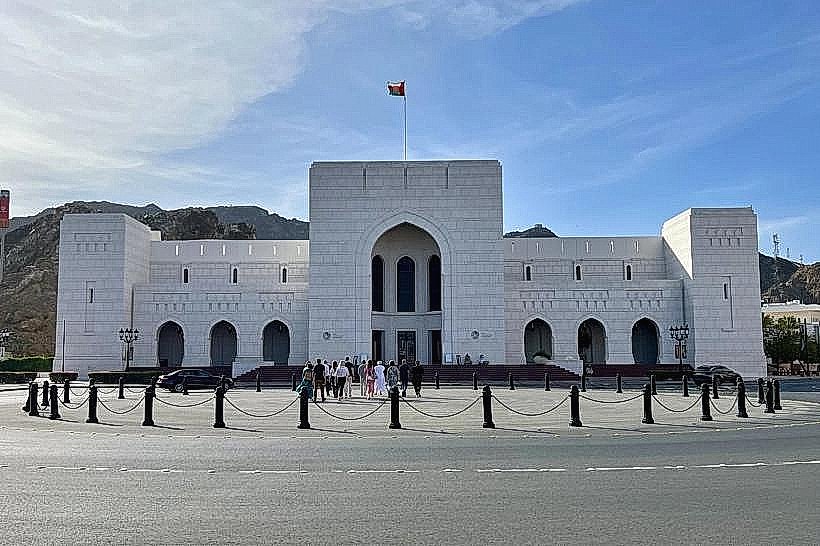
National Museum of Oman – 0.3km West
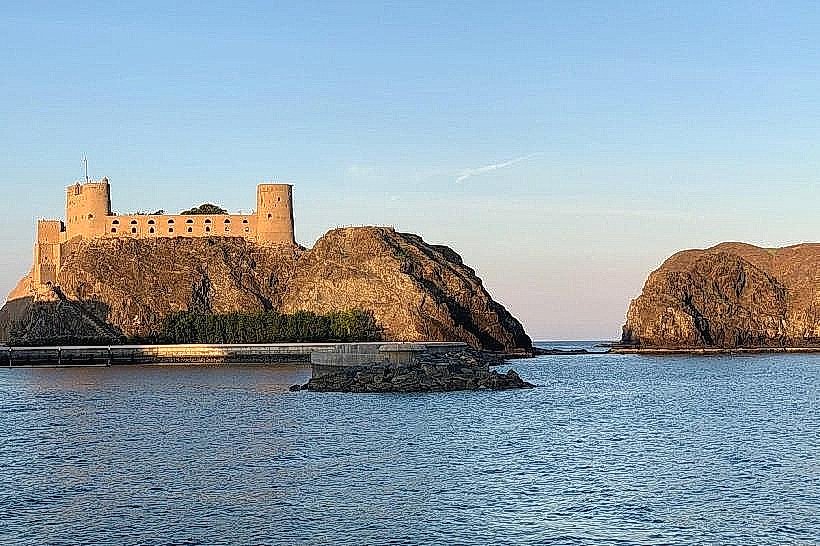
Al Jalali Fort – 0.4km East
Al Mirani Fort – 0.5km Northwest
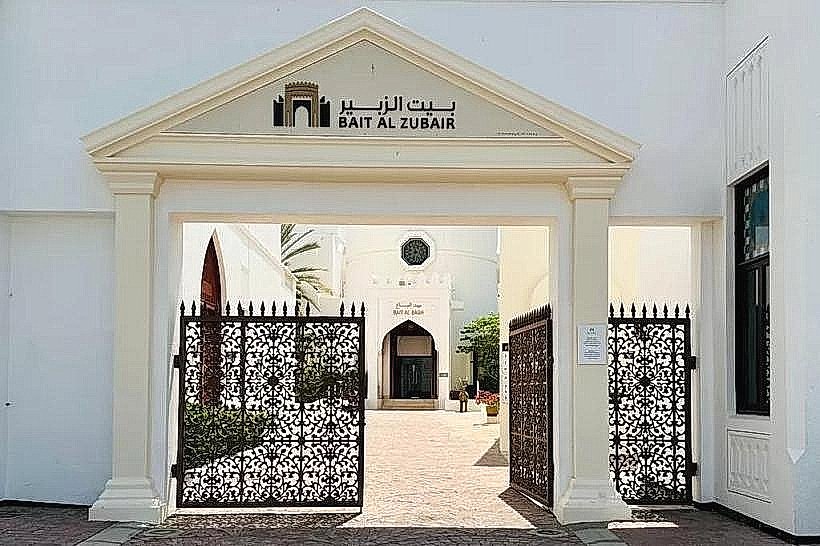
Bait Al Zubair Museum – 0.8km West