Landmark: Al Jalali Fort
City: Muscat
Country: Oman
Continent: Asia
Al Jalali Fort, Muscat, Oman, Asia
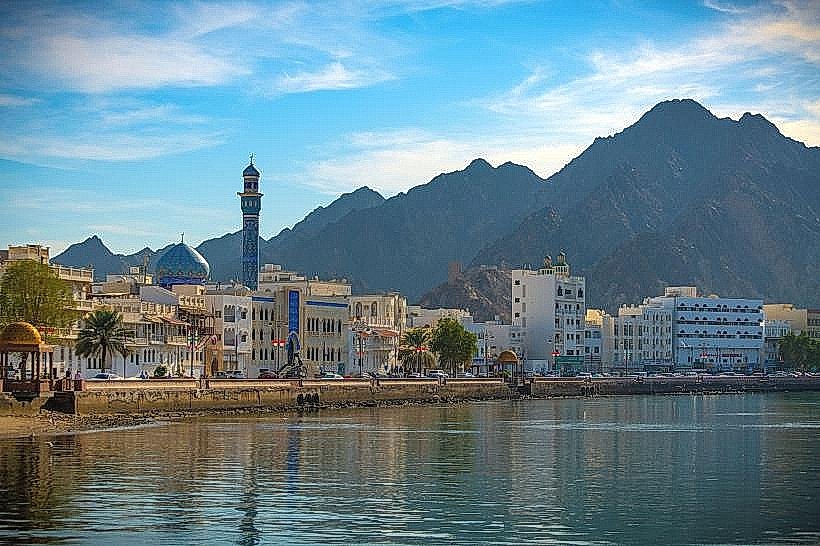
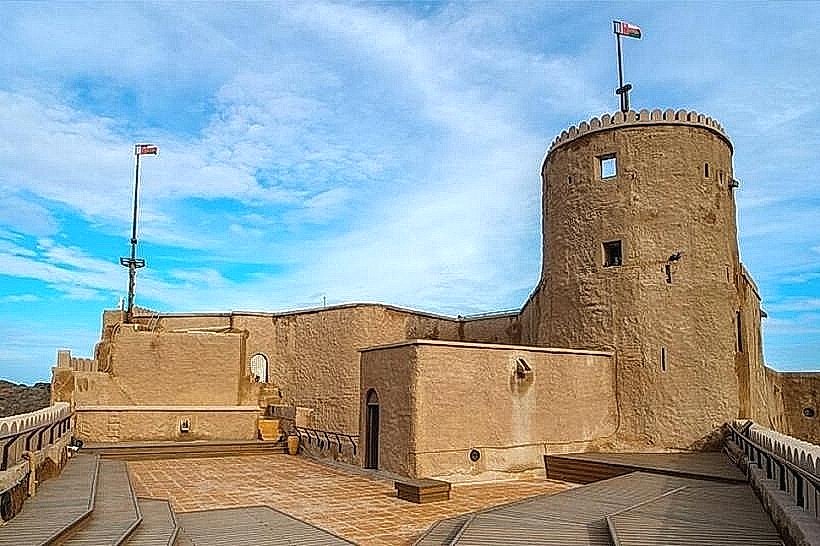
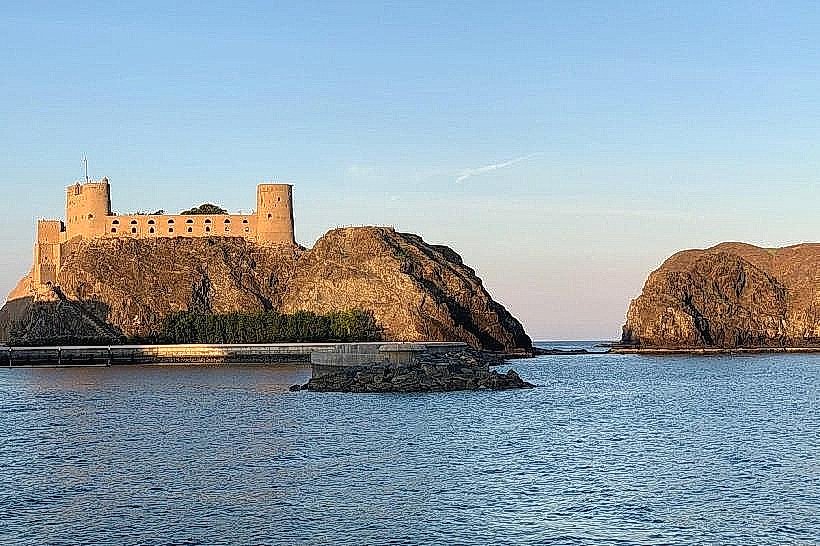
Al Jalali Fort is a 16th-century military fortification situated on a rocky outcrop overlooking the harbor of Old Muscat, Oman. Positioned to the east of Al Alam Palace, it serves as a prominent landmark of the city's historic maritime defense system.
Visual Characteristics
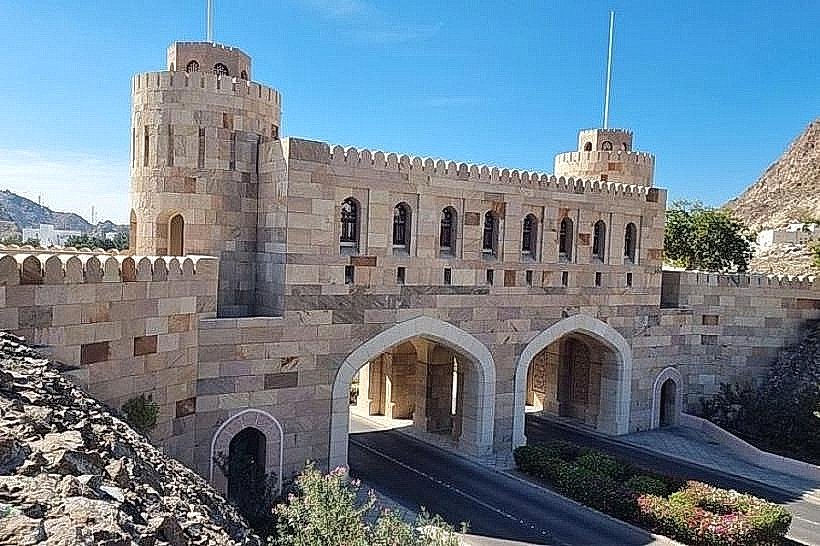
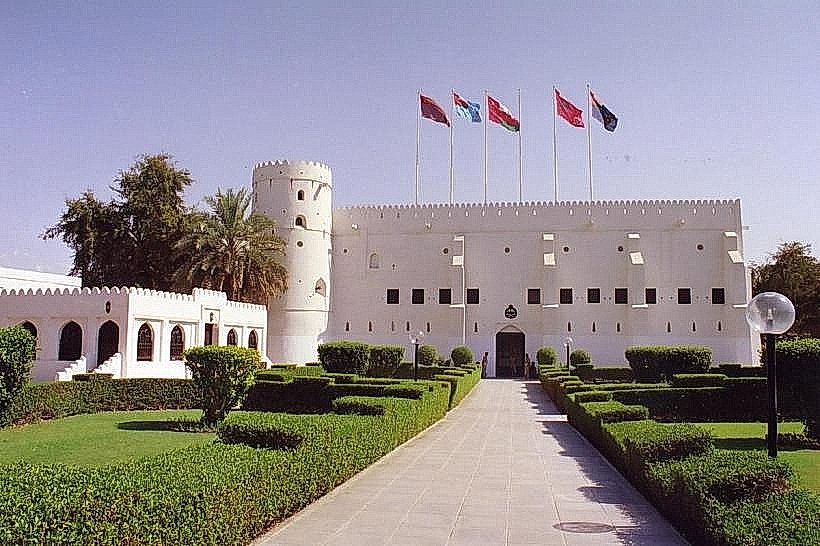
The fort is constructed from dark volcanic rock and limestone, featuring two main circular towers connected by a central crenelated wall. The structure sits atop a steep cliff, accessible primarily via a stone staircase carved into the rock face. Its exterior is characterized by heavy iron-studded wooden gates, small arched windows, and multiple gun embrasures designed for artillery.
Location & Access Logistics
The site is located on the eastern side of the Muscat harbor, approximately 32km from Muscat International Airport. There is no direct vehicle access to the fort; visitors must park in the public lots serving Al Alam Palace and approach via the pedestrian plaza. Access to the interior is strictly regulated and typically requires prior permission from the Ministry of Heritage and Tourism, as the site is often used for official state functions.
Historical & Ecological Origin
The fortification was built by the Portuguese under the command of Melchior Calaça in 1587, during their occupation of Muscat. Originally named Forte de São João, it was constructed on the foundations of an earlier structure to protect the harbor from Ottoman naval incursions. After the Omani recapture of Muscat in 1650, the fort was renamed Al Jalali and underwent several phases of expansion and reinforcement.
Key Highlights & Activities
Observation of the fort's exterior architecture and its strategic position above the Gulf of Oman is the primary activity for the public. The stairs and harbor-side walkway provide vantage points for viewing the historic graffiti carved into the rocks by visiting sailors over the centuries. During national holidays and state visits, the fort serves as a platform for ceremonial firing of cannons and traditional Omani musical performances.
Infrastructure & Amenities
There are no public facilities, restrooms, or food vendors located on the fort's rocky outcrop. Amenities such as public toilets and shaded seating are available 400 meters away in the pedestrian area surrounding the National Museum. 5G cellular signal is strong due to the fort's elevated and unobstructed position.
Best Time to Visit
The optimal time for photography is during the late afternoon (16:30 to 17:30) when the setting sun illuminates the western face of the towers and the harbor. The fort is also a popular subject for night photography when it is fully illuminated by powerful floodlights. Visitors should check local schedules for the occasional bagpipe performances that take place on the battlements during sunset.
Facts & Legends
A historical oddity is the fort's past use as Oman's primary prison during the early 20th century, a role it maintained until the 1970s. Local legend suggests the existence of a secret underground tunnel connecting Al Jalali Fort to its twin, Al Mirani Fort, on the opposite side of the harbor, though no such passage has ever been officially documented.
Nearby Landmarks
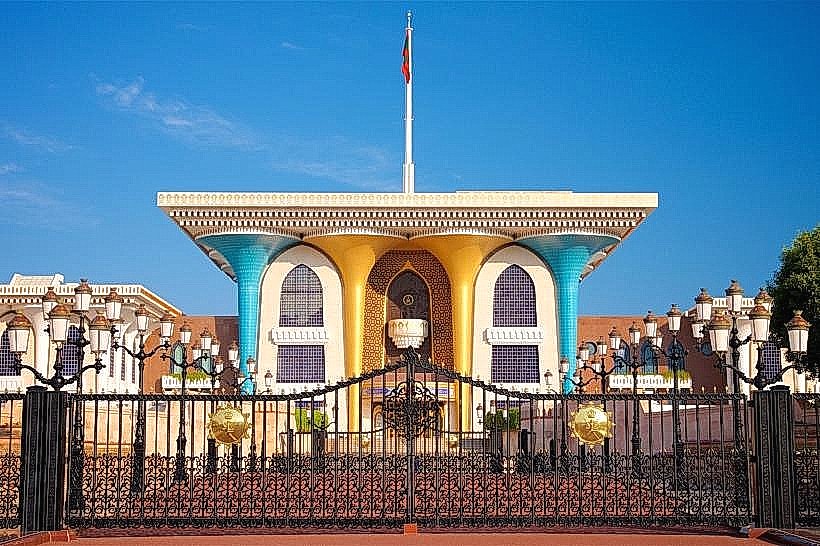
Al Alam Palace – 0.4km West
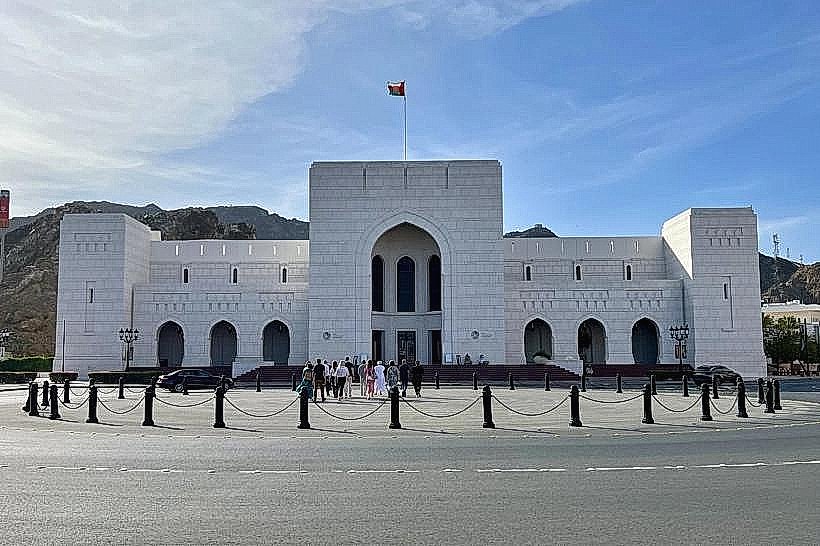
National Museum of Oman – 0.5km Southwest
Al Mirani Fort – 0.9km West
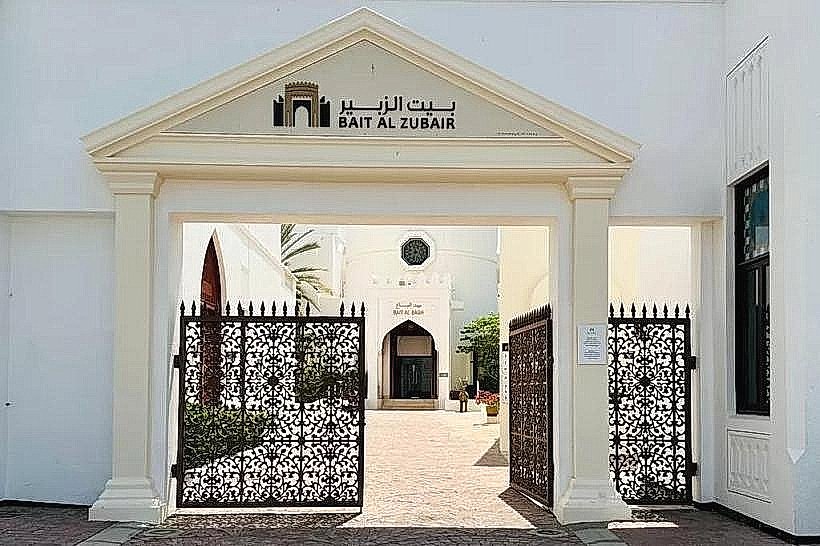
Bait Al Zubair Museum – 1.1km West