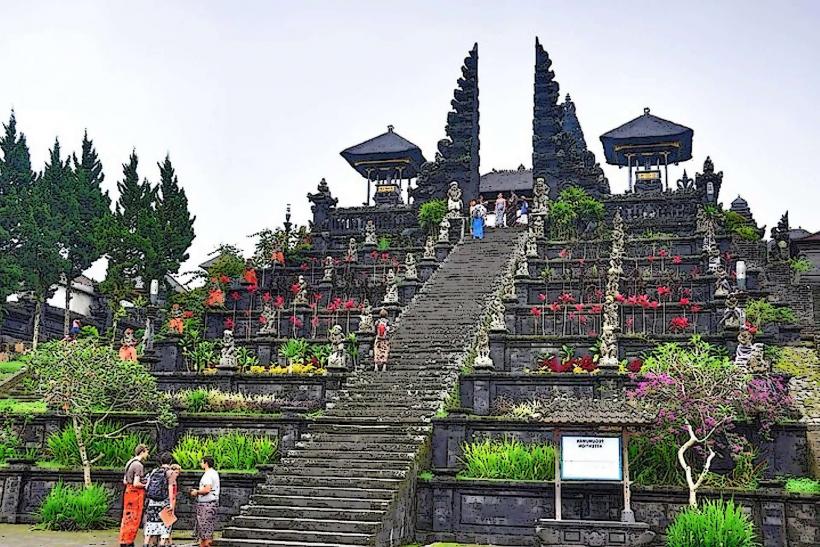
Landmark: Besakih Temple
City: Bali
Country: Indonesia
Continent: Asia
Besakih Temple, Bali, Indonesia, Asia
Besakih Temple is a large complex of Hindu temples located on the slopes of Mount Agung in Bali, Indonesia.
It is considered the most important and holiest temple in Bali.
Visual Characteristics
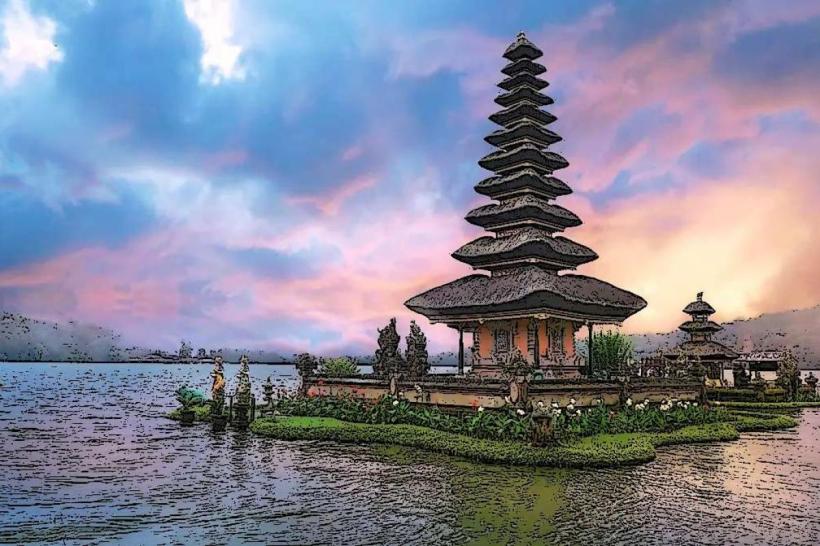
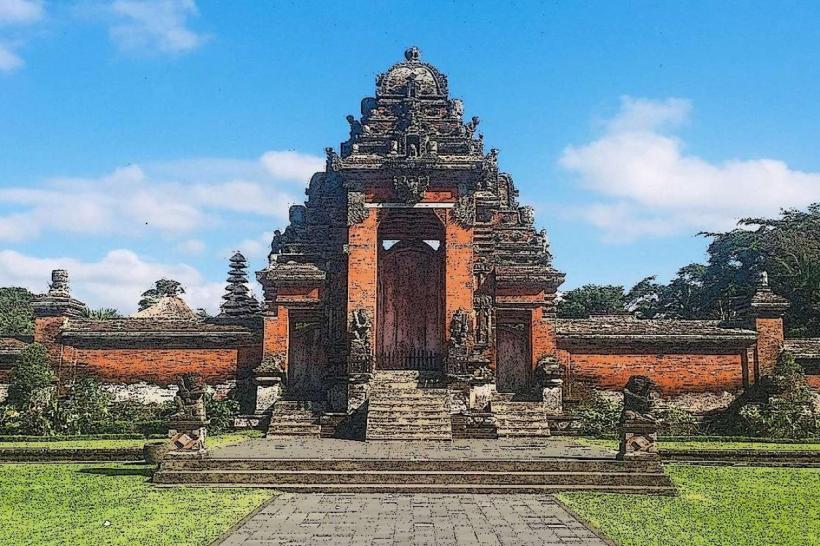
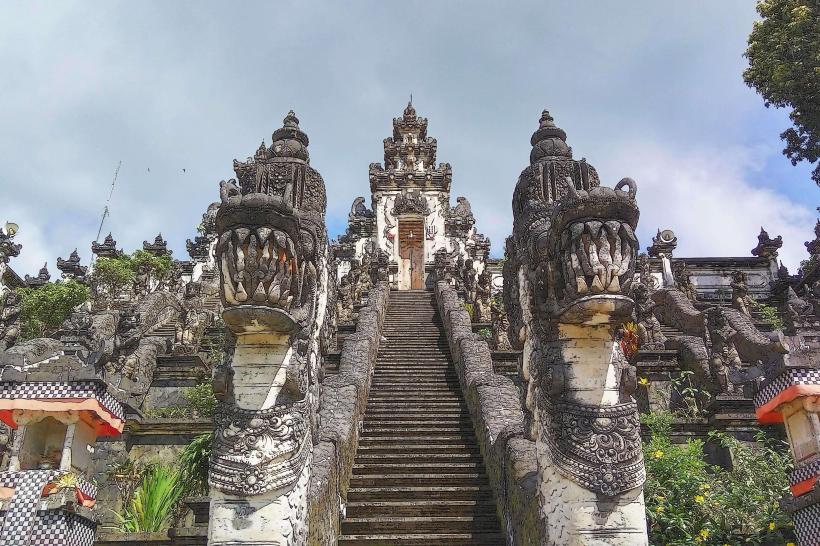
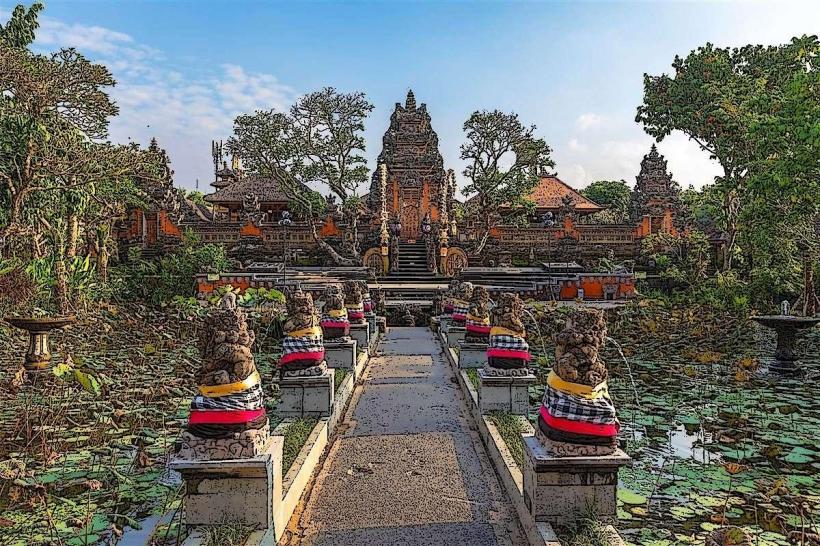
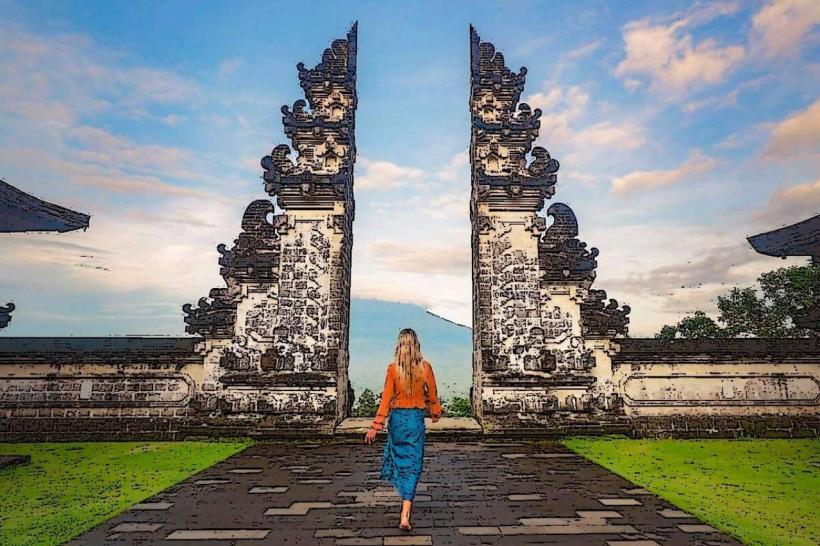
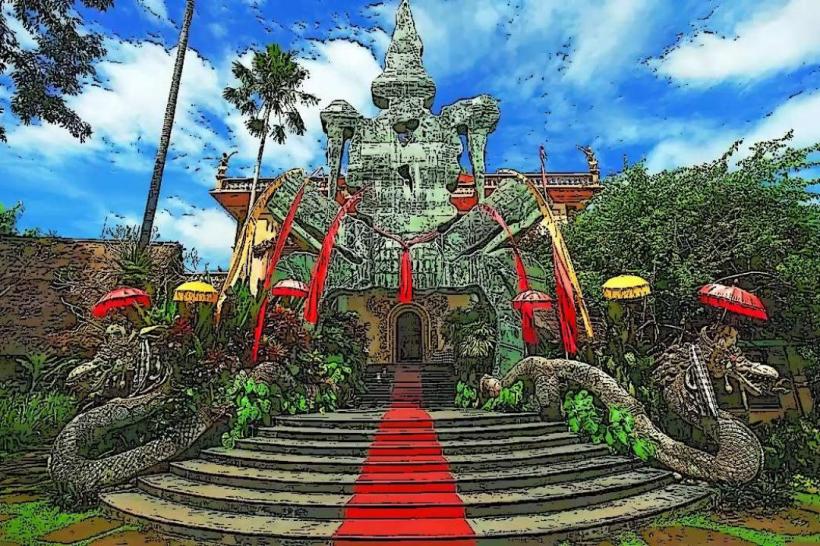
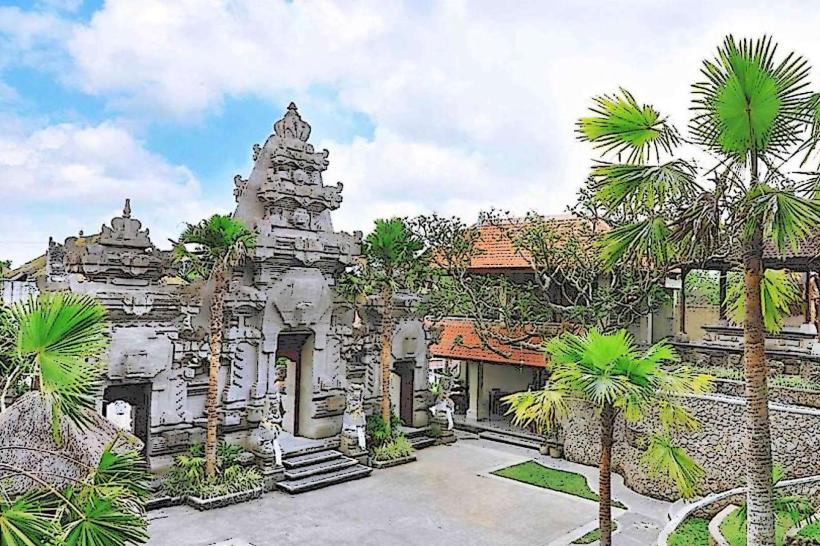
The temple complex comprises over 86 individual temples and shrines, with the main Pura Penataran Agung being the largest. Structures are primarily constructed from volcanic stone and black lava rock, often adorned with intricate carvings. The architecture follows traditional Balinese Hindu styles, featuring tiered shrines (meru) and multi-storied pagodas. The overall color palette is dominated by natural stone and weathered wood, with occasional accents of red and gold in ceremonial banners and decorations. The complex is spread across multiple levels on the mountainside, offering expansive views.
Location & Access Logistics
Besakih Temple is situated approximately 50 kilometers northeast of Denpasar, Bali's capital city. Access is via Jalan Raya Besakih. Driving from Denpasar typically takes 1.5 to 2 hours, depending on traffic. Parking is available at designated areas near the temple entrance, with fees applicable. Public transport options are limited; shared minibuses (bemos) may be available from larger towns like Klungkung, but direct routes are uncommon. Hiring a private car or taxi is the most straightforward method of access.
Historical & Ecological Origin
The origins of Besakih Temple are ancient, with evidence suggesting its existence as a sacred site for centuries, possibly predating the arrival of Hinduism. The earliest documented references date back to the 8th century. It is believed to have been developed and expanded over many centuries by various Balinese kingdoms. The temple is built on the slopes of Mount Agung, an active volcano, and its location is considered sacred due to the mountain's spiritual significance in Balinese cosmology.
Key Highlights & Activities
Visitors can explore the various temple courtyards and shrines. Guided tours are available from local guides at the entrance, providing historical and cultural context. Observing the architectural details and the scale of the complex is a primary activity. Participation in religious ceremonies, if scheduled during a visit, offers insight into Balinese spiritual practices. Walking the pathways between the different temple sections allows for appreciation of the site's layout and surrounding landscape.
Infrastructure & Amenities
Restrooms are available at designated points within the temple complex and in the surrounding tourist area. Shade is provided by natural vegetation and some covered walkways. Cell phone signal (4G/5G) is generally available within the main visitor areas. Food vendors and small warungs (local eateries) are located outside the main temple entrance and in the adjacent market area, offering local Balinese cuisine.
Best Time to Visit
The best time of day for photography is generally in the morning, between 8:00 AM and 10:00 AM, when the light is softer and Mount Agung is often visible. The dry season, from April to September, offers the most favorable weather conditions with less rainfall. Visits outside of major Balinese holidays (like Galungan and Kuningan) will result in fewer crowds.
Facts & Legends
Besakih Temple is often referred to as the "Mother Temple of Bali." According to local belief, the temple was founded by the sage Rsi Markandeya. A significant eruption of Mount Agung in 1963, which devastated many surrounding villages, miraculously spared the main temple complex, reinforcing its sacred status among the Balinese people.
Nearby Landmarks
- Pura Goa Lawah (Bat Cave Temple) - 8km Southwest
- Tirta Gangga Water Palace - 12km East
- Ubud Monkey Forest - 35km Southwest
- Tegalalang Rice Terraces - 40km Southwest
- Mount Batur - 45km Northwest