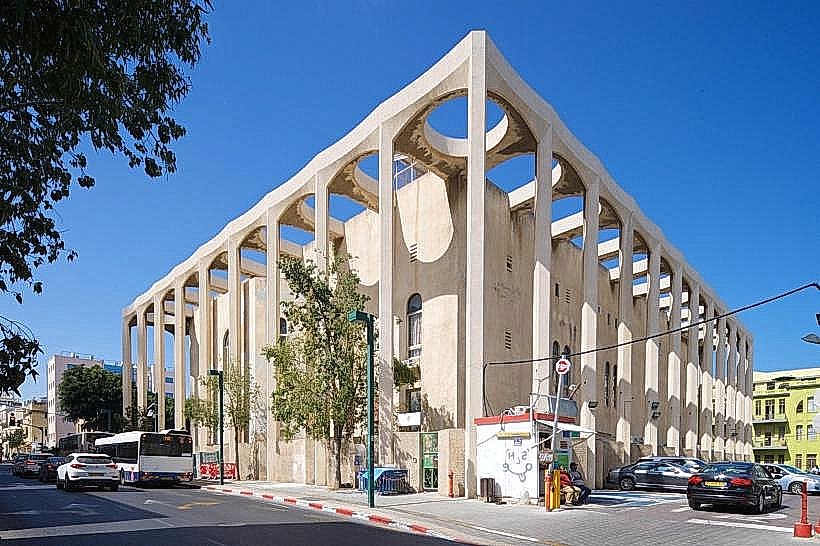
Landmark: Great Synagogue
City: Tel Aviv
Country: Israel
Continent: Asia
Great Synagogue, Tel Aviv, Israel, Asia
The Great Synagogue of Tel Aviv is a prominent religious and architectural landmark located at 110 Allenby Street. It serves as the primary spiritual center for the city's Ashkenazi Jewish community and is a focal point for official state ceremonies and religious services in the heart of the business district.
Visual Characteristics
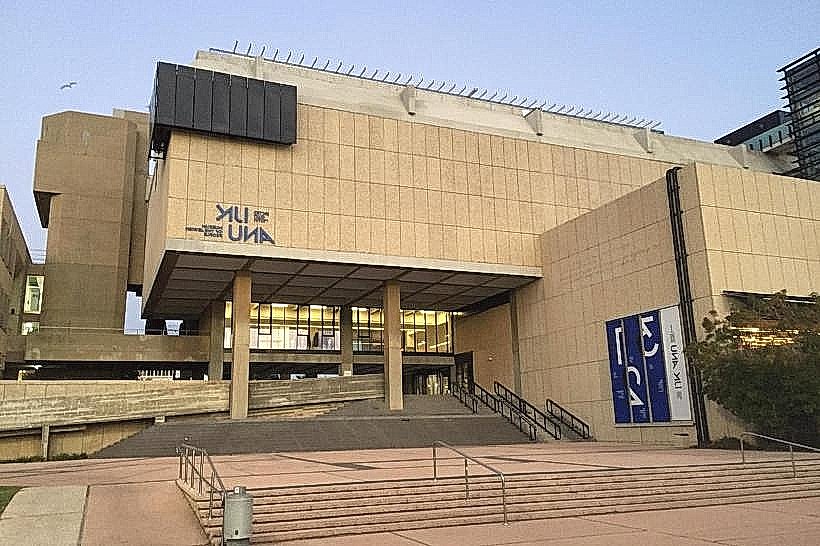
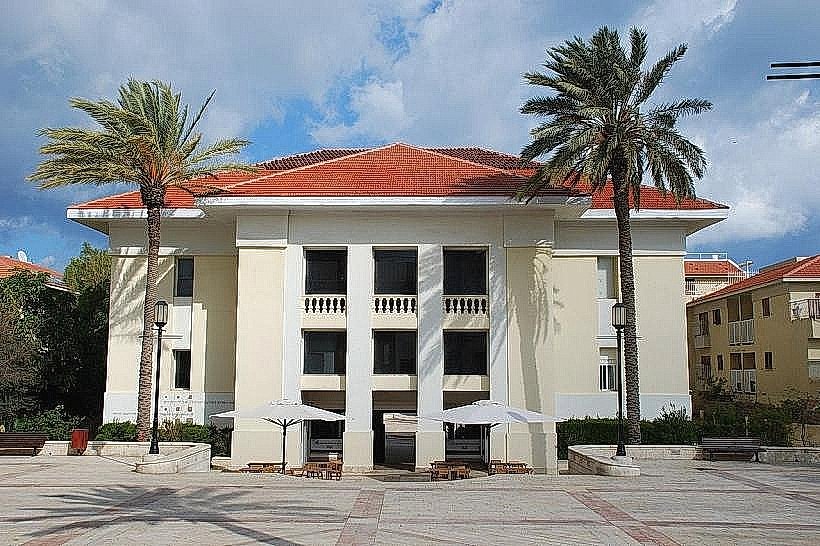
The building is a massive, rectangular structure defined by a heavy concrete facade and a series of dramatic, soaring arches that encircle the exterior. This Brutalist exterior was added during a 1970s renovation to modernize the original 1920s design. The interior features a grand prayer hall with high ceilings, a large dome, and intricate stained-glass windows that are replicas of windows found in European synagogues destroyed during the Holocaust. A large, ornate chandelier serves as the central light source in the main sanctuary.
Location & Access Logistics
Situated at the intersection of Allenby Street and Ahad Ha'am Street, the synagogue is approximately 1.2km southeast of the beachfront. Access is provided by several major bus lines along Allenby, including the 1, 19, and 25. There is no dedicated parking on-site; visitors typically use paid parking lots on Yehuda Halevi Street or Rothschild Boulevard. The area is a high-traffic zone, making public transit or walking the most effective means of arrival.
Historical & Ecological Origin
The synagogue was completed in 1926, designed by architect Yehuda Magidovitch, and was the largest of its kind in Tel Aviv at the time. In 1970, architect Aryeh Elhanani added the outer shell of arches to revitalize the building's appearance. The site is located in the historic core of the city, built on the stable Kurkar ridges that characterize the central Tel Aviv topography.
Key Highlights & Activities
The primary activity is the observance of daily, Sabbath, and holiday prayer services. The synagogue is also a popular venue for traditional Jewish wedding ceremonies due to its grand interior. In recent years, the square surrounding the building has become a center for local nightlife, with several upscale bars and restaurants operating in the adjacent historic buildings, creating a unique contrast between religious and secular urban life.
Infrastructure & Amenities
The facility includes a main sanctuary, smaller prayer rooms, and public restrooms for congregants. 5G cellular signal is strong throughout the exterior plaza and interior spaces. While the synagogue itself does not offer food services, it is surrounded by a high density of cafes and restaurants on Allenby and Ahad Ha'am Streets. The building is climate-controlled and wheelchair accessible via a side entrance.
Best Time to Visit
For those wishing to view the interior, it is best to visit during morning prayer times (Shacharit) or by coordinating with the synagogue office, as the main hall is not always open to the public during the day. Friday evenings and Saturday mornings offer the opportunity to witness traditional services. The exterior is best photographed in the late afternoon when the sun highlights the geometric shadows of the concrete arches.
Facts & Legends
A verified historical detail is that the synagogue was a central meeting point for the Haganah during the pre-state era. Local lore suggests that the original design was intended to be even more magnificent, but budget constraints during the early years of Tel Aviv required several modifications to the plans. Another point of interest is the "Great Synagogue Square" project, which has transformed the area from a neglected transit point into one of the city's most vibrant social hubs.
Nearby Landmarks
Rothschild Boulevard - 0.3km East
Shalom Meir Tower - 0.4km South
Independence Hall - 0.5km South
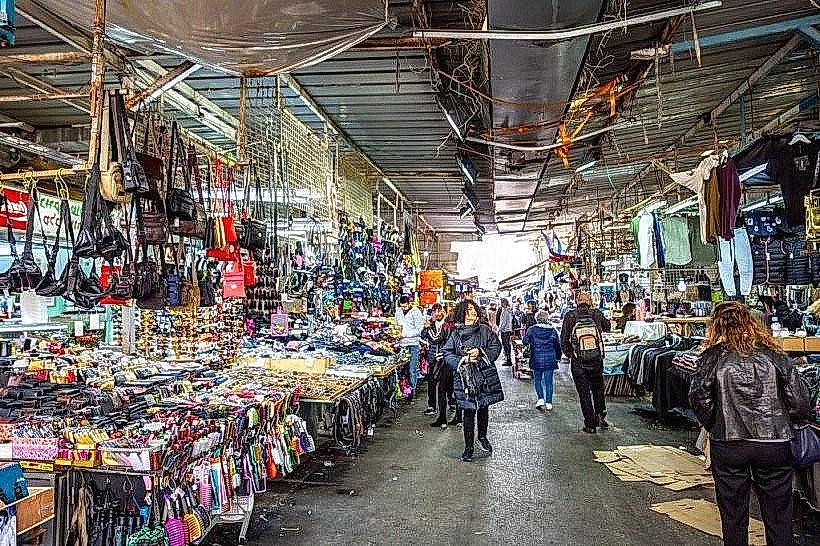
Carmel Market - 0.6km Northwest
Bialik House - 0.8km North