Landmark: Triton Fountain
City: Valletta
Country: Malta
Continent: Europe
Triton Fountain, Valletta, Malta, Europe
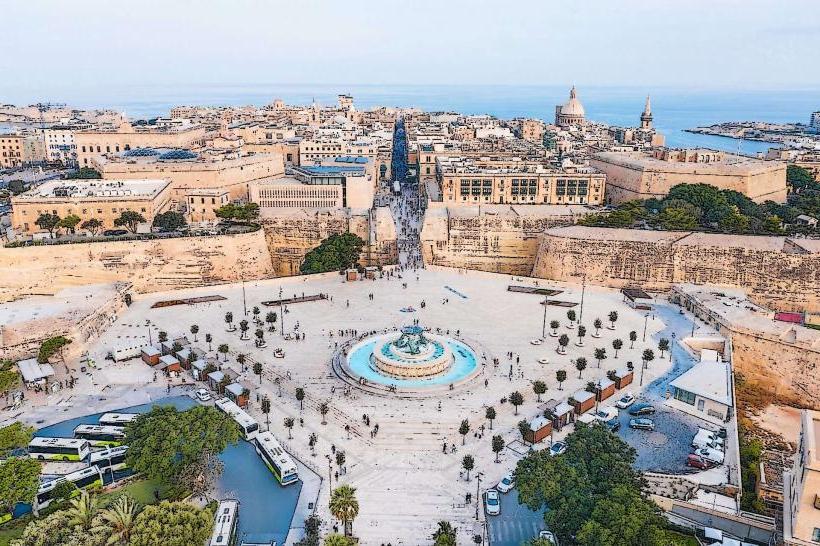
The Triton Fountain is a bronze and concrete fountain located just outside the City Gate of Valletta, Malta. It serves as a prominent public monument at the entrance to the capital city.
Visual Characteristics
The fountain features three bronze mythological Tritons, depicted as mermen, supporting a large circular basin. The figures exhibit a greenish-brown patina due to age and exposure. The central pedestal and surrounding basin are constructed from concrete, while the base and surrounding paving utilize light-colored travertine. The central figures stand approximately 5 meters tall, with the entire composition reaching a height of about 12 meters. Its design blends modernist aesthetics with classical mythological themes.
Location & Access Logistics
The Triton Fountain is situated at Vjal ir-Rejiet (Kingsway), directly adjacent to the main entrance of Valletta City Gate. It is effectively at the threshold of the city center. Limited street parking is available in the immediate vicinity, but several paid parking garages, such as the MCP Car Park, are within a 5-10 minute walk. The main Valletta Bus Terminus is located directly behind the fountain, providing extensive public transport connections via nearly all bus routes across Malta.
Historical & Ecological Origin
This man-made landmark was designed by sculptor Vincent Apap and executed by his team, including sculptor George Fenech and architect Victor Anastasi. Construction began in 1952, and the fountain was officially inaugurated in 1959. Its original purpose was to commemorate the 1955 Malta Trade Fair and to serve as a grand decorative focal point at Valletta's primary entrance.
Key Highlights & Activities
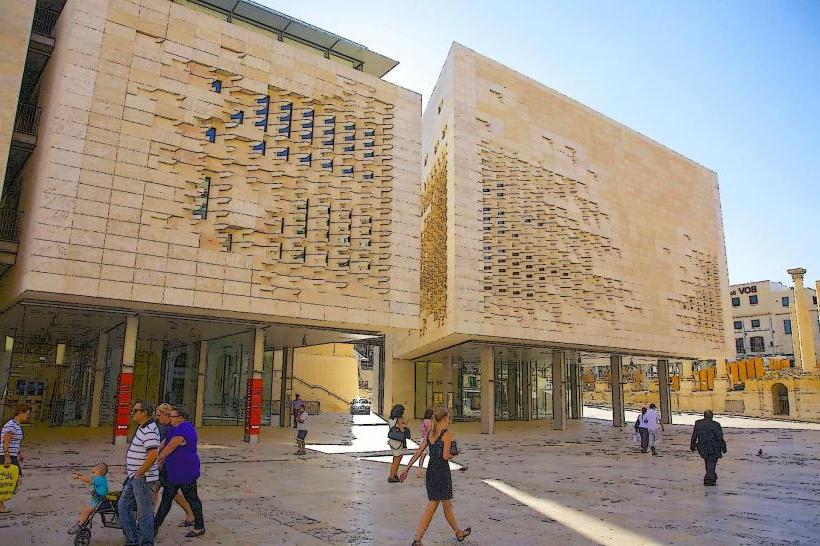
Visitors can observe the intricate bronze sculptures of the three Tritons supporting the large shell basin. The fountain provides a significant photographic opportunity, particularly when framed with the historic Valletta City Gate and the modern Parliament House in the background. The adjacent Valletta Bus Terminus facilitates onward travel to various locations across the island.
Infrastructure & Amenities
Public restrooms are available within the main building of the Valletta Bus Terminus, located directly behind the fountain. Direct shade at the fountain itself is limited, though some shade is cast by nearby buildings depending on the time of day. A strong 4G/5G cellular signal is consistently available in the area. Numerous kiosks, cafes, and restaurants are situated within the Valletta Bus Terminus complex and immediately inside Valletta City Gate.
Best Time to Visit
For optimal photography, early morning or late afternoon hours are recommended to capture softer light and avoid harsh shadows, as well as to experience fewer crowds. The months of April to June and September to October offer the most pleasant weather conditions, with moderate temperatures and less intense sun. As a land-based fountain, tide requirements are not applicable.
Facts & Legends
The fountain underwent an extensive restoration between 2017 and 2018, costing approximately €4 million. This project involved the careful dismantling, repair, and reassembly of the bronze figures, along with a complete overhaul of the water circulation system. A specific tip for visitors is to position oneself slightly to the side of the fountain for a wider photographic angle that encompasses both the detailed Triton figures and the contemporary architecture of Renzo Piano's City Gate.
Nearby Landmarks
- Valletta City Gate: 0.05km East
- Parliament House: 0.1km East
- Royal Opera House Ruins (Pjazza Teatru Rjal): 0.15km East
- National Museum of Archaeology: 0.4km East
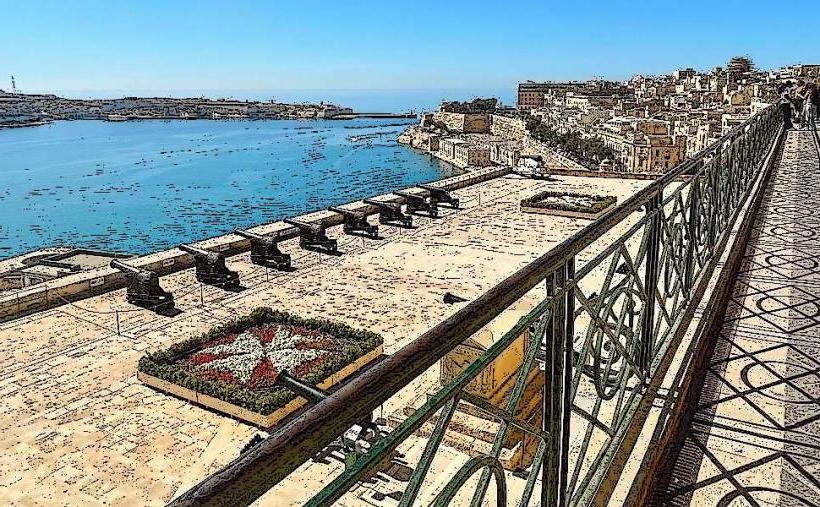
- Upper Barrakka Gardens: 0.7km Southeast