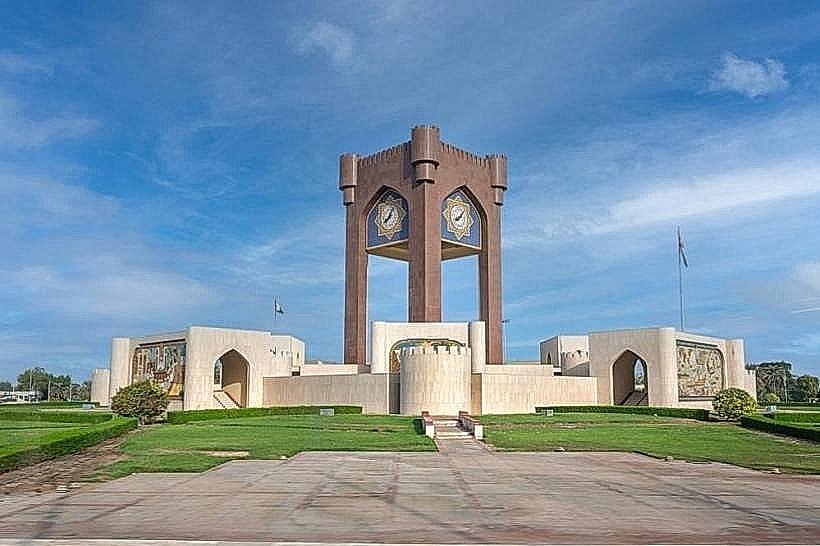
Landmark: Burj Al Sahwa
City: Muscat
Country: Oman
Continent: Asia
Burj Al Sahwa, Muscat, Oman, Asia
Burj Al Sahwa is a landmark clock tower located at the gateway to the Muscat capital area in Al Mawaleh, Oman. It serves as a central navigational point at the intersection of the Sultan Qaboos Highway and the road leading to the interior regions of the country.
Visual Characteristics
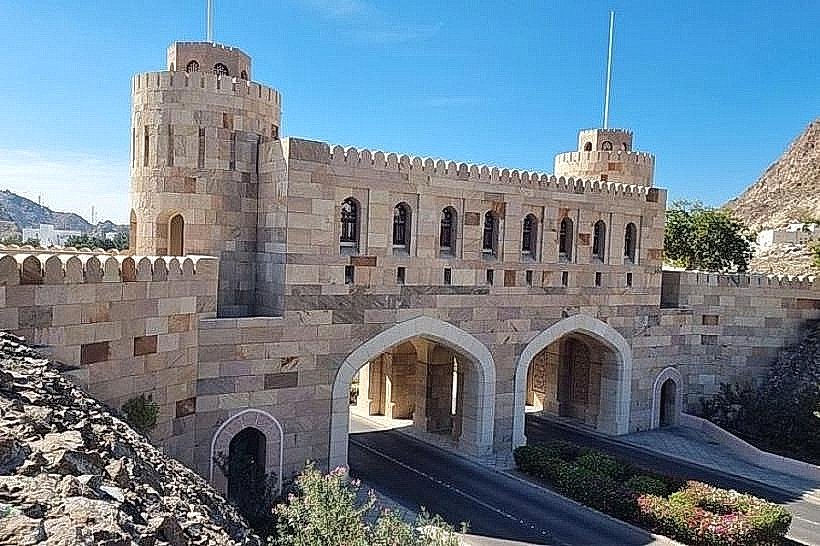
The tower is a 50-meter-tall masonry structure featuring four large clock faces directed toward the cardinal compass points. Its architecture is characterized by traditional Omani decorative elements, including pointed arches, crenellated parapets, and four smaller peripheral towers connected to the central column. The exterior is finished in a light sand-colored stone, and the surrounding plaza is paved with geometric tiles and landscaped with palm trees and seasonal floral displays.
Location & Access Logistics
The tower is positioned in the center of the Al Sahwa roundabout in Al Mawaleh, approximately 8km west of Muscat International Airport. Access is via the Sultan Qaboos Highway (Route 1) or the Al Jamiat Street. While pedestrians cannot access the base of the tower itself due to high-speed traffic, a dedicated parking lot and viewing area are located at the adjacent Al Sahwa Garden. The Al Sahwa Bus Station, a primary hub for intercity Mwasalat lines, is situated 300m to the east.
Historical & Ecological Origin
Constructed in 1985 to commemorate the 15th National Day of Oman, the tower was designed as a symbol of the nation's "Renaissance" under Sultan Qaboos bin Said. It was built on the site of a traditional travelers' resting point where coastal routes met the paths leading to the Western Hajar Mountains. The structure represents a transition from fortified military architecture to modern civic design.
Key Highlights & Activities
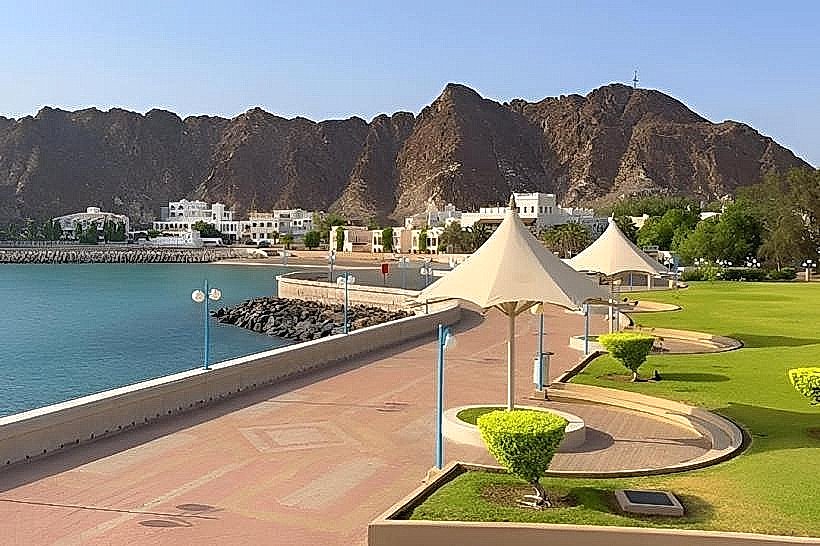
The primary activity is visual observation and photography of the tower’s traditional Omani motifs and its illuminated facade at night. Visitors typically use the adjacent Al Sahwa Garden for leisure while viewing the tower from the perimeter. The site serves as the principal visual waypoint for travelers arriving from the interior governorates or the United Arab Emirates.
Infrastructure & Amenities
There are no amenities within the tower itself. However, the immediate vicinity at the Al Sahwa Garden and the adjacent bus terminal provides public restrooms, prayer rooms, and 5G cellular coverage. Small snack kiosks and coffee shops are located at the bus station, and the City Centre Muscat mall is 2.5km to the east for full retail and dining services.
Best Time to Visit
The best time for photography is at dusk or during the night when the tower is lit with floodlights. For daytime viewing, the early morning (07:00 to 09:00) offers the clearest light before the midday haze. The tower is a permanent outdoor landmark visible year-round, though the adjacent gardens are most comfortable from October to March.
Facts & Legends
Local tradition maintains that the tower’s four clock faces signify the importance of time in the nation's development, with each face representing a different pillar of the Omani Renaissance. It is often referred to by locals as "The Gateway to Muscat," as passing it signifies one's official entry into the capital district from the Batinah or Ad Dakhiliyah regions.
Nearby Landmarks
Al Sahwa Garden - 0.2km West
City Centre Muscat - 2.5km East
Amouage Perfumery Factory - 6.2km Northwest
Muscat International Airport - 8.2km East
Sultan Qaboos University - 10.8km Southwest