Landmark: Fadial Giant Baobab
City: Mbour
Country: Senegal
Continent: Africa
Fadial Giant Baobab, Mbour, Senegal, Africa
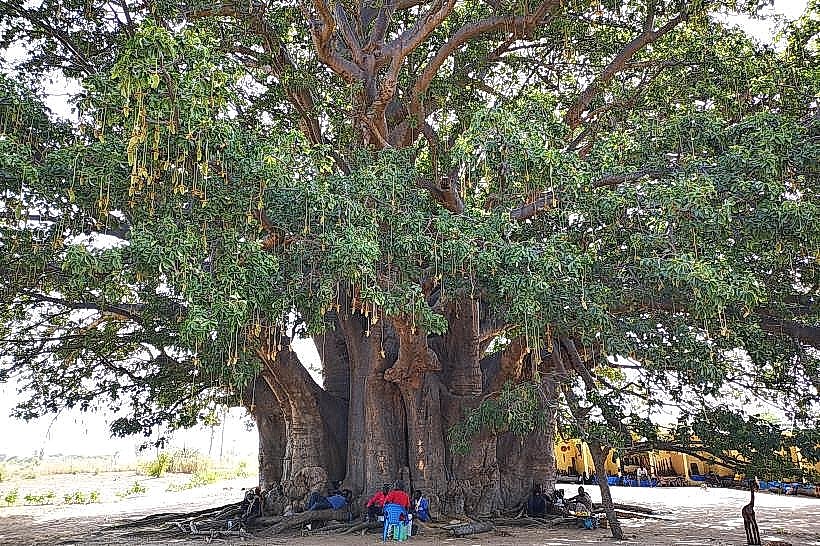
The Fadial Giant Baobab (Baobab Sacré de Fadial) is one of the largest and oldest specimens of Adansonia digitata in Senegal. It is located in the village of Fadial, situated on the road between Mbour and Joal-Fadiouth, approximately 110km south of Dakar.
Visual Characteristics
The tree is a botanical anomaly characterized by its massive circumference, which exceeds 30 meters at the base. Its trunk is deeply fissured and features a vast hollow interior cavern capable of accommodating over 20 adults. The bark is smooth and grey, while the upper branch structure spreads into a wide canopy that remains leafless for nine months of the year, following the typical phenology of the species.
Location & Access Logistics
The baobab is positioned just off the N1 National Road (Mbour–Joal axis).
Access: Visitors traveling toward Joal-Fadiouth can easily stop at the village of Fadial.
Transport: "Sept-place" taxis and local buses from Mbour to Joal pass the site regularly.
Parking: There is a dedicated sandy clearing near the tree for private vehicles and tour buses.
Entry: Access is managed by the local community; a small entrance fee is usually required to support village initiatives and maintenance of the site.
Historical & Ecological Origin
Estimated to be over 850 years old, the tree has survived through multiple climatic shifts in the Petite Côte region. Geologically, it sits on a stable sandy-lateritic terrace. Historically, like many giant baobabs in West Africa, it served as a "Griot Cemetery" before the practice was banned by the Senegalese government in the early 1960s. The hollow interior was traditionally used to inter the bodies of Griots (traditional musicians and oral historians), whose remains were believed to be too sacred or distinct for burial in the ground.
Key Highlights & Activities
Interior Exploration: Visitors are permitted to enter the hollow trunk to observe the internal architecture and historical burial niches.
Cultural Interpretation: Local guides provide detailed accounts of Serer traditions, the history of the Griots, and the spiritual significance of the tree.
Photography: The scale of the tree makes it a primary subject for architectural and botanical photography, particularly during the dry season when its skeletal form is fully visible.
Infrastructure & Amenities
Infrastructure is minimal and focuses on preservation. A small reception hut provides shade for guides and visitors. 4G cellular signal is strong due to the proximity of the N1 road. There are no public restrooms or restaurants on-site, but basic provisions and "Café Touba" can be found in the adjacent Fadial village stalls.
Best Time to Visit
The dry season (November to May) is the best time for access and photography. To avoid the high heat of the afternoon and to experience the best lighting on the trunk, early morning (08:30–10:30) or late afternoon (16:30–18:00) is recommended.
Facts & Legends
Local legend holds that the tree is inhabited by protective spirits (jinns) that guard the village of Fadial. While it no longer functions as a tomb, it remains a site of deep cultural reverence. It is often compared to the famous "Baobab of the 7 Trunks" nearby, but the Fadial specimen is widely considered more impressive due to its singular, massive volume and accessible interior.
Nearby Landmarks
Joal-Fadiouth (Shell Island) – 8km South
Mbodiène Lagoon – 6km North
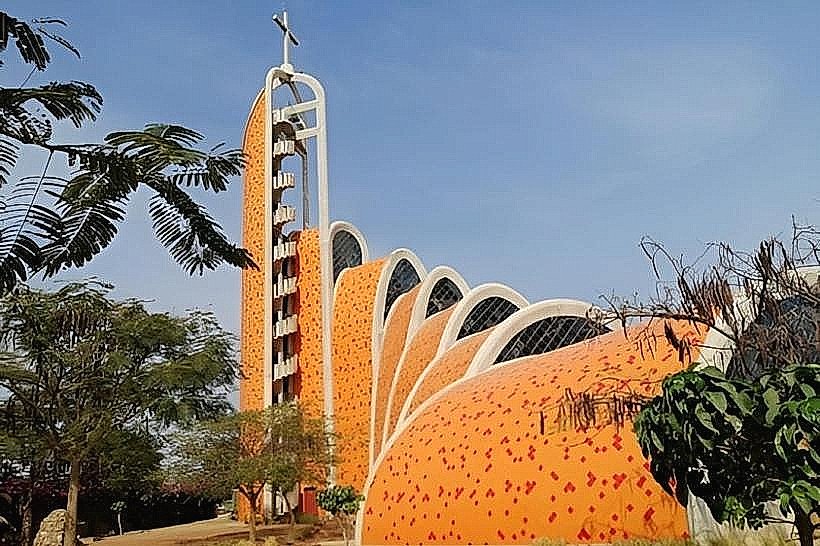
Nianing Church – 15km North
Palmarin Sanctuaries – 25km South