Landmark: Khan al-Franj
City: Sidon
Country: Lebanon
Continent: Asia
Khan al-Franj, Sidon, Lebanon, Asia
Khan al-Franj, also known as the Inn of the Franks, is a preserved Ottoman-era caravanserai located near the old harbor of Sidon (Saida), Lebanon. It stands as one of the most prominent commercial urban structures built along the Levantine coast during the 17th century.
Visual Characteristics
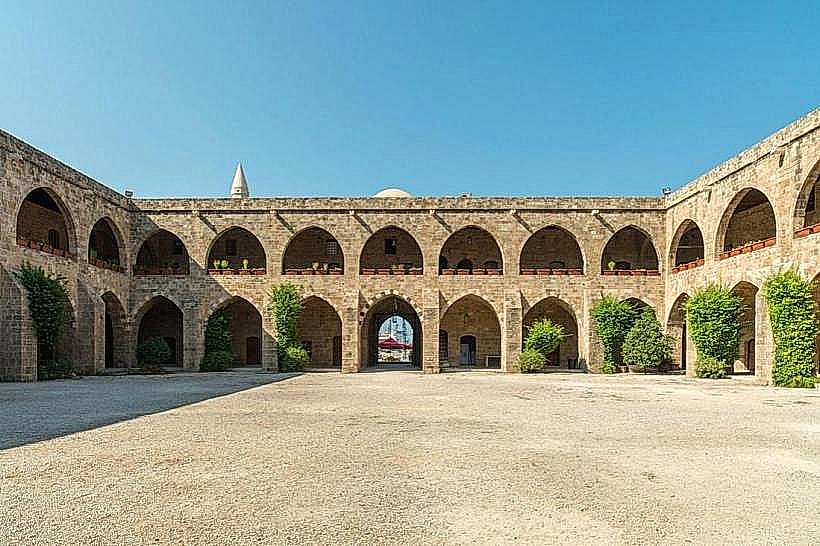
The complex is a large, two-story rectangular limestone structure built around a vast central open courtyard measuring roughly 50 meters by 40 meters. The courtyard features a central stone fountain and is entirely bordered by a ground-floor arcade of wide, pointed stone arches. The upper floor contains a matching gallery of arched open corridors that provide access to individual vaulted rooms. The building exhibits classic Ottoman civic architecture, utilizing local cream and ochre sandstone with minimal external ornamentation, save for the vaulted main entrance portal facing north toward the harbor.
Location & Access Logistics
The caravanserai is situated on Al-Moutran Street, immediately southeast of the main harbor roundabout and approximately 43 kilometers south of Beirut. Access from Beirut is via the South Coastal Highway, following the seaside boulevard directly into Sidon. Vehicles must park in the municipal lot located at the adjacent seaport or along the coastal road, as the alleys surrounding the khan are pedestrian-only. Public transit minivans and buses from Beirut's Cola intersection drop passengers at the central Nejmeh Square, requiring a 400-meter walk northward through the market streets to reach the entrance.
Historical & Ecological Origin
The khan was constructed between 1610 and 1620 AD by Emir Fakhreddine II, the ruler of Mount Lebanon, to stimulate trade with Europe by providing secure lodging and warehousing for French merchants. The design reflects the classic architectural layout of urban trade inns used throughout the Ottoman Empire. The site occupies a flat alluvial plain adjacent to the historical maritime port, positioned just above sea level on the coastal strip between the Mediterranean Sea and the foothills of Mount Lebanon.
Key Highlights & Activities
Walking through the central open courtyard to examine the symmetrical stone arcades and the historic central font.
Exploring the upper-floor galleries to inspect the vaulted rooms originally used as living quarters by foreign traders.
Viewing the specialized vaulted ground-floor chambers engineered to warehouse heavy commercial goods and livestock.
Attending seasonal cultural exhibitions, musical performances, and artisan craft fairs occasionally hosted within the courtyard space.
Infrastructure & Amenities
The monument features a restored infrastructure managed in partnership with cultural foundations. Public restrooms are located on the ground floor near the main administrative offices. The interior rooms and arched galleries provide ample shade from direct sunlight, though the central courtyard is fully exposed. Cellular signal coverage is stable, with 4G and 5G connectivity delivered by networks Alfa and Touch. Numerous traditional cafes, seafood restaurants, and street vendors operate immediately outside the entrance within the old commercial quarter.
Best Time to Visit
The recommended months for a visit are April through June and September through November to avoid extreme summer humidity and winter coastal rain. The facility is generally open to visitors daily from 9:00 AM to 6:00 PM. The best time of day for photography is mid-morning or late afternoon, when the sun angles into the courtyard, illuminating the limestone arches while casting deep shadows through the recessed vaulted corridors.
Facts & Legends
A verified historical oddity is that during the 19th century, the complex ceased operating as a commercial inn and was converted into a multi-functional institutional site, serving sequentially as a Franciscan monastery, a French consulate, and an orphanage managed by the Sisters of Saint Joseph. Local folklore holds that Fakhreddine II incorporated hidden architectural escape niches within the thick perimeter walls to allow merchants to conceal gold and precious gems during sudden pirate raids on the port.
Nearby Landmarks
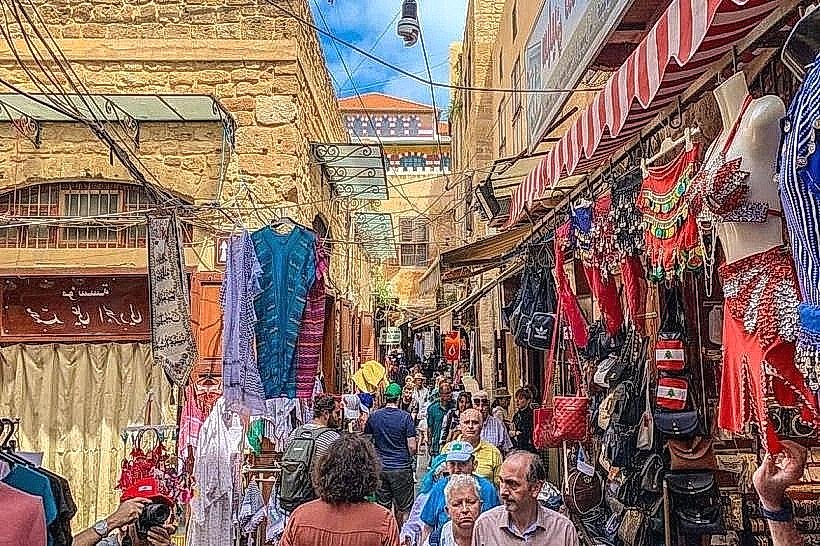
Sidon Old Souks: 0.05km South
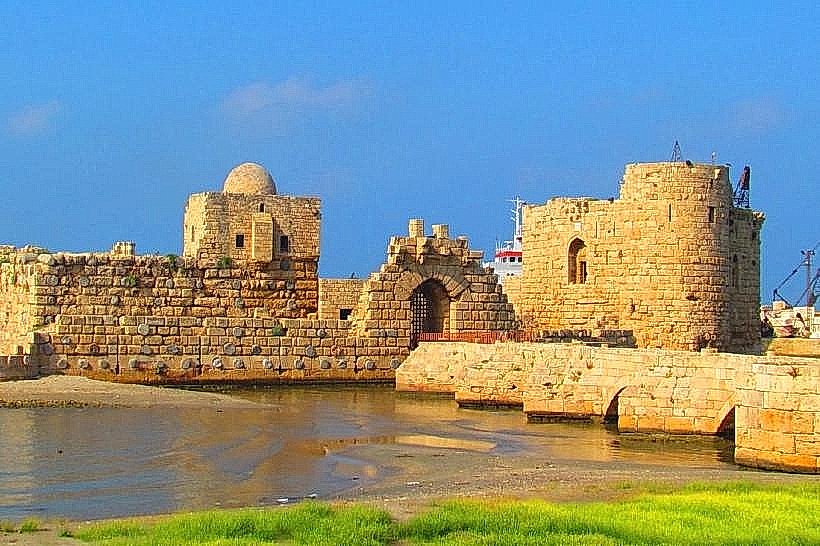
Sidon Sea Castle: 0.2km Northwest
Debbane Palace: 0.25km Southeast
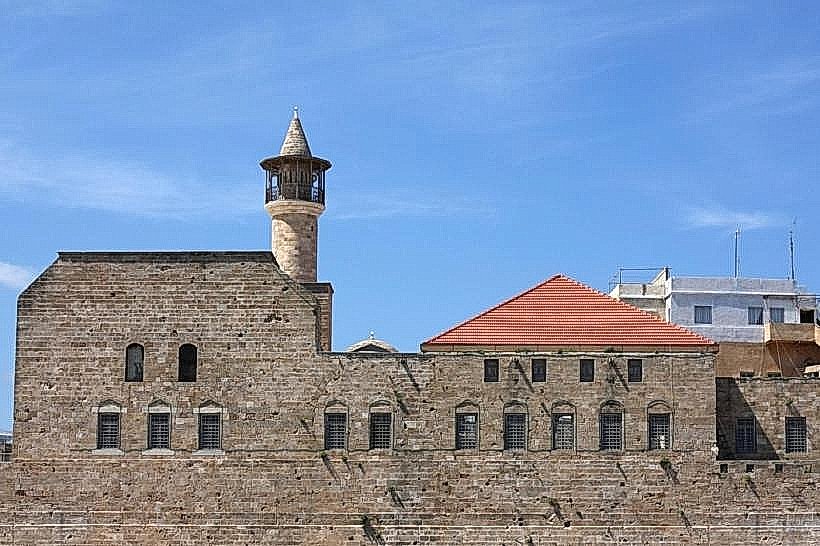
Great Al-Omari Mosque: 0.3km Southwest
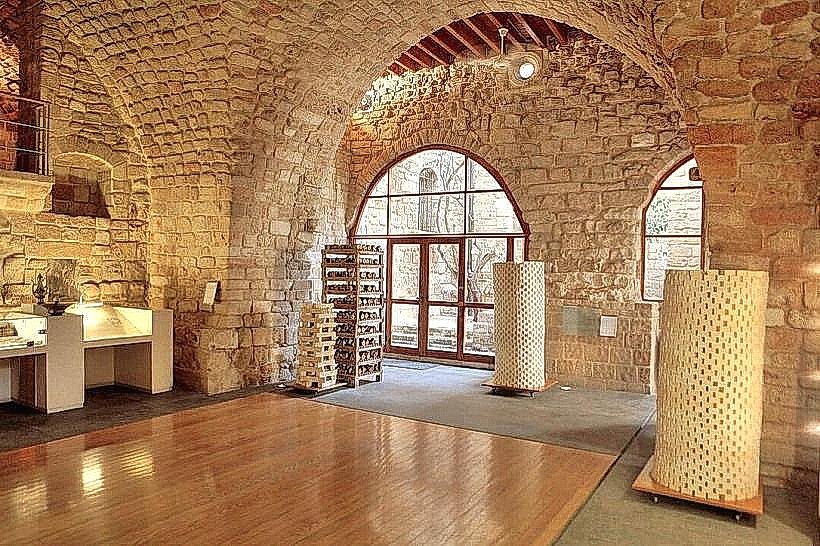
Soap Museum (Audi Foundation): 0.4km Southeast