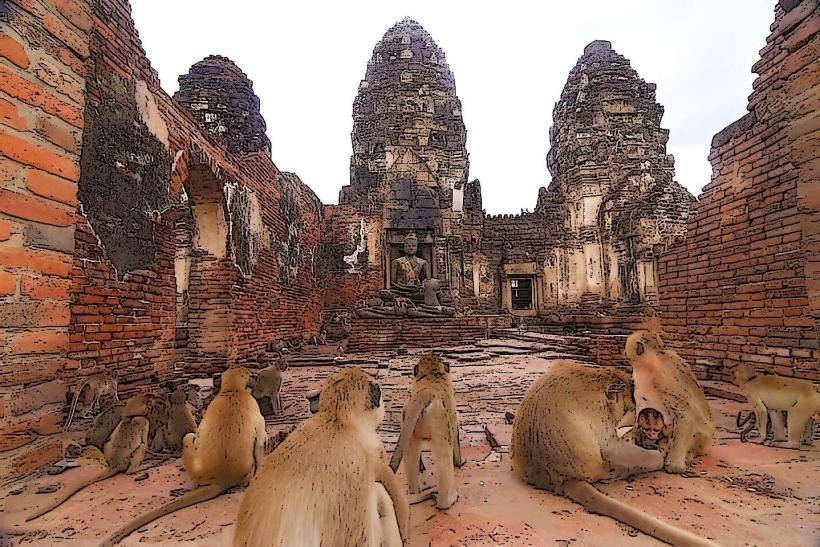
Landmark: Lopburi Monkey Temple
City: Gulf of Thailand
Country: Thailand
Continent: Asia
Lopburi Monkey Temple, Gulf of Thailand, Thailand, Asia
The Lopburi Monkey Temple, officially known as Phra Prang Sam Yot, is a 13th-century Khmer-style temple located in the city of Lopburi, Thailand.
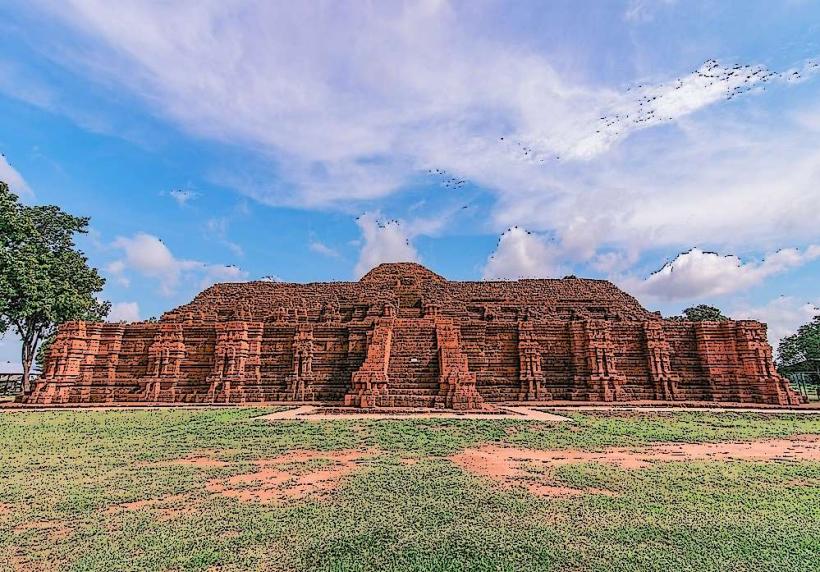
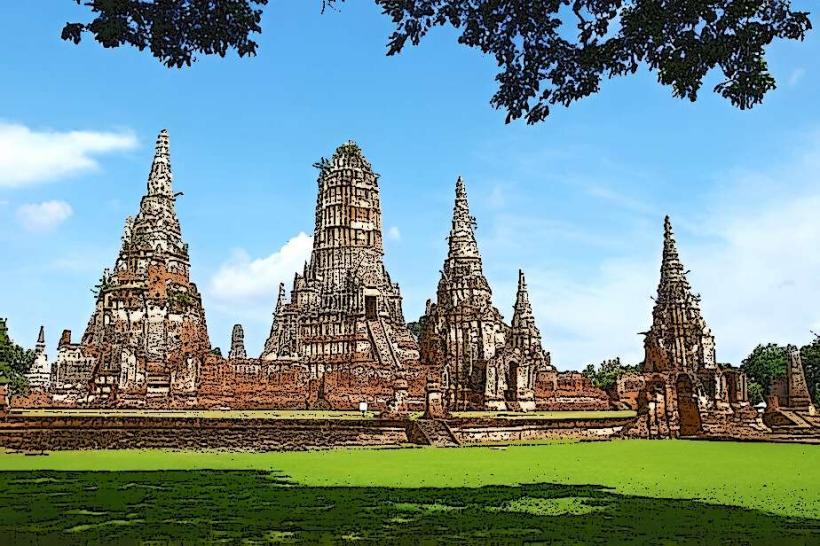
This temple complex is characterized by its three main prangs, or towers, constructed from laterite stone. The central prang stands approximately 20 meters tall. The exterior surfaces are weathered, revealing the reddish-brown hue of the laterite. Architectural elements suggest a blend of Khmer and Sukhothai influences, with remnants of stucco work visible in some areas. The site is surrounded by a moat and a low wall.
Location & Access Logistics
Phra Prang Sam Yot is situated in the center of Lopburi city, approximately 150 kilometers north of Bangkok. Access is via Highway 311. The temple is located at the intersection of Phra Narai Maharat and Wichayen roads. Parking is available on the street surrounding the temple grounds. Lopburi Railway Station is within walking distance, approximately 1 kilometer east of the temple, with regular train services connecting to Bangkok.
Historical & Ecological Origin
The temple was originally constructed in the 13th century by the Khmer Empire as a Buddhist shrine. Later, during the reign of King Narai the Great in the 17th century, it was converted into a Hindu temple and then back to a Buddhist temple. The site's ecological significance is primarily due to the large population of long-tailed macaques that inhabit the temple and surrounding area, a phenomenon that began in the latter half of the 20th century.
Key Highlights & Activities
Observation of the resident macaque population is the primary activity. Visitors can walk around the temple structures and observe the monkeys. Feeding the monkeys is permitted by vendors on-site, though caution is advised. Photography of the temple architecture and the monkeys is common.
Infrastructure & Amenities
Restrooms are available near the entrance. Limited shade is provided by the temple structures themselves. Cell phone signal (4G) is generally available. Food vendors selling snacks and drinks are present outside the temple perimeter.
Best Time to Visit
The best time of day for photography is early morning or late afternoon when the sunlight is less direct. The months of November to February offer cooler temperatures and lower humidity, making daytime exploration more comfortable. High tide is not a relevant factor for this inland temple.
Facts & Legends
A local legend states that the monkeys are the descendants of the divine army of Hanuman, the monkey god. A verified historical oddity is the annual "Monkey Buffet" festival, held in late November, where a large feast of fruits and vegetables is laid out for the monkeys to encourage tourism.
Nearby Landmarks
- Phra Narai Ratchaniwet (King Narai's Palace) - 0.3km Southwest
- Wat Phra Si Mahathat - 0.8km Northeast
- San Phra Kan (Shrine of the City Pillar) - 0.4km West
- Wat Sao Thong Thong - 0.6km Northwest