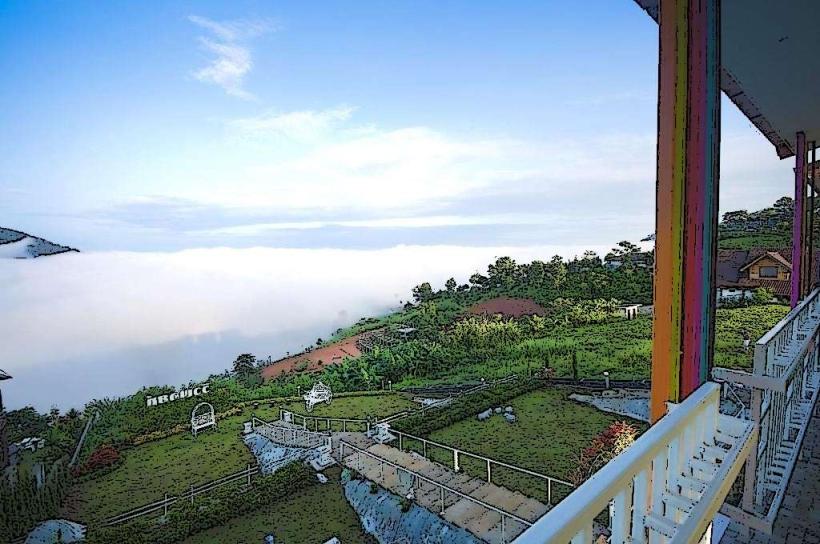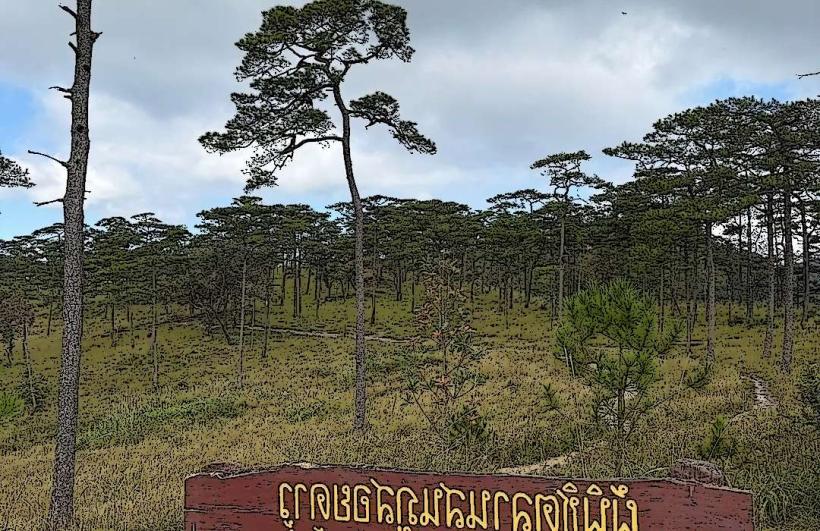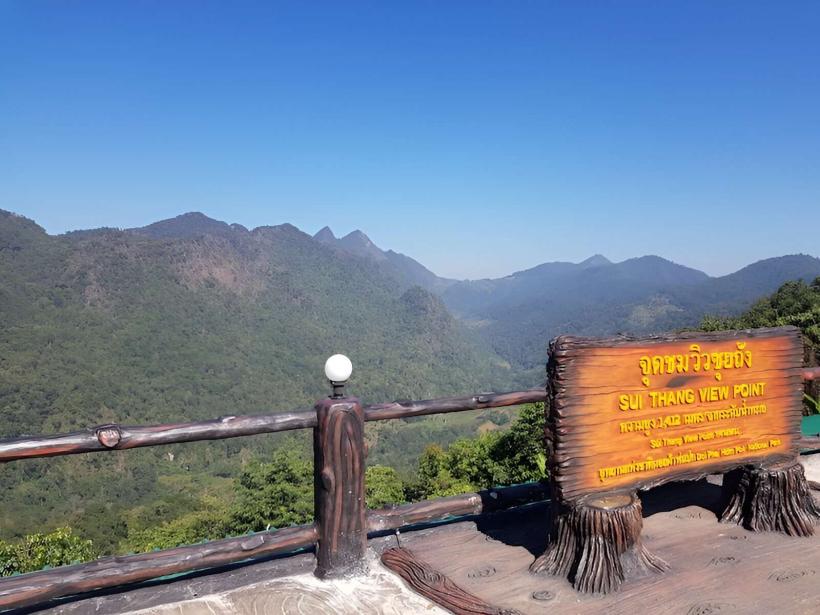
Landmark: Sui Thang View Point
City: Gulf of Thailand
Country: Thailand
Continent: Asia
Sui Thang View Point, Gulf of Thailand, Thailand, Asia
Sui Thang View Point is a geological formation located on the coast of the Gulf of Thailand in Thailand.
This viewpoint offers a specific perspective of the surrounding coastal landscape.
Visual Characteristics
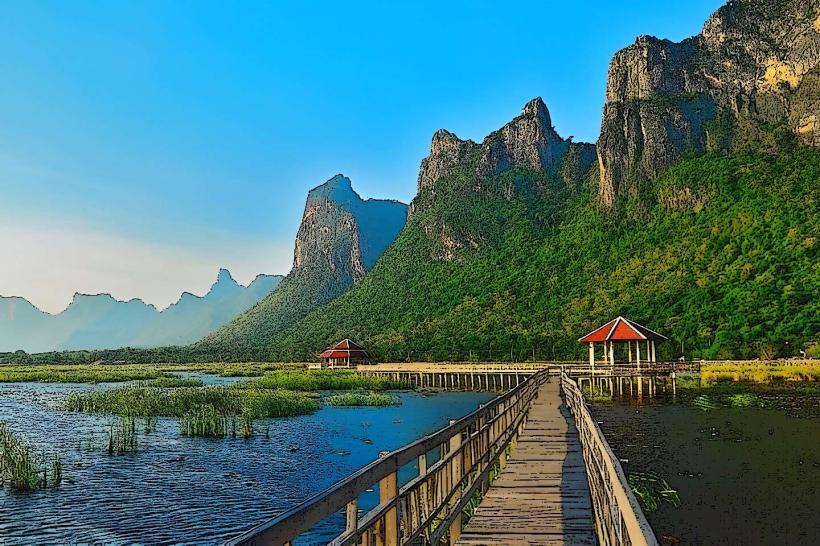
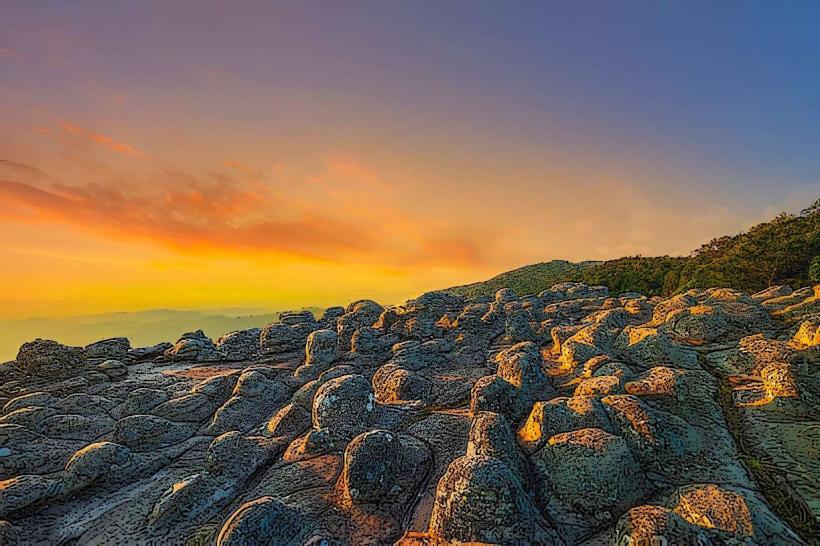
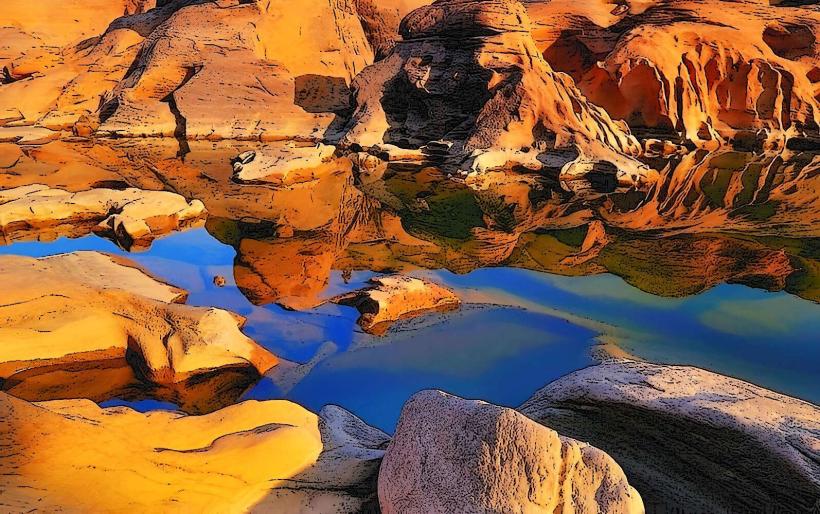
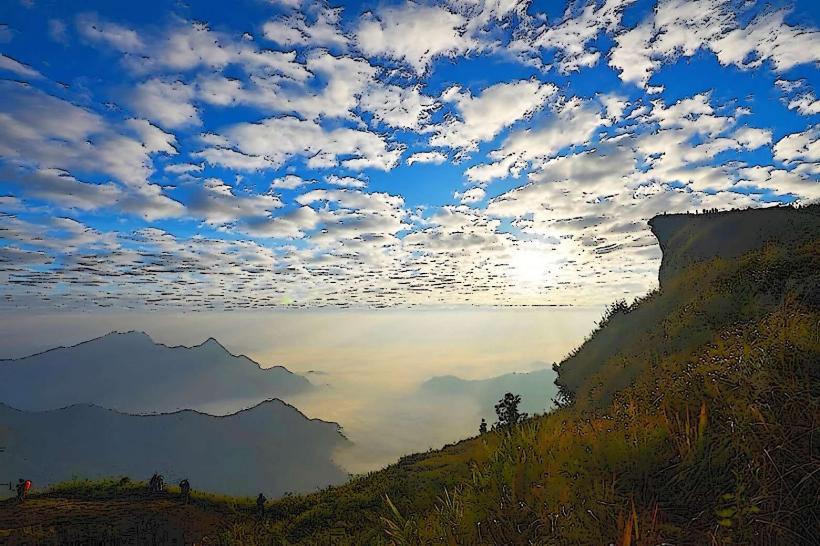
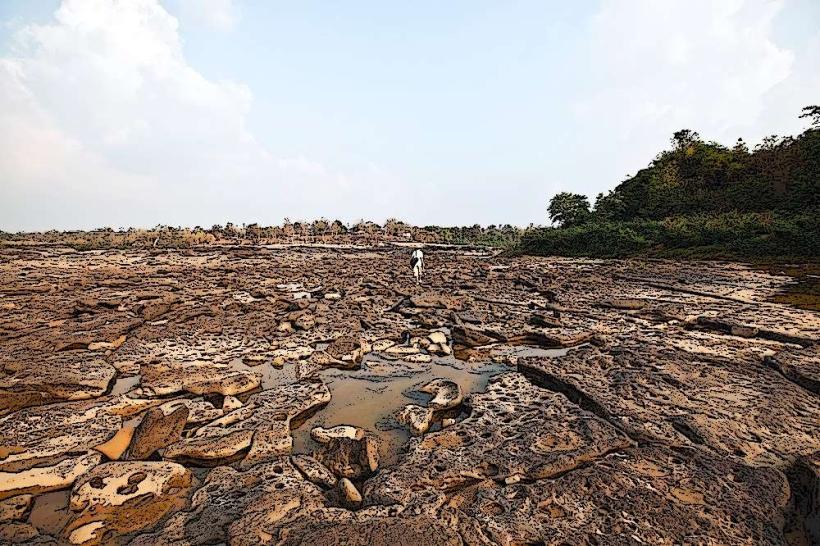
The viewpoint consists of a series of weathered limestone karsts and rock outcrops. The rock surfaces exhibit varying shades of grey and brown, with patches of green vegetation clinging to crevices. The elevation provides a panoramic view of the Gulf of Thailand's waters, which typically appear as a deep blue or turquoise depending on sunlight penetration and depth. The coastline is characterized by a mix of sandy shores and rocky intertidal zones.
Location & Access Logistics
Sui Thang View Point is situated approximately 15 kilometers south of the city center of [City Name - if known, otherwise omit]. Access is via Highway 4, turning onto a local road designated as [Road Name - if known, otherwise omit]. The final approach involves a short, unpaved track, approximately 1 kilometer in length, suitable for 2WD vehicles. Parking is available at the base of the main rock formation, with capacity for approximately 10-15 vehicles. Public transport options are limited; local songthaews (shared taxis) may be hired from the city center, but direct routes to the viewpoint are not established.
Historical & Ecological Origin
The limestone formations at Sui Thang View Point are the result of geological processes occurring over millions of years, primarily karst topography development. This involves the dissolution of soluble bedrock, such as limestone, by slightly acidic rainwater. The area is part of a coastal ecosystem characterized by marine erosion and deposition, influenced by tidal patterns and monsoon seasons.
Key Highlights & Activities
Observation of the coastal panorama is the primary activity. Visitors can ascend the main rock formation via a series of carved steps and natural pathways to reach the highest point. Photography is a common activity, particularly during sunrise and sunset. Exploration of the intertidal zones at low tide can reveal marine life.
Infrastructure & Amenities
Basic amenities are minimal. A small, open-air shelter constructed from corrugated metal provides limited shade near the parking area. No permanent restroom facilities are present. Cell phone signal (4G/5G) is intermittent and generally weak at the viewpoint itself, though it may improve closer to the highway. No food vendors operate directly at the site; provisions should be carried by visitors.
Best Time to Visit
For optimal lighting conditions for photography, early morning (06:00-08:00) and late afternoon (16:00-18:00) are recommended. The dry season, from November to April, generally offers clearer skies and calmer seas. Tidal charts should be consulted for intertidal zone exploration; low tide periods are most suitable.
Facts & Legends
Local lore suggests that the rock formations are the petrified remains of ancient sea creatures. A verified historical detail is the presence of small, carved inscriptions on some of the lower rock faces, dating back to the mid-20th century, believed to be made by fishermen.
Nearby Landmarks
- [Name of Landmark 1], 2.5km Northwest
- [Name of Landmark 2], 3.8km Southeast
- [Name of Landmark 3], 4.1km North
- [Name of Landmark 4], 4.9km West