Landmark: Great Court
City: Baalbek
Country: Lebanon
Continent: Asia
Great Court, Baalbek, Lebanon, Asia
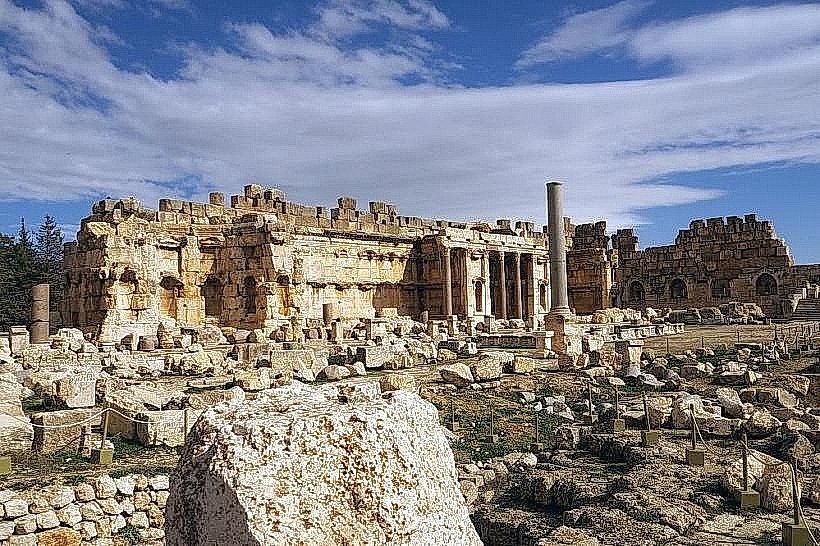
The Great Court is a massive, open-air ceremonial plaza situated at the heart of the ancient Roman sanctuary complex of Heliopolis in Baalbek, Lebanon. It serves as the central architectural nexus connecting the monumental Hexagonal Court to the elevated Temple of Jupiter.
Visual Characteristics
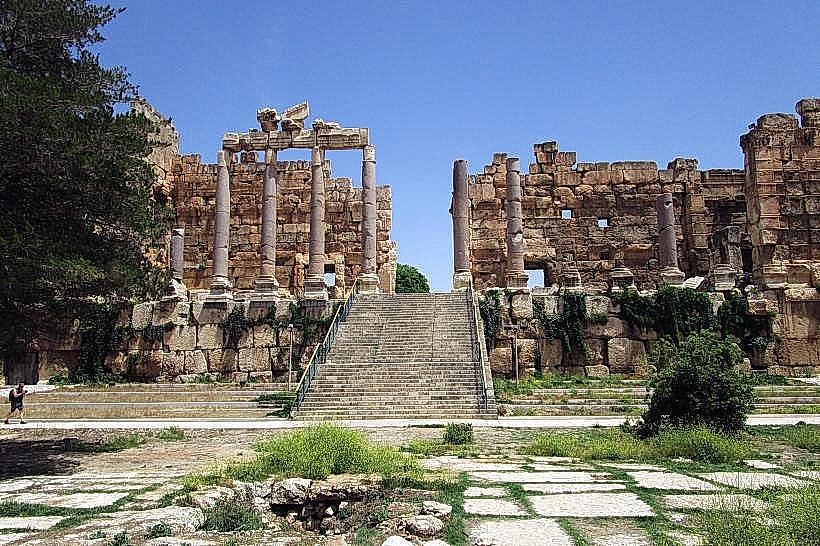
The rectangular plaza measures approximately 135 meters in length by 113 meters in width and is constructed entirely from local cream-colored limestone blocks. The central space is flanked on the northern, southern, and eastern sides by the remnants of a double-tiered portico that originally held 84 Corinthian columns. Behind these colonnades are alternating semicircular and rectangular exedrae (recessed chambers) decorated with highly detailed stone niches, reliefs of mythological deities, and intricate friezes. The center of the courtyard features the foundations of two large stone altars and two symmetrical lustral basins (baths) decorated with relief carvings of marine life and classical festoons.
Location & Access Logistics
The site is located within the central sector of the Baalbek Archaeological Zone along Baalbek Castle Road, approximately 85 kilometers northeast of Beirut. Access from Beirut is via the Beirut-Damascus Highway (Route 30M) to Chtaura, continuing north along the Baalbek-Riyak Highway. Visitors must leave vehicles at the main municipal parking facility situated opposite the central ticket office. Access to the courtyard requires passing through the primary site entrance, the Propylaea, and the Hexagonal Court. Public transportation is serviced via shared minivans from Beirut’s Cola intersection, with a transfer at Chtaura for a direct connection to the Baalbek terminal, located 1 kilometer east of the ruins.
Historical & Ecological Origin
Construction of the plaza began during the mid-1st century AD under the reign of Emperor Nero and was completed during the 2nd century AD under Antoninus Pius. It was engineered to accommodate large-scale sacrificial rituals, priestly processions, and thousands of pilgrims worshipping the Heliopolitan Triad. The courtyard rests on an artificial earthen plateau supported by massive Roman masonry walls. The geological context is the high-altitude, semi-arid steppe of the northern Beqaa Valley, located at an elevation of 1,145 meters between the Lebanon and Anti-Lebanon mountain ranges.
Key Highlights & Activities
Examining the carved stone reliefs and architectural moldings inside the surviving northern and southern exedrae chambers.
Observing the structural foundations of the two monumental sacrificial altars positioned in the center of the plaza.
Inspected the detailed carvings of Tritons, Nereids, and decorative garlands on the walls of the southern lustral basin.
Walking up the wide monumental staircase on the western side that ascends directly to the platform of the Temple of Jupiter.
Infrastructure & Amenities
The plaza is located entirely within the paid archaeological park boundaries, with central public restrooms and a visitor center available at the main park entrance. The expansive open-air design provides no natural or artificial shade, requiring sun protection during daytime visits. Mobile cellular reception is reliable across the entire area, with 4G and 5G signals maintained by local operators Alfa and Touch. Food, bottled water, and local vendor shops are situated directly outside the main exit gate of the archaeological site.
Best Time to Visit
The ideal months to visit are from April to June and September to November to avoid extreme high-altitude winter cold and summer heat. The site is open daily from 8:30 AM until sunset. The best time of day for photography is mid-morning or late afternoon, when the low angle of the sun casts pronounced shadows that emphasize the deep-relief stone carvings along the perimeter walls and exedrae.
Facts & Legends
A verified historical oddity is that during the late 4th century AD, Emperor Theodosius dismantled the central sacrificial altars and used the stone blocks to construct a massive Christian basilica directly inside the courtyard. This Byzantine structure stood until modern archaeological excavations removed it to expose the original Roman floor plan. Local folklore long held that the vast courtyard was used as an ancient landing pad for extraterrestrial spacecraft or celestial chariots due to the precision and scale of the underlying stone foundations.
Nearby Landmarks
Hexagonal Court: 0.05km East
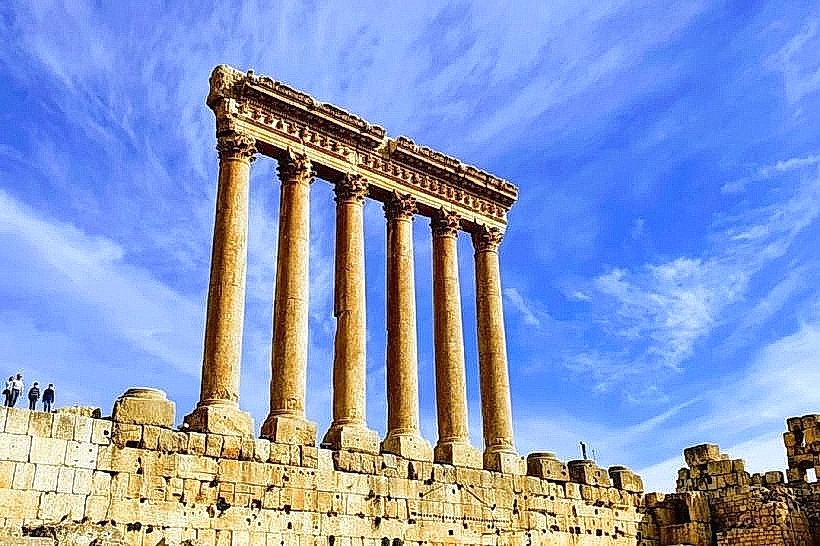
Temple of Jupiter: 0.1km West
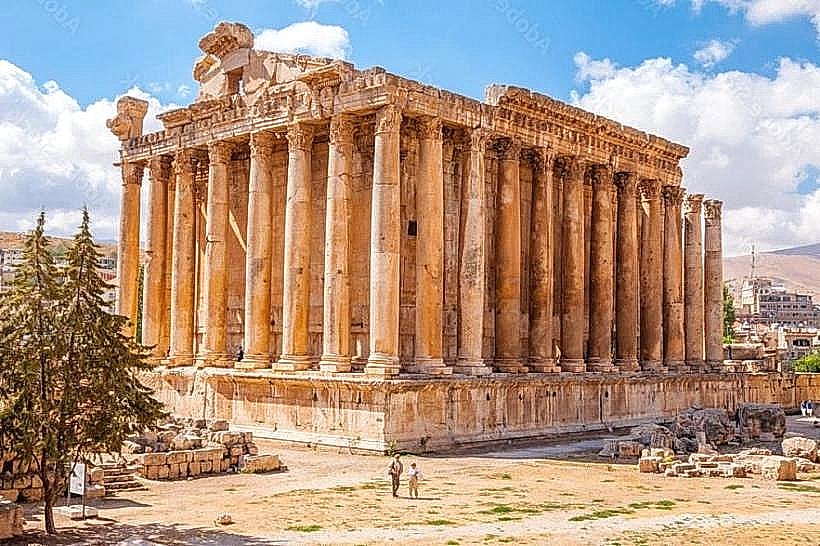
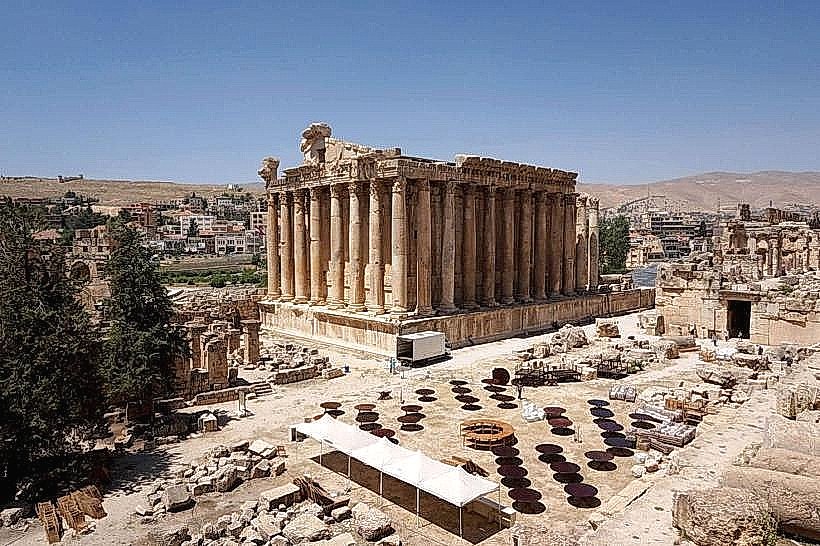
Temple of Bacchus: 0.15km Southwest
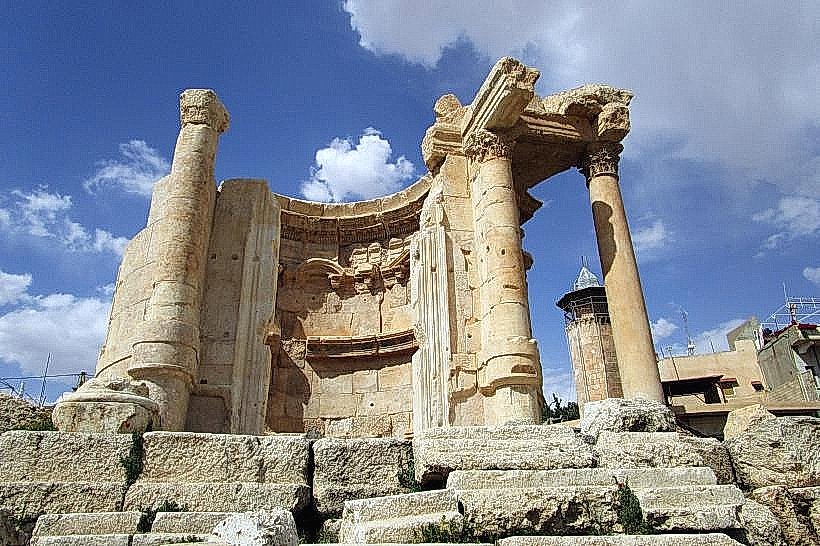
Temple of Venus: 0.2km East
Sayyida Khawla Shrine: 0.9km Southwest