Landmark: Qoubbat Douris
City: Baalbek
Country: Lebanon
Continent: Asia
Qoubbat Douris, Baalbek, Lebanon, Asia
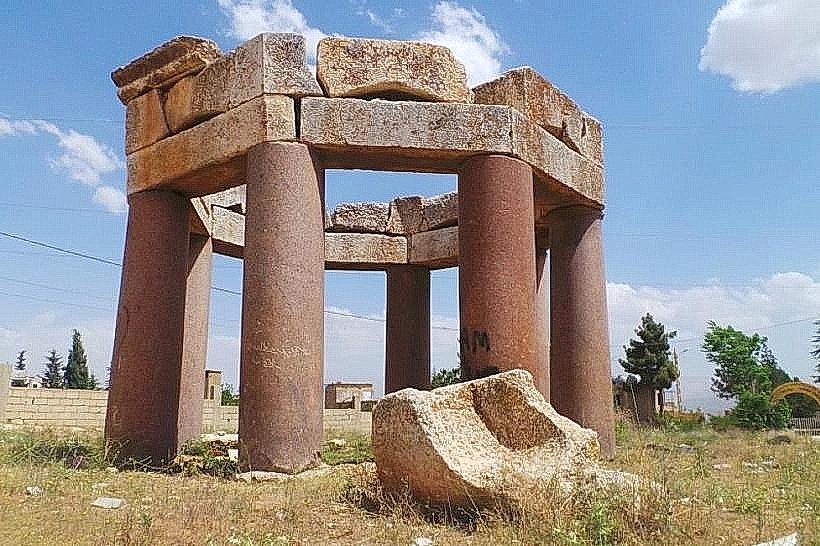
Qoubbat Douris is an ancient tomb and shrine located at the southern entrance of Baalbek in the Beqaa Valley of Lebanon. The structure stands as a prominent historical landmark positioned directly adjacent to the main highway leading into the city.
Visual Characteristics
The monument is an octagonal dome structure constructed from regional cream-colored limestone and salvaged Roman architectural materials. It features eight thick granite columns arranged in a circle, which support a stone architrave and a partially collapsed hemispherical dome. The columns lack uniform design, exhibiting varying dimensions and capitals due to their diverse origins. A notable architectural anomaly is that one of the columns is positioned upside down, with its capital serving as the base.
Location & Access Logistics
The site is situated on the Baalbek-Riyak Highway in the village of Douris, approximately 2 kilometers southwest of the main Baalbek city center and 83 kilometers northeast of Beirut. Vehicles from Beirut follow the Beirut-Damascus Highway (Route 30M) to Chtaura, then transition north via the Baalbek-Riyak Highway, which runs directly past the monument. Roadside parking is available immediately adjacent to the fenced enclosure surrounding the shrine. Public transport minivans operating between Chtaura and Baalbek pass the site directly, allowing passengers to request a drop-off at the Douris intersection.
Historical & Ecological Origin
The shrine was constructed in 1243 AD during the Ayyubid era, built as a tomb for a Muslim saint or local dignitary, though it has also been historically associated with the Mamluk period. Builders constructed the monument by dismantling and repurposing architectural elements from the nearby Roman ruins of Heliopolis. The geological setting is the flat, high-altitude steppe of the Beqaa Valley, located at an elevation of approximately 1,140 meters between the Lebanon and Anti-Lebanon mountain ranges.
Key Highlights & Activities
Observing the architectural reuse (spolia) of Roman materials, specifically the mismatched granite columns and capitals.
Inspecting the inverted column structure to examine the placement of the Roman capital at ground level.
Photographing the open-air octagonal structure against the backdrop of the Beqaa Valley and surrounding mountains.
Viewing the internal stone sarcophagus layout positioned within the center of the columns.
Infrastructure & Amenities
The monument sits within a small, protective iron-fenced municipal plot. There are no public restrooms or visitor centers directly on-site; these facilities must be accessed at nearby service stations or within Baalbek city center. The structure provides minimal shade underneath the central stone dome. Cellular signal coverage is stable, with 4G and 5G network access provided by local networks Alfa and Touch. Convenience stores, bakeries, and fuel stations operate within a 200-meter radius along the main highway.
Best Time to Visit
The ideal months for a visit are April through June and September through November to avoid extreme mountain winter cold and summer heat. The site is outdoors and visible at all hours from the public road. For optimal photography, the late afternoon golden hour provides direct lateral illumination on the limestone and granite surfaces, highlighting the textures of the ancient stone blocks without the harsh overhead shadows of midday.
Facts & Legends
A verified historical oddity is the deliberate inversion of the single column capital, which modern archaeologists attribute to the haste or structural indifference of the medieval builders who prioritized functional stability over classical alignment. Local folklore long suggested the site was the burial place of a holy man whose spirit protected the southern gateway of Baalbek, leading residents to preserve the structure even as the surrounding modern village expanded.
Nearby Landmarks
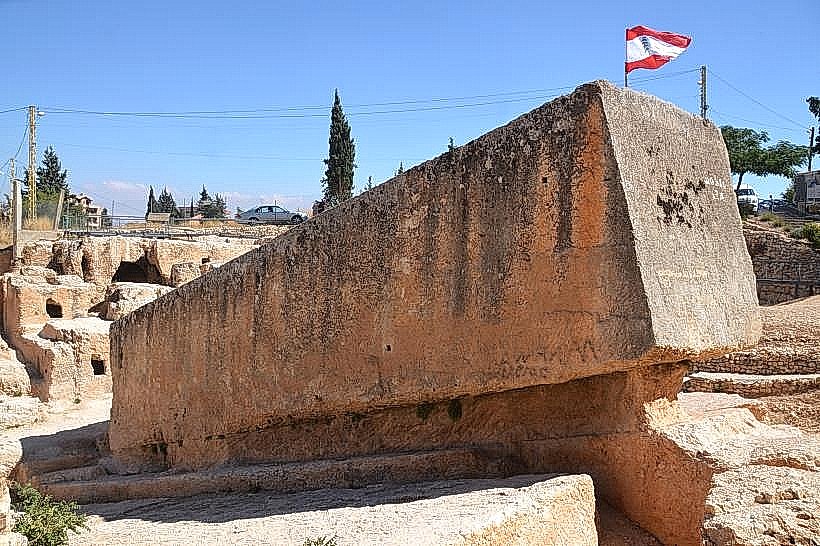
Stone of the Pregnant Woman (Ancient Quarry): 1.5km Northeast
Sayyida Khawla Shrine: 2.1km Northeast
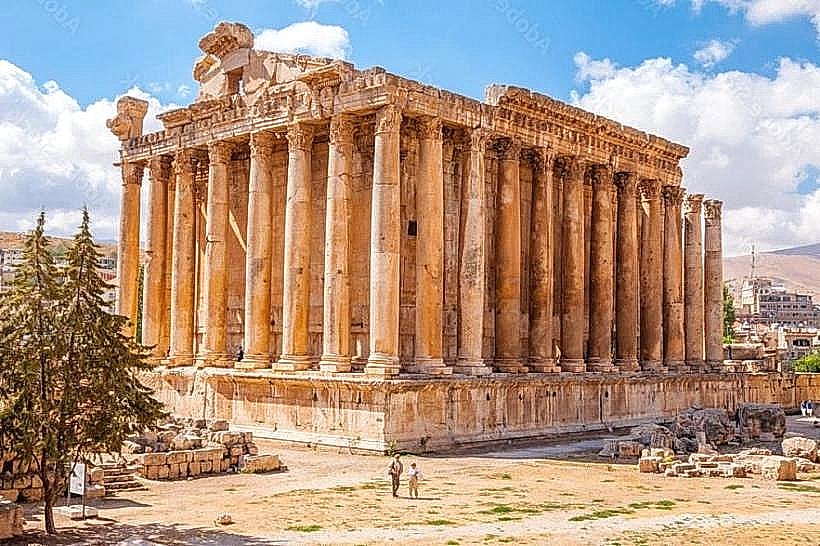
Temple of Bacchus: 2.6km Northeast
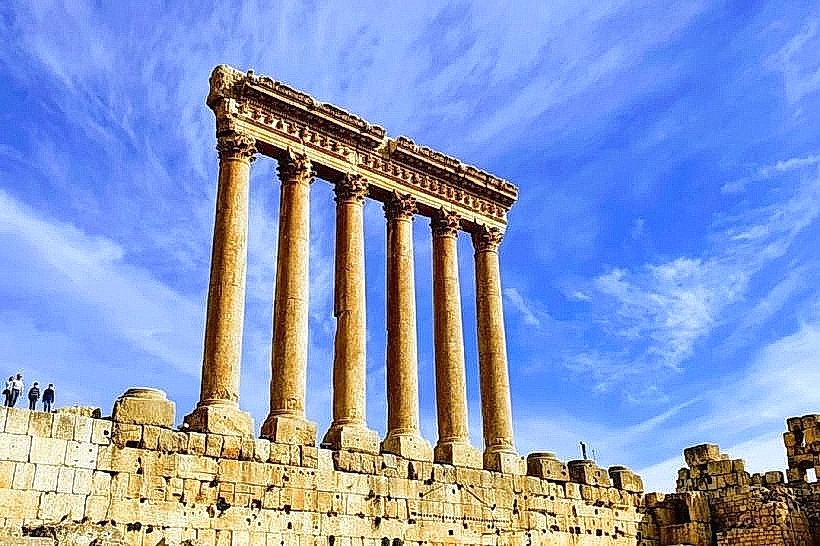
Temple of Jupiter: 2.6km Northeast
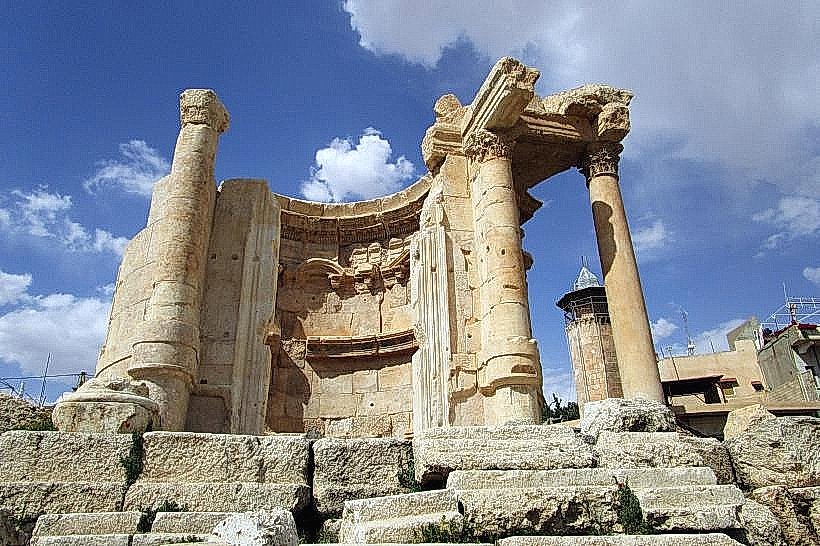
Baalbek Old Town: 2.7km Northeast