Landmark: Temple of Venus
City: Baalbek
Country: Lebanon
Continent: Asia
Temple of Venus, Baalbek, Lebanon, Asia
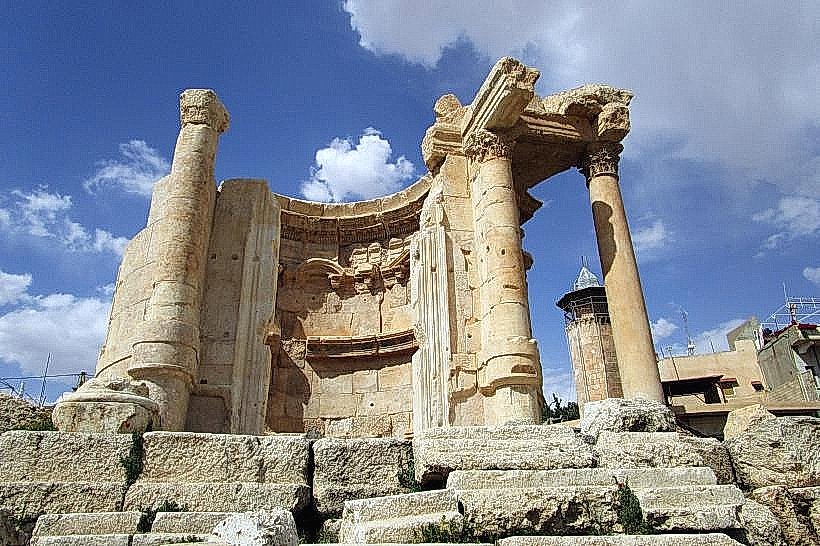
The Temple of Venus is a circular ancient Roman sanctuary located outside the main Propylaea of the Heliopolis archaeological complex in Baalbek, Lebanon. It stands as a distinctive example of late Roman baroque architecture, functioning historically as a marginal shrine within the sacred precinct.
Visual Characteristics
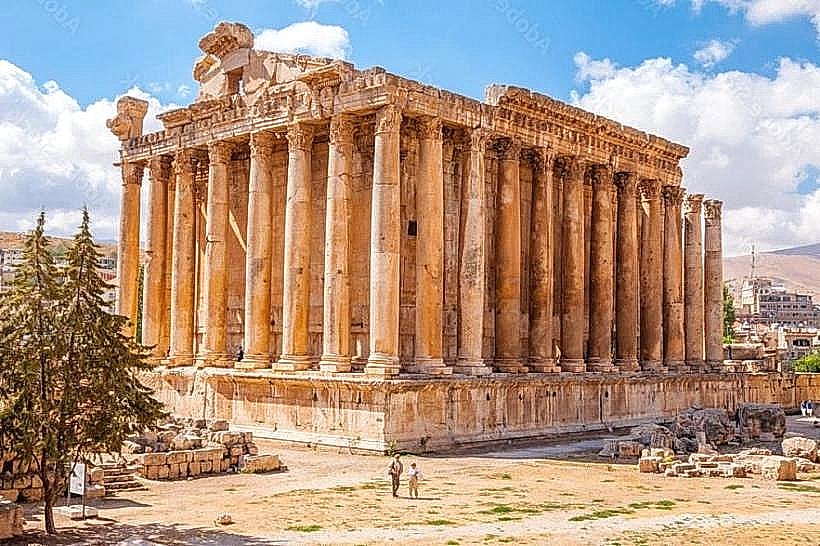
The temple is constructed from local cream-colored limestone and is characterized by its unique horseshoe-shaped or semicircular design. The structure features a circular cella surrounded by a peristyle of Corinthian columns built on a elevated podium. The entablature above the columns is deeply curved inward toward the cella walls between each column, creating an undulating architectural profile. Detailed decorative carvings of doves, shells, and grapevines-motifs explicitly linked to the cult of Venus-adorn the remaining stone friezes and niches.
Location & Access Logistics
The monument is situated just east of the main entrance to the Baalbek Archaeological Site, along Baalbek Castle Road, roughly 85 kilometers northeast of Beirut. Access from Beirut requires taking the Beirut-Damascus Highway (Route 30M) to Chtaura, then proceeding north on the Baalbek-Riyak Highway. Visitors must park at the central municipal parking lot located near the main ticket office. Public transport options include shared minivans from Beirut’s Cola intersection to Chtaura, where passengers transfer to a secondary minivan traveling directly to Baalbek, dropping passengers within a 500-meter walk of the temple.
Historical & Ecological Origin
Construction of the temple dates back to the early 3rd century AD, during the reign of the Severan dynasty, a period marked by highly decorative Roman architectural styles. It was built as a dedicated sanctuary to Venus, the goddess of love and fertility, who was worshipped locally alongside Jupiter and Bacchus. The site sits on the high-altitude, semi-arid plateau of the Beqaa Valley, positioned at an elevation of roughly 1,145 meters near the seasonal springs that feed the Litani River.
Key Highlights & Activities
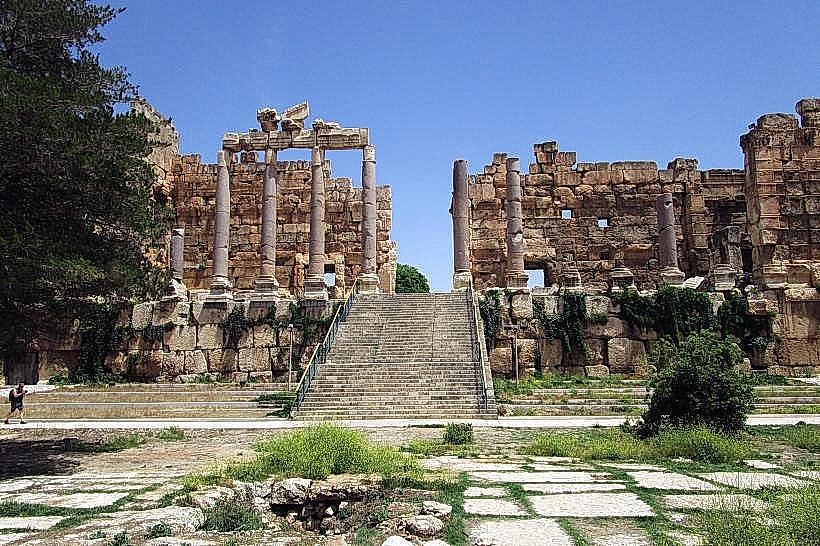
Observing the unique concave, scalloped design of the outer entablature and podium walls from the exterior perimeter.
Examining the surviving Corinthian capitals and the specialized iconographic carvings of shells and marine motifs inside the wall niches.
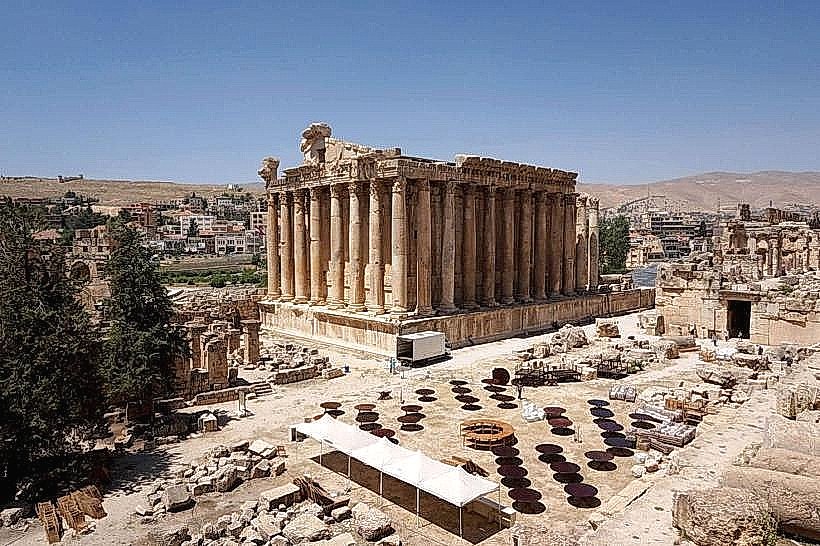
Photographing the temple structure against the backdrop of the larger, elevated fortifications of the Great Court.
Viewing the adjacent remnants of the Temple of the Muses, which sits partially integrated into the same lower archaeological sector.
Infrastructure & Amenities
The Temple of Venus is situated outside the main paid perimeter wall but within the managed archaeological zone. Public restrooms and ticketing facilities are located 150 meters away at the main visitor center. The lower ruins offer zero shade, requiring sun protection during mid-day visits. Cellular signal coverage is strong, with 4G and 5G networks actively maintained by local carriers Alfa and Touch. Local shops, cafes, and street vendors selling water and snacks operate immediately across the street from the monument.
Best Time to Visit
The optimal months for a visit are April through June and September through November to avoid extreme mountain winter conditions and high summer temperatures. The site is visible from the public road at all hours, but close access follows general site hours from 8:30 AM until sunset. The best time of day for photography is late afternoon, as the setting sun directly illuminates the eastern-facing semicircular facade without casting heavy shadows from the taller western ruins.
Facts & Legends
A verified historical oddity is the preservation of the structure due to its conversion into a Christian church during the Byzantine empire under Emperor Constantine. It was dedicated to Saint Barbara, the patron saint of Baalbek, which protected the building from the systematic demolition suffered by neighboring pagan sites. Local legend holds that subterranean tunnels connect the lower Temple of Venus directly to the deep cellars of the Temple of Jupiter on the hill above.
Nearby Landmarks
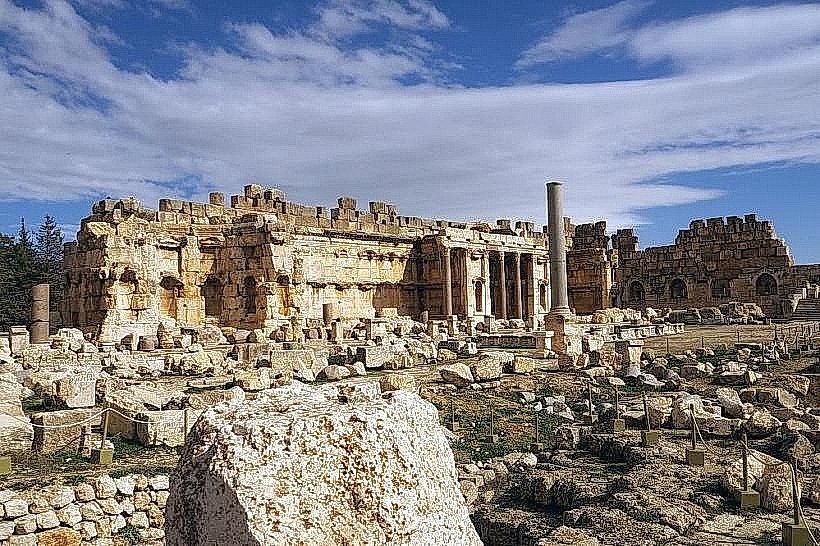
Great Court and Hexagonal Court: 0.2km West
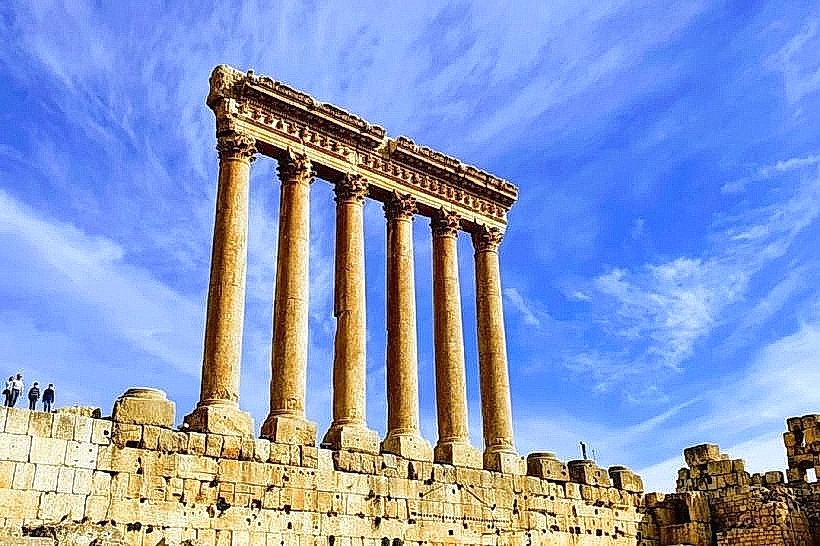
Temple of Jupiter: 0.4km West
Temple of Bacchus: 0.45km West
Sayyida Khawla Shrine: 0.7km Southwest
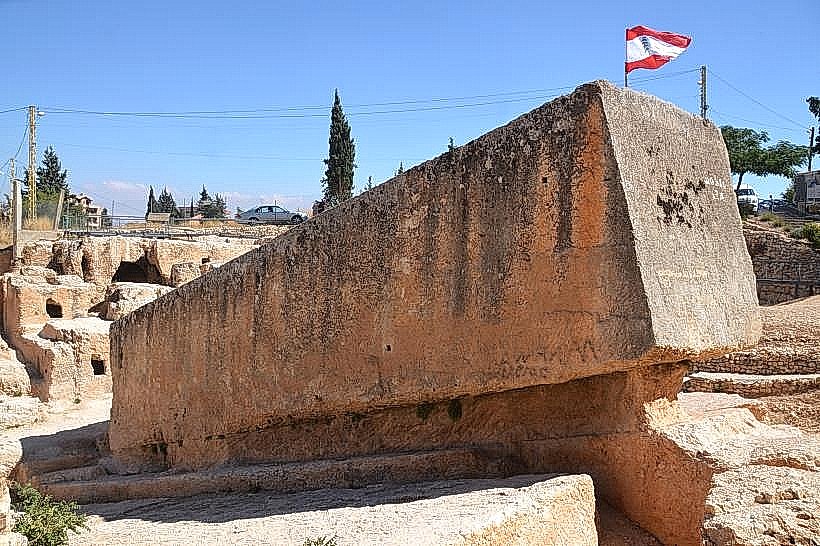
Stone of the Pregnant Woman (Ancient Quarry): 1.3km Southwest