Landmark: Temple of Jupiter
City: Baalbek
Country: Lebanon
Continent: Asia
Temple of Jupiter, Baalbek, Lebanon, Asia
The Temple of Jupiter is a colossal ancient Roman sanctuary located within the complex of Heliopolis in Baalbek, situated in the Beqaa Valley of Lebanon. It stands as the largest pagan temple dedicated to Jupiter Heliopolitanus across the entire Roman Empire.
Visual Characteristics
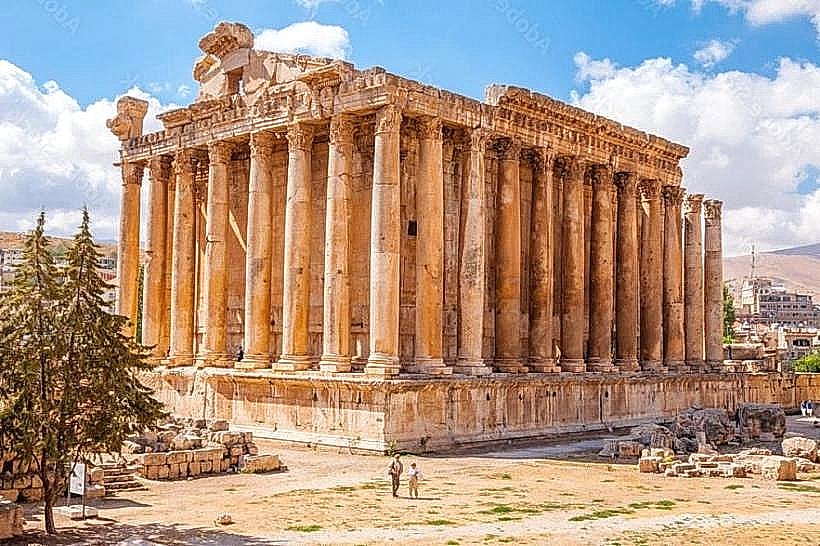
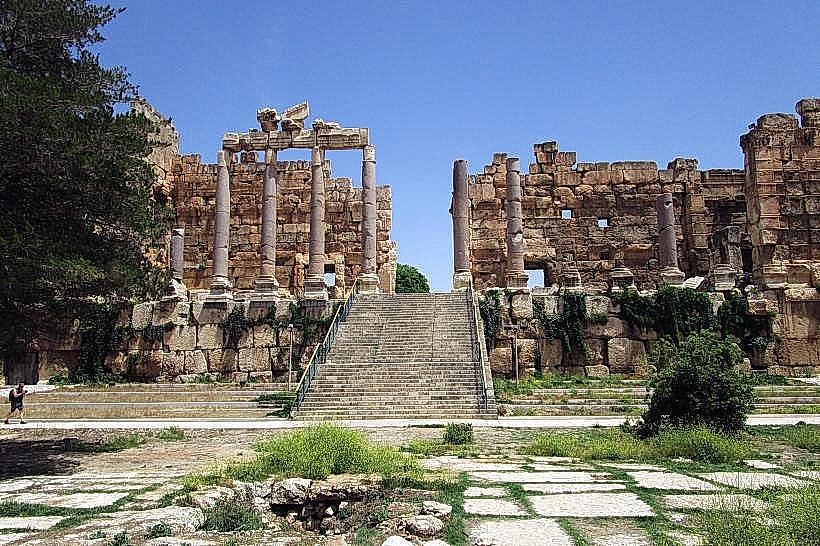
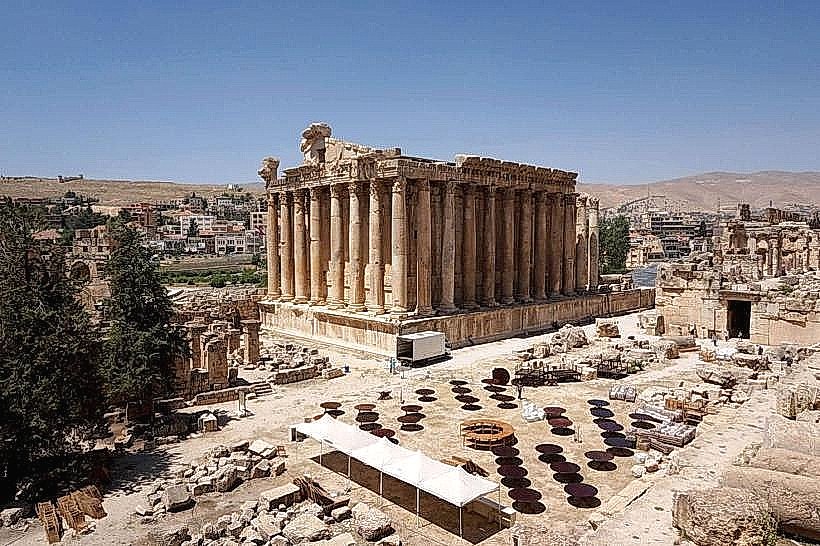
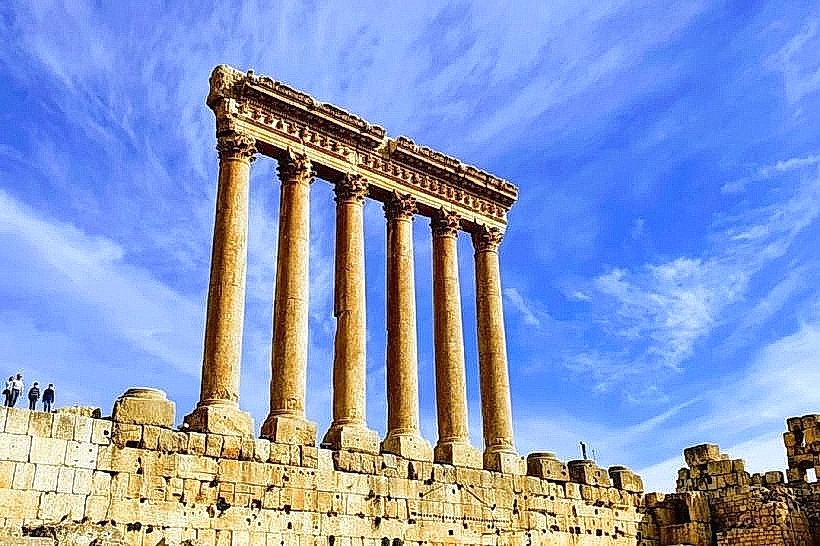
The temple is built from local cream-colored limestone on a massive elevated terrace raised 7 meters above the surrounding foundations. The remaining structure features six monumental columns standing 22 meters high, which include their original Corinthian capitals and an elaborate entablature. The original design consisted of a peristyle with 54 columns measuring over 2 meters in diameter. The platform incorporates some of the largest stone blocks ever quarried, including the Trilithon-a trio of stones integrated into the western retaining wall weighing approximately 800 tonnes each.
Location & Access Logistics
The monument is located within the central Baalbek Archaeological Site on Baalbek Castle Road, approximately 85 kilometers northeast of Beirut. Drivers from Beirut utilize the Beirut-Damascus Highway (Route 30M) to the town of Chtaura, then transition north via the Baalbek-Riyak Highway. Visitor vehicles must utilize the main municipal parking area opposite the primary ticket booth and site entrance. Public transport operations include shared minivans from Beirut's Cola intersection, which transport passengers to Chtaura for a connecting van service directly to Baalbek terminal, situated 1 kilometer from the site entrance.
Historical & Ecological Origin
Construction commenced during the mid-1st century BC under Roman imperial rule, likely initiated during the reign of Augustus, and was completed in stages up to the mid-1st century AD under Nero. It was engineered on top of a massive pre-existing Phoenician architectural platform to serve as the primary cult center for Jupiter Heliopolitanus. The geographical setting is the high-altitude, semi-arid plateau of the Beqaa Valley, located at an elevation of approximately 1,145 meters between the western Lebanon Mountains and the eastern Anti-Lebanon mountain range.
Key Highlights & Activities
Inspecting the six standing columns and their detailed entablature, which serve as the primary architectural symbol of Baalbek.
Observing the Trilithon megaliths embedded into the western foundation wall of the temple terrace.
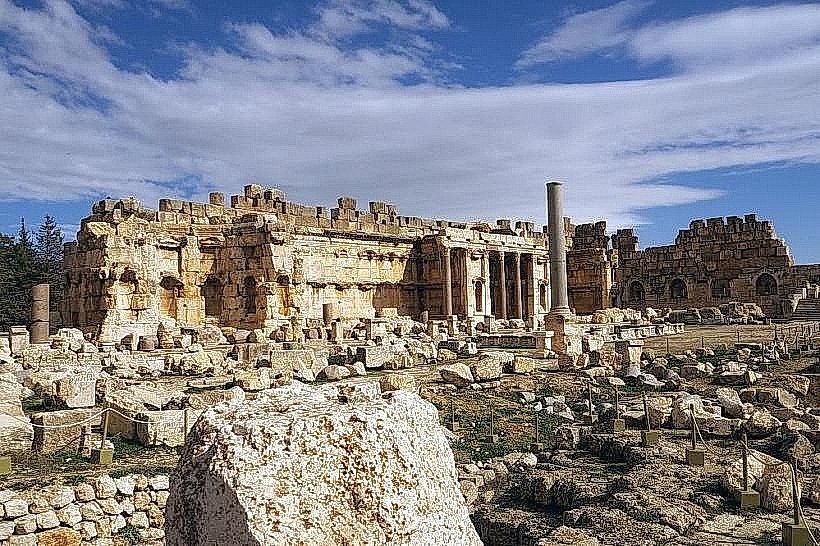
Walking across the Hexagonal Court and the Great Court located directly east of the main temple staircase.
Examining the massive fragments of fallen cornices and stone lion-head gargoyles scattered around the temple base.
Infrastructure & Amenities
The archaeological park provides a visitor center equipped with restrooms and a ticket office at the main entrance. The elevated temple platform offers no natural or artificial shade, necessitating sun protection during daylight hours. Cellular signal coverage is consistent across the ruins, with 4G and 5G connectivity provided by networks Alfa and Touch. Food, water, and regional vendors are located outside the perimeter fence directly across from the site exit.
Best Time to Visit
The recommended months for visiting are April through June and September through November to avoid extreme winter cold and summer heat. The site is open daily from 8:30 AM until sunset. For optimal photographic conditions, early morning provides direct sunlight on the remaining columns from the eastern side, while the late afternoon golden hour illuminates the western limestone retaining structures.
Facts & Legends
A verified historical oddity relates to the destruction of the temple, which occurred progressively due to major regional earthquakes in the 6th and 18th centuries, alongside deliberate dismantling during the Byzantine era under Emperor Theodosius to reuse the stone materials for constructing a Christian basilica in the Great Court. A local legend surrounding the immense foundation stones asserts that the complex was constructed by King Solomon with the assistance of supernatural entities to serve as a palace for the Queen of Sheba.
Nearby Landmarks
Great Court and Hexagonal Court: 0.05km East
Temple of Bacchus: 0.1km South
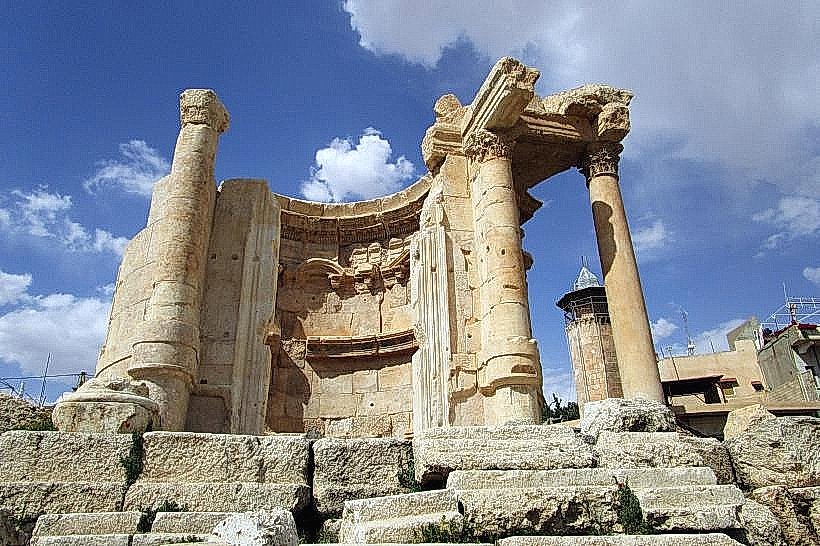
Temple of Venus: 0.4km East
Sayyida Khawla Shrine: 1.0km Southwest
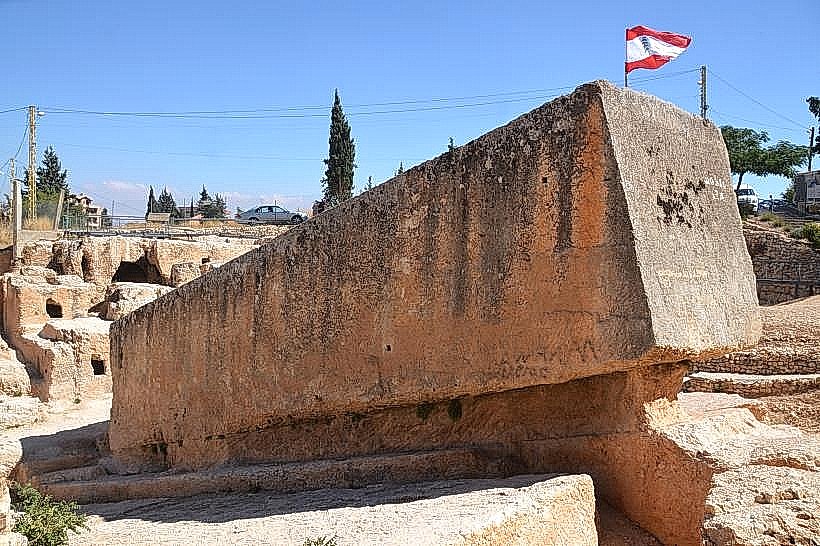
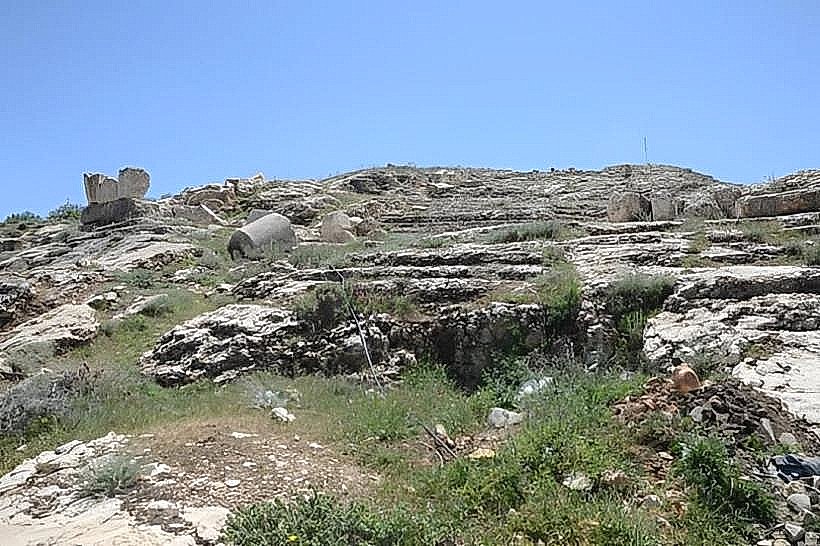
Stone of the Pregnant Woman (Ancient Quarry): 1.1km Southwest